Do Smart Scales Actually Measure Body Fat Accurately
Smart scales use bioelectrical impedance to estimate body fat, but they are not perfectly accurate. Many factors like hydration, meal timing, and skin temperature can skew your readings. While they give you a helpful trend over time, they should not replace professional body composition tests for precise results.
Key Takeaways
- Smart scales estimate body fat using bioelectrical impedance, not direct measurement.
- Accuracy varies based on hydration, fitness level, and how you use the scale.
- Tracking trends over time matters more than any single reading.
- Smart scales sync with fitness apps for long-term health monitoring.
- Professional tools like DEXA scans offer far more precise body fat readings.
- Consistency in how and when you weigh yourself improves accuracy.
📑 Table of Contents
- Do Smart Scales Actually Measure Body Fat Accurately?
- How Smart Scales Measure Body Fat
- Factors That Affect Smart Scale Accuracy
- Smart Scales vs. Professional Body Fat Testing
- Tips for Getting the Best Results From Your Smart Scale
- Common Mistakes People Make With Smart Scales
- Are Smart Scales Worth Buying?
- The Future of Smart Scale Technology
- Final Thoughts
Do Smart Scales Actually Measure Body Fat Accurately?
If you have ever stepped on a smart scale and wondered whether it really knows your body fat percentage, you are not alone. These devices have become incredibly popular in recent years. People love the convenience of stepping on a scale and instantly seeing more than just their weight. But how much trust should you put in those numbers?
The short answer is that smart scales provide estimates, not exact measurements. They use a technology called bioelectrical impedance to guess your body fat percentage. This method sends a tiny, harmless electrical current through your body. The scale then measures how fast that current moves through different tissues. Fat slows the current down more than muscle does. Based on this speed, the scale calculates an estimated body fat percentage.
Now here is the catch. Many things can affect how that electrical signal travels through your body. Your hydration level, what you ate recently, even the temperature of your skin can change the results. This does not mean smart scales are useless. They are actually quite helpful for tracking trends over time. But if you want a precise body fat number, you will need a different tool.
Body fat measurement is a hot topic in the fitness world. More people than ever want to understand their body composition beyond just a number on the scale. Smart scales make this easier than ever before. But understanding how they work helps you use them the right way.
How Smart Scales Measure Body Fat
The Science of Bioelectrical Impedance
Most smart scales rely on a method called bioelectrical impedance analysis, or BIA for short. Here is how it works in simple terms. When you step on the scale, it sends a small electrical current up through one foot and down through the other. This current travels at different speeds through fat, muscle, and water. The scale uses these speeds to estimate your body fat percentage.
The process is completely painless. You will not feel anything at all. The current is so weak that it is completely safe for most people. This is the same basic technology used in more expensive body composition machines found at gyms and clinics. The big difference is the price and the precision.
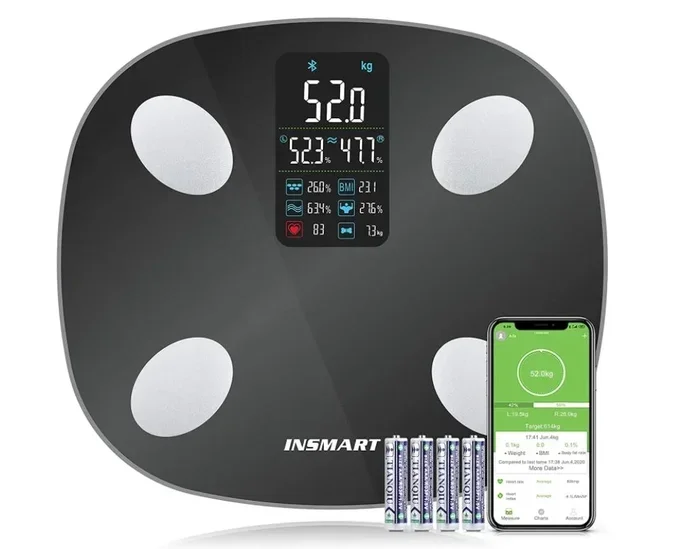
Smart scales also measure other metrics alongside body fat. These include muscle mass, bone density, water weight, and sometimes even your metabolic rate. All of this comes from that same electrical signal. The scale runs the data through built-in algorithms to spit out a full body composition profile. It is pretty impressive when you think about it.
What the Numbers Actually Mean
When your smart scale gives you a body fat reading, it is really giving you a range, not an exact number. Most scales will show something like 22 percent body fat. But the real number could be a few points higher or lower. The margin of error for most consumer smart scales is around 3 to 5 percent. That is a big range when you are trying to track small changes.
For example, if your scale says you are at 22 percent body fat, your actual number could be anywhere from 17 to 27 percent. That is a huge difference. So why do people still trust these readings? Because they are consistent. If you weigh yourself the same way every day, the scale gives you a reliable trend line. Over weeks and months, you can see if your body fat is going up or down, even if the exact number is off.
Factors That Affect Smart Scale Accuracy
Several things can throw off your smart scale readings. Understanding these factors helps you get more consistent results. Here are the main ones to watch out for.
Hydration Levels
Water plays a big role in how electrical signals move through your body. If you are dehydrated, the signal slows down. This can make the scale think you have more body fat than you actually do. On the flip side, if you are very well hydrated, the signal moves faster. This can make your body fat reading appear lower than it really is.
The best time to weigh yourself is in the morning. After using the bathroom and before eating or drinking anything. This gives you the most consistent baseline. Avoid weighing yourself right after a workout or a long shower. Both can change your hydration levels quickly.
Recent Meals and Exercise
What you eat and when you exercise also matters. If you just finished a big meal, your body holds more water in your digestive system. This can shift your readings. Similarly, if you just finished a tough workout, your muscles hold extra water. This affects the electrical impedance and can skew your body fat estimate.
Try to wait at least two hours after eating before stepping on the scale. And avoid weighing yourself right after exercise. Giving your body time to return to a resting state gives you more reliable numbers.
Skin Temperature and Foot Moisture
This one surprises a lot of people. The electrical current enters your body through your feet. If your feet are cold or dry, the signal does not travel as well. Wet or warm feet conduct the signal better. That is why many smart scale manufacturers recommend standing barefoot on a dry surface.
Some scales come with foot pads that help improve conductivity. But even with those, your skin temperature can still affect the reading. If your feet are cold from walking around in socks, wait a few minutes and let them warm up naturally.
Smart Scales vs. Professional Body Fat Testing
So how do smart scales stack up against professional testing methods? Let us compare the most common options people use to measure body fat.
| Method | Accuracy | Cost | Convenience |
|---|---|---|---|
| Smart Scale (BIA) | Moderate | Low | Very High |
| DEXA Scan | Very High | High | Low |
| Hydrostatic Weighing | Very High | High | Low |
| Skinfold Calipers | Moderate | Low | Medium |
| Bod Pod | High | Medium | Medium |
As you can see, smart scales win on convenience. You can weigh yourself at home anytime you want. But professional methods like DEXA scans and hydrostatic weighing give you much more precise results. DEXA scans are considered the gold standard for measuring body fat. They use low-dose X-rays to differentiate between fat, muscle, and bone. The accuracy is far beyond what any consumer smart scale can match.
That said, most people do not need DEXA-level precision. If your goal is to track your progress over time, a smart scale works great. The key is to use it consistently and look at the trend, not the individual number.
When to Use Professional Testing
There are times when professional testing makes more sense. If you are training for a competition or managing a medical condition, precise body fat numbers matter. Athletes and bodybuilders often use DEXA scans every few months to track their progress. For the average person trying to get healthier, a smart scale is perfectly fine.
Also keep in mind that some smart scales sync with fitness apps and health platforms. This makes it easy to log your readings and watch your progress over weeks and months. The trend data is often more valuable than any single measurement. Just like how tracking your daily steps helps you understand your activity level, tracking your body fat trend helps you understand your fitness journey.
Tips for Getting the Best Results From Your Smart Scale
Want to get the most out of your smart scale? Follow these simple tips to improve your readings.
- Weigh yourself at the same time every day. Morning is best. This creates a consistent baseline for comparison.
- Always stand barefoot on a hard, dry surface. Carpet and socks can interfere with the electrical signal.
- Wait at least two hours after eating or exercising. Give your body time to return to a resting state.
- Use the scale on a flat, stable surface. Uneven floors can affect both the weight and the body fat reading.
- Track trends over time, not daily numbers. Your body fat will naturally fluctuate day to day. Look at the bigger picture.
- Keep your feet warm and dry before stepping on. Warm feet conduct the signal better for more accurate readings.
- Enter your personal details correctly. Most scales ask for age, height, gender, and activity level. Accurate inputs lead to better estimates.
Quick Tips for Better Accuracy
- Place your scale on a hard floor, not a rug.
- Stand still and relaxed while the reading is taken.
- Do not hold your breath during the measurement.
- Use the same scale every time for consistency.
- Sync your scale with a fitness tracking app to spot trends easily.
Common Mistakes People Make With Smart Scales
Even with the best intentions, many people make mistakes that throw off their smart scale readings. Here are the most common ones to avoid.
Weighing Yourself at Different Times
This is the number one mistake. Your body weight and composition change throughout the day. After eating, drinking, sweating, and sleeping, your numbers will all shift. If you weigh yourself at 8 AM one day and 8 PM the next, you are comparing apples to oranges.
Pick a consistent time and stick with it. Morning readings before eating or drinking are the most reliable. This gives you the best picture of your true body wellness trends.
Panicking Over Daily Fluctuations
Your body fat percentage can swing by a couple of points from day to day. This is completely normal. Water retention, salt intake, hormonal changes, and even stress can all cause temporary shifts. Do not let a single high or low reading scare you or make you feel like your progress has stalled.
Instead, look at the overall direction of your data over several weeks. Are you trending downward over time? That is what matters. One bad day does not erase weeks of progress.
Ignoring Other Health Metrics
Smart scales give you more than just body fat. They also measure muscle mass, bone density, and water weight. All of these numbers tell a story about your health. Focusing only on body fat can blind you to other important changes. For example, if your muscle mass is increasing while your body fat stays the same, that is a great sign of progress.
Think of your smart scale as a tool that gives you a full picture. Use all the metrics together to understand your health better. Just like how keeping your car software updated helps you get the full picture of your vehicle’s health, using all your scale metrics gives you a complete view of your body.
Are Smart Scales Worth Buying?
This really depends on what you are trying to achieve. If you want a simple way to track your weight and body composition over time, a smart scale is a great investment. They are affordable, easy to use, and provide useful data. Most quality smart scales cost between $40 and $150, which is much cheaper than repeated professional testing sessions.
Smart scales also connect to your phone through Bluetooth or Wi-Fi. This makes it easy to log your readings and see charts of your progress. Many scales work with popular fitness apps, so you can combine your weight data with your exercise and nutrition tracking. Some people even use an old iPad as a dedicated dashboard for viewing their health metrics over time.
However, if you are looking for medical-grade precision, a smart scale will not meet that need. The estimates are good for general tracking but not for clinical decisions. If you have a health condition that requires precise body fat monitoring, talk to your doctor about professional testing options.
The bottom line is that smart scales are a helpful tool for most people. They give you actionable insights into your body composition. Just remember that they provide estimates, not exact measurements. Use them consistently, track your trends, and do not stress over daily fluctuations.
The Future of Smart Scale Technology
Smart scale technology is improving all the time. Newer models are using more advanced impedance analysis methods. Some scales now send signals through both your feet and your hands for a more complete reading. This multi-point contact method can improve accuracy compared to foot-only scales.
Artificial intelligence is also playing a bigger role. Many smart scales now use machine learning to improve their estimates over time. The more you use the scale, the better it gets at understanding your unique body composition. Some brands are even integrating health monitoring features that can detect unusual changes and alert you.
As smart home devices continue to evolve, we can expect even more integration between scales and other health tools. Imagine your scale talking directly with your doctor or fitness trainer, sharing your trends automatically. The future of body composition tracking is looking brighter than ever.
For now, the best thing you can do is use your smart scale wisely. Understand its limitations, follow the tips in this article, and focus on the big picture. Your scale is a helpful guide, not a medical diagnostic tool. Treat it as one piece of the puzzle in your overall health journey.
Final Thoughts
So do smart scales actually measure body fat? The answer is yes, but with important caveats. They estimate body fat using bioelectrical impedance, not direct measurement. The numbers you see are approximations that can be affected by many factors. However, when used correctly and consistently, smart scales provide valuable trend data that can guide your fitness and health decisions.
Think of your smart scale as a compass, not a GPS. It points you in the right direction but does not give you exact coordinates. Pair your scale readings with other health metrics, professional checkups when needed, and a solid understanding of your own body. That combination gives you the best path forward.
The most important thing is to stay consistent and keep moving forward. Whether your body fat is going up or down, the trend tells a story. Trust the process, use your smart scale as a tool, and focus on the bigger picture of your health and wellness journey.
Frequently Asked Questions
How often should I weigh myself on a smart scale?
Most experts recommend weighing yourself once a day at the same time. Morning readings before eating or drinking give the most consistent results. Daily weighing helps you spot trends without getting distracted by normal day-to-day fluctuations.
Can smart scales measure visceral fat?
Some advanced smart scales claim to estimate visceral fat levels. However, these estimates are not as reliable as professional methods. Visceral fat measurement is best done through DEXA scans or other clinical tools. Use your smart scale readings as a general guide, not a definitive number.
Why does my smart scale give different readings than the gym scale?
Different scales use different algorithms and electrode placements. Even small differences in how the electrical current is sent can change the result. Gym scales may also be calibrated differently. Focus on your own scale’s trend over time rather than comparing it to other devices.
Is it safe to use a smart scale every day?
Yes, it is completely safe. The electrical current used by smart scales is extremely low and harmless. Daily use is actually recommended for tracking consistent trends. Just make sure you follow proper weighing habits for the most reliable results.
Do smart scales work better with fitness apps?
Yes, connecting your smart scale to a fitness app can enhance its value. Apps help you visualize trends, set goals, and track progress over time. They also let you combine scale data with exercise and nutrition logs for a complete health picture.
Can I use a smart scale if I have a medical condition?
Smart scales are generally safe for most people. However, if you have a pacemaker or other implanted device, consult your doctor first. The electrical current from the scale could potentially interfere with such devices. Always prioritize your doctor’s advice over any consumer device.
=== CONCLUSION ===
Smart scales are a convenient and affordable way to track your body fat and overall composition at home. They use bioelectrical impedance to estimate body fat, muscle mass, and other health metrics. While they are not perfectly accurate, they provide useful trend data when used consistently.
To get the best results, weigh yourself at the same time every day, stand barefoot on a dry surface, and avoid measuring right after eating or exercising. Focus on the long-term trend rather than daily fluctuations. Your smart scale is a valuable tool in your fitness journey, but it works best when combined with other healthy habits and professional guidance when needed.
Embrace the data your smart scale provides, but keep it in perspective. Use it as one part of a broader approach to health and wellness. With the right mindset and consistent habits, your smart scale can help you stay on track and motivated toward your fitness goals.