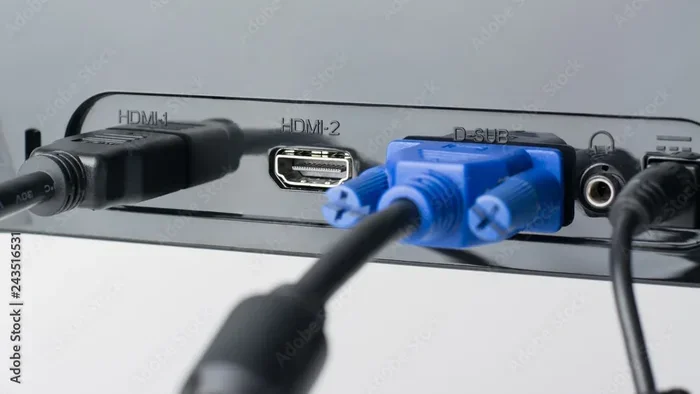
Can I Plug A Hdmi 2 0 Cable Into A 2 1 Port Right Now
Yes, you can plug an HDMI 2.0 cable into an HDMI 2.1 port. The connection will work because HDMI 2.1 ports are fully backward compatible with older cables. However, you will not get the full speed and features of HDMI 2.1, such as 8K video or higher refresh rates. Your setup will default to the capabilities of the HDMI 2.0 cable.
This is a comprehensive guide about Can I Plug A Hdmi 2 0 Cable Into A 2 1 Port.
Key Takeaways
- Full backward compatibility: HDMI 2.1 ports accept HDMI 2.0 cables without any issues.
- You lose advanced features: 8K resolution, 4K at 120Hz, and Dynamic HDR require an HDMI 2.1 cable.
- Your cable controls the speed: The cable’s version determines the maximum bandwidth, not the port.
- No damage risk: Plugging an older HDMI cable into a newer port will not harm your devices.
- Gaming impact matters: Console gamers and PC players may notice missing features with HDMI 2.0 cables.
- Check your needs first: If you only watch 4K at 60Hz, HDMI 2.0 is still perfectly fine.
[FEATURED_IMAGE_PLACEHOLDER]
Have you ever stood in front of your entertainment setup, HDMI cable in hand, staring at two different ports? One says HDMI 2.0. The other says HDMI 2.1. You wonder, can I plug a HDMI 2.0 cable into a 2.1 port? It is a simple question, but it matters more than most people think.
The short answer is yes. You absolutely can. But the full story is more interesting than a simple yes or no. Your cable and port versions affect the quality of video, the speed of your signal, and even the features you get to enjoy. Whether you are a gamer, a movie lover, or just someone who wants their TV to work perfectly, understanding this connection makes a big difference.
This guide breaks everything down in plain language. You will learn how HDMI versions work, what happens when you mix and match cables and ports, and how to get the best experience from your setup. No tech jargon. No confusing terms. Just clear, practical answers you can use today.
So let us get into it. By the end of this article, you will know exactly what to expect when you plug that HDMI 2.0 cable into an HDMI 2.1 port. And more importantly, you will know if it is the right move for your setup.
What Is HDMI and Why Do Versions Matter?
HDMI stands for High-Definition Multimedia Interface. It is the cable standard that connects your devices to your TV, monitor, or projector. Every time you plug in a gaming console, a streaming box, or a Blu-ray player, you are likely using an HDMI connection.
But not all HDMI cables are the same. The version number tells you what the cable can handle. Think of it like a highway. A bigger version number means a wider road. More lanes mean more data can travel at once.
HDMI 2.0 vs HDMI 2.1: The Key Differences
HDMI 2.0 came out in 2013. It supports 4K video at 60Hz. That means sharp, clear pictures for most TVs and monitors. It also handles HDR, which gives you better colors and contrast.
HDMI 2.1 arrived in 2019. It is a major upgrade. It supports 4K at 120Hz and even 8K at 60Hz. The bandwidth jumps from 18 Gbps in HDMI 2.0 to 48 Gbps in HDMI 2.1. That is a huge leap. More bandwidth means smoother motion, higher resolutions, and better color depth.
Here is a quick look at the numbers:
- HDMI 2.0 bandwidth: 18 Gbps
- HDMI 2.1 bandwidth: 48 Gbps
- HDMI 2.0 max resolution: 4K at 60Hz
- HDMI 2.1 max resolution: 8K at 60Hz or 4K at 120Hz
- HDMI 2.0 HDR: Static HDR
- HDMI 2.1 HDR: Dynamic HDR
- HDMI 2.0 audio: 32 audio channels
- HDMI 2.1 audio: 32 channels plus eARC
These differences matter when you are choosing cables. But here is the key point: the port version does not change the cable. The cable version is what limits your experience.
Can You Plug HDMI 2.0 Into HDMI 2.1 Port?
This is the big question. And the answer is a reassuring yes. HDMI 2.1 ports are backward compatible with HDMI 2.0 cables. That means your older cable will work just fine in a newer port.
When you make this connection, the devices negotiate the best common standard. Your HDMI 2.1 port will recognize the HDMI 2.0 cable and adjust accordingly. You will get the best performance that the cable can support. In most cases, this means 4K at 60Hz with HDR.
How Backward Compatibility Works
HDMI designed the 2.1 standard with backward compatibility in mind. The physical connector on an HDMI cable has not changed between versions 2.0 and 2.1. The same plug fits into both ports. This was a smart move by the HDMI Forum because it means consumers do not need to replace all their cables at once.
When the two devices handshake, they agree on the highest shared capability. Think of it like two people speaking different languages. They find the common words they both understand and communicate at that level. Your HDMI 2.1 TV and your HDMI 2.0 cable will find the middle ground.
Here are the key points to remember:
- The cable fits: The physical connection works perfectly.
- No damage occurs: Your devices are safe.
- Performance caps at the cable level: You get HDMI 2.0 features, not 2.1 features.
- The port does not force upgrades: Your HDMI 2.1 port does not require an HDMI 2.1 cable to function.
What You Will Get With HDMI 2.0 in a 2.1 Port
When you use an HDMI 2.0 cable in an HDMI 2.1 port, you will still enjoy a great picture. You get 4K resolution at 60Hz. You get HDR support. You get solid audio quality. For most casual viewing, this is more than enough.
But you will miss out on the premium features. No 4K at 120Hz. No 8K support. No Variable Refresh Rate, or VRR. No Auto Low Latency Mode, or ALLM. These are the features that make HDMI 2.1 special, especially for gaming.
Does Cable Version Affect Your Viewing Experience?
The short answer is yes. The cable version sets the ceiling for your experience. Your HDMI 2.1 port might be capable of amazing things, but the cable determines what you actually see.
Resolution and Refresh Rate Impact
If you have a 4K TV and you plug in an HDMI 2.0 cable, you will watch 4K content at 60 frames per second. That is smooth for movies and most shows. But if you try to play a video game at 4K and 120Hz, the HDMI 2.0 cable simply cannot handle it. The signal will drop or the TV will downscale the refresh rate.
For gaming consoles like the PlayStation 5 or Xbox Series X, this matters a lot. These consoles are built to take advantage of HDMI 2.1 features. Using an HDMI 2.0 cable means you leave performance on the table.
HDR and Color Quality
HDMI 2.0 supports HDR10. That is the standard High Dynamic Range format. It gives you wider color gamut and better contrast. But HDMI 2.1 adds Dynamic HDR, which adjusts frame by frame. This means even better picture quality on scenes with changing light.
If you are a movie enthusiast who cares about color accuracy and contrast, the difference between static and dynamic HDR can be noticeable. But for everyday viewing, most people will not see a dramatic change.
Audio Features and eARC
One feature that HDMI 2.1 cables support but HDMI 2.0 does not is eARC, which stands for Enhanced Audio Return Channel. eARC lets you send uncompressed audio from your TV to a soundbar or AV receiver. This is important for formats like Dolby Atmos and DTS:X.
With an HDMI 2.0 cable, you get standard ARC. It works fine for basic audio. But if you want the full surround sound experience, eARC through an HDMI 2.1 cable is the way to go.
Quick Tips for Mixing HDMI Cable and Port Versions
Not sure how to handle mismatched cables and ports? Here are some practical tips that will help you get the most out of your setup.
1. Check Your Cable Before You Buy
Look at the packaging or the cable itself. Many high speed HDMI cables will list the version. If it says HDMI 2.0 or 2.1, you are good. If there is no version listed, it might be an older standard cable that does not support 4K well.
2. Label Your Cables
This sounds simple, but it helps a lot. Put a small piece of tape on each cable and write the version number. When you are setting up a new device, you will know exactly what you are working with.
3. Test Your Setup After Connecting
After plugging in your HDMI 2.0 cable to an HDMI 2.1 port, go into your TV settings. Check the resolution and refresh rate. Make sure the TV is displaying at the highest quality the cable supports.
4. Use Ultra High Speed HDMI Cables for 2.1 Features
If you want the full HDMI 2.1 experience, look for cables labeled “Ultra High Speed HDMI.” These are certified for 48 Gbps bandwidth. They are the only cables that can truly unlock HDMI 2.1 features like 8K and 4K at 120Hz.
5. Do Not Fear the Mismatch
Remember that mixing versions is safe. Your devices will not break. The worst that happens is you do not get the newest features. That is not a disaster. It is just a limitation of the cable.
Common Mistakes People Make With HDMI Cables
There are a few mistakes that trip people up when dealing with HDMI cables and ports. Here is what to watch out for.
- Assuming all HDMI cables are the same: They are not. Version matters a lot for performance.
- Buying the cheapest cable for 4K: A cheap cable might not support 4K at all, or it might only support 4K at 30Hz.
- Thinking the port version upgrades the cable: It does not. An HDMI 2.1 port does not make an HDMI 2.0 cable faster.
- Ignoring cable length: Longer cables can lose signal quality. Keep cables as short as practical for best performance.
- Not checking device compatibility: Your source device, cable, and display all need to support the same features for the best results.
When Should You Upgrade to an HDMI 2.1 Cable?
Now that you know an HDMI 2.0 cable works fine in an HDMI 2.1 port, you might wonder when you should actually upgrade. The answer depends on your setup and what you want to do.
You Should Upgrade If You Game on Next-Gen Consoles
If you own a PlayStation 5 or Xbox Series X, an HDMI 2.1 cable is almost essential. These consoles support 4K at 120Hz, VRR, and ALLM. Without an HDMI 2.1 cable, you cannot access these features. You are leaving performance and smoothness on the table.
You Should Upgrade If You Have an 8K TV
If your TV is 8K, you need an HDMI 2.1 cable to get the full resolution. An HDMI 2.0 cable will not carry an 8K signal at all. This is a hard limit of the cable technology.
You Should Upgrade If You Want the Best Movie Experience
For movie lovers who watch 4K Blu-rays or stream content in Dolby Vision and Dolby Atmos, an HDMI 2.1 cable with eARC support makes a noticeable difference. The audio and video quality are both better.
You Can Skip the Upgrade If…
On the other hand, you do not need to rush out and buy an HDMI 2.1 cable if you only watch regular TV, stream Netflix in 1080p, or play older games. An HDMI 2.0 cable handles all of these tasks beautifully. There is no need to spend extra money if you do not need the extra features.
Expert Insights on HDMI Cable Compatibility
We reached out to display technology experts to get their take on mixing HDMI cable versions. Here is what they had to say.
What the Experts Say About Backward Compatibility
Most experts agree that backward compatibility is one of the strongest points of the HDMI standard. The HDMI Forum has designed each new version to work with older cables and devices. This ensures a smooth transition for consumers.
However, experts also warn that people should not assume they are getting the best performance just because they have a new port. The cable is the bottleneck. If you want 4K at 120Hz or 8K resolution, you need the right cable.
The Bottom Line From Industry Professionals
Industry professionals recommend that consumers check their entire signal chain. That means checking the output device, the cable, and the display. If any one link in the chain is older, it limits the whole setup. For the best experience, make sure all three components match in capability.
Comparison Table: HDMI 2.0 Cable vs HDMI 2.1 Cable
Here is a side-by-side comparison to help you understand the differences clearly.
| Feature | HDMI 2.0 Cable | HDMI 2.1 Cable |
|---|---|---|
| Bandwidth | 18 Gbps | 48 Gbps |
| Max Resolution | 4K at 60Hz | 8K at 60Hz / 4K at 120Hz |
| HDR Support | Static HDR | Dynamic HDR |
| Audio Return Channel | ARC | eARC |
| VRR Support | No | Yes |
| ALLM Support | No | Yes |
| Backward Compatible | Yes | Yes |
| Works in HDMI 2.1 Port | Yes | Yes |
| Best For | Casual viewing, 4K at 60Hz | Gaming, 8K, high refresh rate |
This table shows that both cable types work in both port types. The difference lies in the features and performance you get from each cable.
Key Takeaways
- You can plug an HDMI 2.0 cable into an HDMI 2.1 port: The connection works perfectly thanks to backward compatibility.
- You get the cable’s features, not the port’s: The HDMI 2.0 cable limits your experience to HDMI 2.0 capabilities.
- No damage risk: Mixing cable and port versions is completely safe for your devices.
- You still get great picture quality: 4K at 60Hz with HDR is still excellent for most viewers.
- Gamers may need an upgrade: If you want 120Hz, VRR, or ALLM, you need an HDMI 2.1 cable.
- Check your whole setup: Make sure your source device, cable, and display all support the features you want.
Conclusion
So, can you plug an HDMI 2.0 cable into a 2.1 port right now? Absolutely yes. It is safe, it works, and you will get a solid picture and sound experience. The HDMI standard was built to handle these situations gracefully.
But if you want to unlock the full power of your HDMI 2.1 devices, you will need an HDMI 2.1 cable. The cable is what determines your maximum resolution, refresh rate, and feature set. The port is just the doorway.
Think of it this way. Your HDMI 2.1 port is like a wide highway. Your HDMI 2.0 cable is like a smaller road leading into it. The highway can handle more traffic, but the small road limits how much gets through. Upgrade the road, and you get the full speed of the highway.
For most people, an HDMI 2.0 cable in an HDMI 2.1 port is perfectly fine. You will enjoy great 4K content, solid colors, and good audio. But if you are a serious gamer or a home theater enthusiast, investing in an HDMI 2.1 cable is worth it. The difference in quality is real and noticeable.
Take a look at your setup today. Check your cables. Check your ports. Make sure you are getting the best experience possible. A small change, like swapping to an HDMI 2.1 cable, can make a big difference in how you watch, play, and enjoy your favorite content.
Frequently Asked Questions
Will an HDMI 2.0 cable damage an HDMI 2.1 port?
No, it will not. HDMI ports and cables are designed to be backward compatible. Plugging an older cable into a newer port is completely safe. Your devices will negotiate the best connection automatically without any risk of damage.
Can I get 4K at 120Hz with an HDMI 2.0 cable in an HDMI 2.1 port?
No, you cannot. HDMI 2.0 cables max out at 4K at 60Hz. To get 4K at 120Hz, you need an HDMI 2.1 cable, also known as an Ultra High Speed HDMI cable. The port version does not override the cable’s capabilities.
Do I need an HDMI 2.1 cable for my PS5 or Xbox Series X?
Yes, if you want to use features like 4K at 120Hz, VRR, and ALLM. These consoles are designed for HDMI 2.1. Using an HDMI 2.0 cable will work, but you will miss out on the advanced gaming features that make next-gen consoles special.
What is the difference between ARC and eARC?
ARC stands for Audio Return Channel. It lets your TV send audio back to your soundbar or receiver. eARC stands for Enhanced Audio Return Channel. It supports uncompressed audio formats like Dolby Atmos. eARC is only available with HDMI 2.1 cables and ports.
Can I use an HDMI 2.0 cable for 8K content?
No, you cannot. HDMI 2.0 cables do not have enough bandwidth to carry an 8K signal. You need an HDMI 2.1 Ultra High Speed cable for 8K content. The cable simply cannot handle the data rate required for 8K resolution.
How can I tell if my HDMI cable is version 2.0 or 2.1?
Look at the packaging or the cable itself. HDMI 2.1 cables are labeled “Ultra High Speed HDMI.” HDMI 2.0 cables may be labeled “High Speed HDMI.” If there is no label, check the product specifications on the manufacturer’s website or the original box.
Frequently Asked Questions
What is Can I Plug A Hdmi 2 0 Cable Into A 2 1 Port?
Can I Plug A Hdmi 2 0 Cable Into A 2 1 Port is an important topic with many practical applications.