How Do I Choose The Right Wallpaper For Your Walls
Choosing the right wallpaper can completely transform your space. This guide covers wallpaper types, patterns, textures, and colors so you can make confident decisions. You will learn practical tips for matching wallpaper to your room size, lighting, and personal style. We also share common mistakes to avoid and expert advice for a flawless finish.
Your walls are the biggest canvas in any room. And wallpaper is one of the most powerful ways to bring personality, color, and texture into your space. But with so many options out there, choosing the right wallpaper can feel overwhelming. That is exactly why we wrote this guide.
Whether you are redecorating a bedroom, updating a living room, or tackling a whole home makeover, this article breaks everything down in simple terms. You will learn about different wallpaper types, how to pick patterns and colors, and what to watch out for during installation. By the end, you will feel confident walking into any store or browsing any online shop with a clear plan.
Wallpaper has made a huge comeback in recent years. Interior designers love it because it adds depth and character that paint alone simply cannot match. From subtle textures to eye-catching murals, the options are nearly endless. Let us walk you through every step of the decision-making process so you end up with walls you truly love.
Key Takeaways
- Know Your Room: Measure your walls and consider lighting before picking any wallpaper.
- Choose the Right Type: Vinyl, non-woven, and removable wallpaper each serve different needs and budgets.
- Patterns Matter: Small rooms work best with subtle patterns, while large rooms can handle bold designs.
- Color Coordination: Match your wallpaper to your room color scheme for a cohesive look.
- Installation Tips: Proper wall prep and the right adhesive make all the difference.
- Avoid Common Mistakes: Skip wrong sizing, ignore lighting, and rush the prep work.
📑 Table of Contents
- Understand Your Room Before You Shop
- Explore Wallpaper Types and Materials
- Picking the Right Pattern and Style
- Match Wallpaper to Your Color Scheme
- Compare Wallpaper vs Paint
- Installation Tips and Common Mistakes
- Budgeting for Your Wallpaper Project
- Current Wallpaper Trends to Consider
- Final Thoughts on Choosing Your Perfect Wallpaper
Understand Your Room Before You Shop
The first step in wallpaper selection is understanding your room. Every space is different, and what works in one room may fail in another. Take a few minutes to assess the basics before you start browsing designs.
Measure Your Walls Accurately
Grab a tape measure and write down the height and width of each wall you plan to cover. Wallpaper comes in rolls of standard sizes, and knowing your exact measurements prevents waste. Most rolls cover about 30 square feet, but this varies by brand. Always add 10 to 15 percent extra for pattern matching and trimming.
Consider Natural and Artificial Lighting
Lighting changes everything about how wallpaper looks. A bold pattern in a dim hallway feels completely different than the same pattern in a sunlit living room. Rooms with lots of natural light can handle darker, richer colors. Rooms with limited light benefit from lighter shades and subtle textures that help bounce available light around the space.
Think About the Room’s Purpose
Ask yourself what this room is for. A bedroom calls for calming, soft tones. A home office might need something that inspires focus. A kids room can handle playful, vibrant designs. The room color scheme and function should guide your choice from the very start.
Quick Tip: Hold a large swatch of wallpaper against your wall and observe it at different times of day. Morning light, afternoon sun, and evening lamps all change how the color and pattern appear.
Explore Wallpaper Types and Materials
Not all wallpaper is created equal. The material you choose affects durability, ease of installation, and even cleanup. Here is a breakdown of the most popular wall covering options on the market today.
Vinyl Wallpaper
Vinyl is the workhorse of the wallpaper world. It is durable, moisture-resistant, and easy to wipe clean. This makes it ideal for kitchens, bathrooms, and high-traffic areas. Vinyl wallpaper comes in both solid sheets and fabric-backed versions. The solid sheets are thinner and cheaper, while fabric-backed vinyl offers a more premium feel.
Non-Woven Wallpaper
Non-woven wallpaper is a favorite among DIYers. It does not require soaking and is much easier to remove than traditional options. The material breathes well, which means fewer chances of peeling or bubbling. If you are new to wallpaper installation, non-woven is a great starting point.
Removable and Peel-and-Stick Wallpaper
Renters and temporary decor enthusiasts love removable wallpaper. It sticks to walls without damaging the surface and peels off cleanly when you move out. Removable wallpaper comes in tons of designs, from geometric patterns to floral prints. The trade-off is that it may not last as long as traditional options.
Textured Wallpaper
Textured wallpaper adds a tactile dimension to your walls. Think raised patterns, grasscloth looks, or embossed designs. This type of wallpaper texture can make a room feel cozy and sophisticated. However, textured wallpaper can collect dust, so consider your cleaning habits before choosing this option.
Picking the Right Pattern and Style
The pattern and style you choose set the entire mood of a room. This is where interior design really comes into play. Let us break down the main categories so you can narrow your search.
Solid Colors
Solid wallpaper is timeless and versatile. It works beautifully as an accent wall behind a bed, sofa, or fireplace. Solid colors also pair well with patterned furniture and accessories. If you are unsure where to start, a neutral solid is always a safe bet.
Geometric Patterns
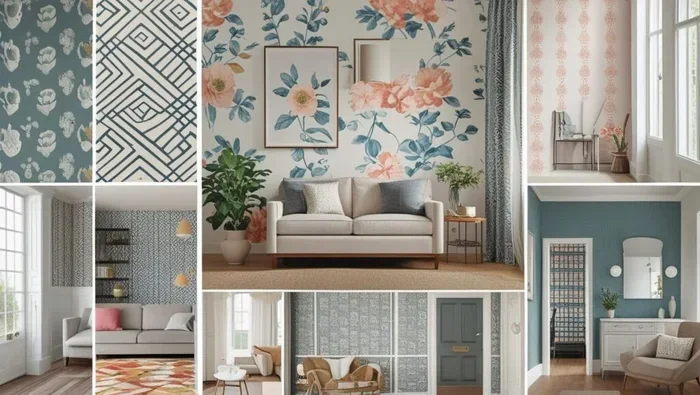
Geometric patterns add modern energy to any space. Triangles, hexagons, and classic stripes are hugely popular right now. These patterns work well in home offices, playrooms, and contemporary living rooms. Large geometric designs make a statement, while small repeats create subtle visual interest.
Floral and Botanical Designs
Floral wallpaper brings nature indoors. Large-scale botanical prints create drama, while small floral patterns feel delicate and romantic. This style fits beautifully in bedrooms, dining rooms, and sunrooms. Wallpaper styles like floral designs never truly go out of fashion.
Stripes and Damasks
Stripes can make a small room feel taller or a large room feel cozier, depending on the direction. Damask patterns offer an elegant, traditional look that works well in formal spaces. Both options add depth without feeling overwhelming.
Match Wallpaper to Your Color Scheme
Wallpaper color is one of the most important decisions you will make. The wrong shade can clash with your furniture, flooring, and decor. The right shade ties everything together beautifully.
Start by identifying the dominant colors in your room. Look at your sofa, curtains, rug, and any large furniture pieces. Your wallpaper should complement these elements, not compete with them. If your furniture is bold, choose a more subtle wallpaper. If your furniture is neutral, you can go bold with the wall covering.
Many people also consider the room color scheme in three parts: the wall color, the accent color, and the neutral base. Wallpaper can serve any of these roles depending on the design. A neutral wallpaper with a hint of color works as a base, while a bold pattern can serve as the accent.
Quick Tip: Stick to a palette of three to five colors throughout your room. This includes your wallpaper, furniture, and accessories. Staying within this limit keeps the space feeling cohesive and intentional.
Compare Wallpaper vs Paint
Many homeowners wonder whether to use paint vs wallpaper for their walls. Both options have clear strengths, and the right choice depends on your priorities.
| Feature | Wallpaper | Paint |
|---|---|---|
| Durability | Lasts 10 to 15 years | Needs touch-ups every 3 to 5 years |
| Variety | Huge range of patterns and textures | Unlimited color options |
| Installation | More complex, often professional | Simple DIY project |
| Cost | Higher upfront cost | Lower upfront cost |
| Removal | Can be difficult | Easy to repaint |
| Impact | High visual impact | Clean, classic look |
Paint is generally cheaper and easier to change. Wallpaper offers more texture, pattern, and long-term durability. Some homeowners use both: paint on most walls and wallpaper on an accent wall for the best of both worlds.
Installation Tips and Common Mistakes
Even the most beautiful wallpaper will look terrible if installed poorly. Proper preparation and technique make all the difference. Here is what you need to know.
Prep Your Walls First
Clean the walls thoroughly and fill any holes or cracks with spackle. Sand down rough spots and apply a primer designed for wallpaper. Skipping this step leads to peeling, bubbling, and uneven adhesion. Wallpaper adhesive also bonds better to a properly primed surface.
Follow the Manufacturer Instructions
Every wallpaper brand has specific guidelines for soaking, booking, and applying. Read the instructions carefully before you start. Some wallpapers need to soak for just a few minutes, while others require longer. Using the wrong technique can ruin the material.
Work With a Partner
Wallpapering is much easier with a second person. One person holds the sheet in place while the other smooths it out. This prevents air bubbles and ensures even alignment, especially with patterned designs that require precise matching.
Common Mistakes to Avoid:
- Skipping wall prep and primer
- Buying too little wallpaper and running short on matching rolls
- Ignoring the pattern repeat, which wastes material
- Applying wallpaper in direct sunlight, which causes it to dry too fast
- Using the wrong type of adhesive for your specific material
Expert Insights on Wallpaper Longevity
According to interior design professionals, the lifespan of your wallpaper depends heavily on the room environment. High-humidity areas like bathrooms need vinyl or treated materials. Dry rooms can handle almost any type. Proper ventilation also extends the life of your wallpaper durability significantly.
If you are planning a room with both a projector setup and beautiful walls, consider how the wallpaper surface interacts with light projection. For tips on using walls for projection, check out how to use a projector on my wall effectively. Similarly, if you are setting up a media room with blackout curtains that double as projector screens, learn more about using blackout curtains as a projector screen. And for your entertainment setup, find out how to project Netflix from your laptop to a projector for the ultimate movie night experience.
Budgeting for Your Wallpaper Project
Wallpaper cost varies widely depending on the material, brand, and design. Solid vinyl rolls typically cost between 15 and 50 dollars per roll. Premium non-woven options can run 50 to 100 dollars or more per roll. Designer and custom prints can cost even higher.
Do not forget to factor in the cost of adhesive, primer, tools, and potentially professional installation. A full room DIY project might cost anywhere from 100 to 500 dollars depending on size and material quality. Hiring a professional adds another 200 to 800 dollars depending on your region and the complexity of the job.
One of the best ways to save money is to use wallpaper as an accent on just one or two walls rather than covering every surface. This approach gives you the visual impact of wall decor ideas at a fraction of the cost. You can also look for sales, clearance sections, and sample books that offer deep discounts on overstock designs.
Current Wallpaper Trends to Consider
Staying current with wallpaper trends helps you create a space that feels fresh and modern. Here are some of the most popular directions in home decoration right now.
- Earth Tones: Warm browns, terracottas, and sage greens bring a natural, calming vibe.
- Maximalist Patterns: Bold, layered designs that embrace color and texture without restraint.
- Micro-Patterns: Tiny, subtle repeats that add interest without overwhelming the eye.
- Grasscloth and Natural Textures: Woven grasscloth and linen-look wallpapers add organic warmth.
- Murals and Statement Walls: Full-wall images that turn a single wall into a work of art.
Trends come and go, but classic patterns and timeless colors never fade. Choose a design that you genuinely love and that fits your long-term taste. The best wallpaper selection is one that still makes you smile five years from now.
Final Thoughts on Choosing Your Perfect Wallpaper
Choosing the right wallpaper for your walls is a blend of practical planning and creative expression. Start by understanding your room, its lighting, and its purpose. Then explore the different materials, patterns, and colors available. Compare your options honestly, consider your budget, and do not be afraid to mix wallpaper with paint for a balanced look.
The process takes a little time, but the payoff is enormous. A well-chosen wallpaper transforms a plain room into a space that reflects who you are. It adds depth, warmth, and character that paint alone simply cannot achieve. Trust your instincts, follow the tips in this guide, and you will end up with walls you are proud of every single day.
Remember, the best wallpaper for your walls is the one that makes you feel at home. So take your time, gather inspiration, and enjoy the journey of making your space truly yours.
Frequently Asked Questions
What is the best wallpaper for a small room?
Light colors and small-scale patterns work best in small rooms. They make the space feel open and airy. Avoid large bold patterns, which can make a small room feel cramped and overwhelming.
Can I install wallpaper myself or should I hire a professional?
You can absolutely install wallpaper yourself if you choose non-woven or peel-and-stick options. These materials are forgiving and beginner-friendly. For complex patterns or large rooms, hiring a professional ensures a cleaner, more precise result.
How long does wallpaper last on a wall?
Quality wallpaper can last 10 to 15 years with proper care. Vinyl and non-woven types tend to last the longest. High-traffic areas and humid rooms may wear faster and need touch-ups sooner.
Is removable wallpaper good for rental apartments?
Yes, removable wallpaper is ideal for renters. It sticks without damaging walls and peels off cleanly when you move out. It is a great way to personalize a rental space without violating lease terms.
How do I clean wallpaper in a kitchen or bathroom?
Vinyl wallpaper wipes clean with a damp cloth and mild soap. Avoid abrasive cleaners that can damage the surface. Non-woven and textured wallpapers need gentler cleaning methods, so always check the manufacturer guidelines first.
What wallpaper looks best with modern furniture?
Geometric patterns, bold solids, and subtle textures pair well with modern furniture. Stick to a clean color palette with two to three colors. Avoid overly ornate or traditional patterns that clash with sleek modern lines.