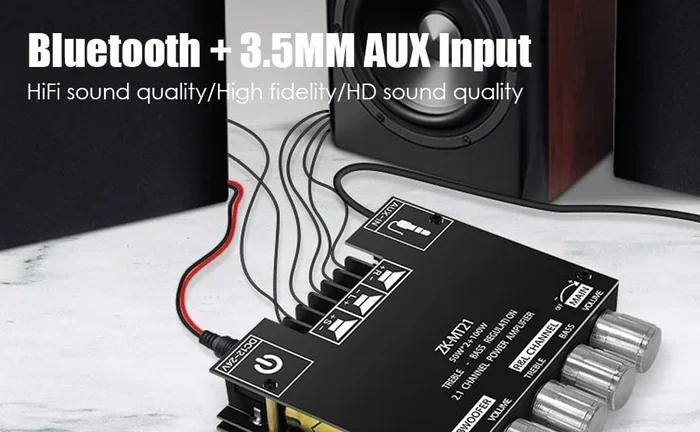
Do Bluetooth Speakers Have Built In Amplifiers Inside
Yes, Bluetooth speakers do have built-in amplifiers inside them. These small but powerful amps boost the audio signal so your speaker can produce clear, loud sound without needing external equipment. Understanding how these amplifiers work helps you choose the right Bluetooth speaker for your needs.
This is a comprehensive guide about Do Bluetooth Speakers Have Built In Amplifiers.
Key Takeaways
- All Bluetooth speakers include a built-in amplifier: Without one, they simply cannot produce sound at usable volumes.
- Class D amplifiers are the most common: They are small, efficient, and generate very little heat inside portable speakers.
- Speaker driver size affects amplification needs: Larger drivers need more power, which means a stronger internal amp.
- Battery life is directly tied to the amplifier: More powerful amps drain the battery faster, so there is always a trade-off.
- Not all amplifiers are equal: Cheap speakers often use low-quality amps that distort at higher volumes.
- You can connect external amplifiers: Some users upgrade their setup by pairing a Bluetooth speaker with an external amp for richer sound.
- Check wattage and driver size before buying: These two specs tell you most of what you need to know about amplification quality.
[FEATURED_IMAGE_PLACEHOLDER]
Do Bluetooth Speakers Have Built-In Amplifiers Inside?
The short answer is yes. Every Bluetooth speaker you have ever used contains a built-in amplifier. Without that tiny electronic component, your speaker would be nothing more than a silent paper cone and magnet. The amplifier takes the weak digital signal from your phone and boosts it into something powerful enough to move air and create the music you hear.
It is easy to take this for granted. You press play on your phone, and sound comes out. But behind that simple moment is a fascinating chain of events. The digital audio file travels via Bluetooth connectivity to your speaker. The speaker’s internal circuitry converts that digital signal into an analog one. Then the built-in amplifier powers up that analog signal and sends it to the speaker driver. The driver moves back and forth, pushing air, and that movement creates the sound waves you enjoy.
Understanding how this works helps you make smarter buying decisions. It also explains why some speakers sound better than others, even when they cost the same price. The amplifier is the hidden heart of every portable Bluetooth speaker, and it deserves your attention.
You might also wonder whether your Bluetooth headphones work the same way. They do. In fact, most wireless audio devices rely on internal amplifiers to deliver sound. If you are curious about how Bluetooth audio reaches different devices, check out how Bluetooth headphones connect to devices like Roku for a deeper look at the technology.
How Do Bluetooth Speakers Amplify Sound?
The Role of the Amplifier Chip
Inside every Bluetooth speaker sits a small amplifier chip. This chip is sometimes called a Class D amplifier, and it is the workhorse of modern portable audio. Its job is simple but critical. It takes a low-power electrical signal and turns it into a high-power signal that can drive a speaker driver.
Class D amplifiers are popular because they are incredibly efficient. They use less battery power and produce very little heat. This is why your rechargeable Bluetooth speaker can play music for hours without dying or getting hot to the touch. Older amplifier designs, like Class A or Class AB, waste more energy as heat. They are bulkier and less suited for portable devices.
Here is how the process works step by step:
- Your phone sends a digital audio signal through Bluetooth.
- The speaker’s Bluetooth receiver picks up that signal.
- A digital-to-analog converter (DAC) changes the signal into analog form.
- The amplifier chip boosts the analog signal to speaker level.
- The boosted signal travels to the speaker driver.
- The driver vibrates and produces sound waves.
Each step matters. If any one part is weak, the final sound suffers. The amplifier quality often makes the biggest difference between a cheap speaker and an expensive one.
Why Amplifier Size Matters
You might think bigger amplifiers are always better. That is not always true in the world of portable Bluetooth speakers. The amplifier must fit inside a compact housing. Engineers design these circuits to be as small as possible without sacrificing too much performance.
A larger amplifier generally means more power output, measured in watts. More watts usually mean louder sound and better handling of bass frequencies. But bigger amps also take up more space and drain the battery faster. This is why speaker designers must balance power, size, and battery life carefully.
Think of it like a car engine. A bigger engine gives you more speed, but it also uses more fuel. The same trade-off applies to Bluetooth speaker amplifiers. Premium speakers often use larger, better-built amplifier circuits. Budget speakers cut corners here, and you can hear the difference.
Why Built-In Amplifiers Matter for Sound Quality
The amplifier inside your speaker has a huge impact on sound quality. A good built-in amplifier delivers clean, distortion-free sound even at high volumes. A poor one starts to crackle and distort the moment you turn the volume past halfway.
Here are the key ways amplifiers affect your listening experience:
- Volume capability: A stronger amp pushes more power to the driver, producing louder sound without distortion.
- Bass response: Low-frequency sounds need more power to reproduce accurately. A weak amp struggles with bass.
- Clarity at high volumes: Quality amps maintain clarity even when the volume is cranked up.
- Signal-to-noise ratio: Better amps produce less background hiss or static noise.
- Dynamic range: Good amplifiers handle sudden changes in volume and intensity smoothly.
When you are shopping for a portable wireless speaker, pay attention to the amplifier specifications. Look at wattage, driver size, and any mentions of amplifier class. These details tell you a lot about what to expect from the sound.
Common Problems Caused by Weak Amplifiers
Not all Bluetooth speakers are created equal. Some use very basic amplifier circuits to keep costs low. Here are the problems you might encounter:
- Distortion at high volume: The sound gets fuzzy or crackly when you turn it up.
- Weak bass: Low frequencies sound thin or disappear entirely.
- Background noise: A faint hiss or hum is audible during quiet passages.
- Clipping: The sound cuts out or sounds harsh during loud moments in music.
- Rapid battery drain: A poorly designed amp wastes power, shortening playback time.
If you notice any of these issues, the amplifier is likely the culprit. It is not always the speaker driver. Many people blame the driver when the real problem is a weak or low-quality internal amplifier.
Types of Amplifiers Used in Bluetooth Speakers
Not all amplifiers are the same. Different designs offer different benefits. Here is a look at the most common types found inside Bluetooth speakers today.
Class D Amplifiers
Class D amplifiers dominate the portable speaker market. They are highly efficient, meaning they convert most of their power into sound rather than heat. This efficiency is why your rechargeable Bluetooth speaker can last for hours on a single charge.
Class D amps are also very compact. They fit easily into small speaker housings without taking up too much space. Most modern portable Bluetooth speakers from brands like JBL, Bose, and Anker use Class D amplifier designs.
Class AB Amplifiers
Class AB amplifiers are an older design but still found in some higher-end Bluetooth speakers. They offer excellent sound quality and low distortion. However, they are less efficient than Class D amps and generate more heat.
You will find Class AB amplifiers in larger, non-portable Bluetooth speakers that can handle more power and have better cooling. These speakers often sound warmer and more natural, but they are bulkier and use more energy.
Class T Amplifiers
Class T amplifiers are a hybrid design. They combine the efficiency of Class D with the sound quality of Class AB. Some premium Bluetooth speakers use Class T amps to deliver excellent performance in a compact form factor.
These amplifiers are less common than Class D but offer a compelling middle ground. If you see a speaker that claims Class T amplification, it is likely targeting audiophile-level sound in a portable package.
Class G and Class H Amplifiers
These are more advanced designs that adjust their power supply based on the audio signal. They are more efficient than standard Class AB amps and are sometimes found in high-end wireless speakers. However, they are rare in the consumer Bluetooth speaker market.
| Amplifier Class | Efficiency | Sound Quality | Common Use |
|---|---|---|---|
| Class D | Very High | Good | Most portable Bluetooth speakers |
| Class AB | Moderate | Excellent | Larger, premium Bluetooth speakers |
| Class T | High | Very Good | Mid-range to premium portable speakers |
| Class G/H | Very High | Excellent | High-end specialty speakers |
Do All Bluetooth Speakers Have Amplifiers?
The answer is yes. Every Bluetooth speaker, from the cheapest novelty item to the most expensive premium model, contains an internal amplifier. There is no such thing as a Bluetooth speaker without one. The amplifier is a non-negotiable component of the design.
That said, the quality of that amplifier varies enormously. A $15 Bluetooth speaker from a gas station has a very basic amplifier. A $300 premium speaker has a carefully designed amplifier with better components and more power output. Both have amplifiers, but they are worlds apart in performance.
You might also wonder about passive Bluetooth speakers. These are speakers that do not have their own built-in battery or amplifier. They need to be plugged into an external power source or connected to an external amplifier. A true passive speaker does not have a built-in amp. But most speakers sold today as “Bluetooth speakers” are active speakers with built-in amplifiers and batteries.
If you are curious about how Bluetooth connects to other audio devices, you might enjoy reading about using Bluetooth to play radio, which explores how Bluetooth audio signals work across different devices.
How to Tell If a Speaker Has a Good Amplifier
You do not need to open the speaker to evaluate its amplifier. Here are practical ways to assess amplification quality before you buy:
- Check the wattage rating: Higher wattage generally means a more powerful amplifier.
- Look at driver size: Larger drivers (like 6.5 inches or more) usually pair with stronger amps.
- Read reviews for distortion comments: If reviewers mention distortion at high volume, the amp is likely weak.
- Check battery life claims: Efficient amplifiers contribute to longer battery life.
- Look for amplifier class information: Reputable brands often list the amplifier class in product specs.
Can You Upgrade the Amplifier in a Bluetooth Speaker?
For most Bluetooth speakers, the answer is no. The amplifier is soldered onto the internal circuit board. Opening the speaker will void your warranty, and replacing the amp requires advanced soldering skills and compatible replacement parts.
However, there are workarounds if you want better amplification. You can connect your Bluetooth speaker to an external amplifier using a 3.5mm aux cable or RCA connection. This setup bypasses the internal amp entirely and lets you use a dedicated external amplifier for superior sound.
Some audiophiles also use Bluetooth transmitters with their existing stereo systems. This lets you stream music wirelessly while using the superior amplification of a home stereo system. It is a great way to get the best of both worlds.
If you use Bluetooth headphones and want to understand how they handle audio differently, you can explore how Bluetooth headphones handle audio input and output for more insights.
Quick Tips for Getting the Best Sound from Your Bluetooth Speaker
- Keep your speaker fully charged. A low battery can cause the amplifier to underperform and produce weak or distorted sound.
- Place the speaker on a hard surface. Soft surfaces like beds or cushions absorb bass and muffle the sound.
- Don’t push the volume past 80%. Most Bluetooth speakers sound their best at moderate volumes. Pushing past 80% often introduces distortion.
- Keep the speaker close to your listening position. Bluetooth range is not the issue here. Sound quality drops as you move further from the speaker.
- Clean the speaker grille regularly. Dust and debris can block the driver and reduce sound quality.
- Match the speaker to the room size. A small portable speaker in a large room will always sound weak, regardless of amplifier quality.
- Use high-quality audio files. Low-quality compressed audio files limit what even the best amplifier can deliver.
Expert Insights on Bluetooth Speaker Amplifiers
Audio engineers often say that the amplifier is the soul of a speaker. The driver gets all the attention, but the amplifier determines how well that driver performs. A great driver paired with a poor amplifier will still sound mediocre. A good amplifier paired with an average driver can still produce surprisingly pleasant sound.
When you are evaluating Bluetooth speakers, do not focus only on driver size or brand name. Look at the full package. What class amplifier does it use? How many watts does it output? Does the manufacturer provide frequency response specs? These details reveal a lot about the internal amplification quality.
Some brands invest heavily in custom amplifier designs. They tune the amplifier specifically for their speaker drivers. This is why two speakers with the same driver size can sound very different. The amplifier tuning makes all the difference.
If you are interested in how Bluetooth technology connects to other smart home devices, check out using Alexa as a Bluetooth speaker for your TV to learn more about Bluetooth audio applications in the home.
Final Thoughts
Bluetooth speakers do have built-in amplifiers inside them, and those amplifiers are essential to everything you love about portable wireless audio. The amplifier takes a tiny Bluetooth signal and turns it into music you can fill a room with. Understanding how these amplifiers work helps you appreciate the engineering inside every speaker you own.
When you are shopping for your next Bluetooth speaker, remember to look beyond the brand name and price tag. Check the amplifier class, the wattage, and the driver size. These specs tell the real story of what you can expect from the sound quality.
A good amplifier makes everything better. Your music sounds clearer. Your bass hits harder. Your volume stays clean even when you turn it up. The next time you press play on your favorite playlist, take a moment to appreciate the tiny amplifier working hard inside your speaker to bring that music to life.
Invest in a speaker with a quality amplifier, and you will hear the difference every single time you press play.
Frequently Asked Questions
Do all Bluetooth speakers have amplifiers inside?
Yes, every Bluetooth speaker has a built-in amplifier. Without an amplifier, the speaker cannot boost the weak Bluetooth signal into powerful sound. Even the cheapest Bluetooth speakers include a basic amplifier circuit.
What type of amplifier is most common in Bluetooth speakers?
Class D amplifiers are the most common type found in Bluetooth speakers. They are highly efficient, compact, and produce very little heat. This makes them perfect for portable wireless speakers that need long battery life.
Can a Bluetooth speaker work without an amplifier?
No, a Bluetooth speaker cannot produce usable sound without an amplifier. The amplifier boosts the weak audio signal to a level that can drive the speaker driver. Without it, you would hear nothing or only a faint whisper of sound.
Does a better amplifier mean louder sound?
A better amplifier generally means louder and cleaner sound. It can deliver more power to the speaker driver without distorting. However, the driver size and speaker design also play important roles in overall volume and sound quality.
How can I tell if my Bluetooth speaker amplifier is failing?
Signs of a failing amplifier include distortion at low volumes, crackling sounds, reduced volume output, and the speaker cutting out intermittently. If you notice these issues, the amplifier circuit may be damaged and the speaker may need professional repair.
Can I connect an external amplifier to my Bluetooth speaker?
Yes, you can connect an external amplifier using an aux cable or RCA connection. This bypasses the internal amplifier and gives you access to much more powerful sound. It is a popular upgrade for audiophiles who want better performance from their Bluetooth speaker setup.