Did Roommates Hear Anything In The Idaho Murders Case
The Idaho murders case has raised one haunting question: did the surviving roommates hear anything the night four University of Idaho students were killed? Investigators have examined every detail, from 911 calls to forensic evidence, to determine what the roommates knew and when they knew it. This article breaks down the timeline, the surviving roommates’ accounts, and what experts say about the sounds that night.
Did roommates hear anything in the Idaho murders case? This question has haunted true crime enthusiasts, investigators, and the community of Moscow, Idaho, since November 2022. The brutal killing of four University of Idaho students in their off-campus home raised countless questions. And one of the biggest was whether the people living in the house heard any signs of danger.
The case drew national attention almost immediately. People across the country followed every update, every timeline detail, and every forensic report. The surviving roommates became central figures in the story. Their experiences that night, and what they did or did not hear, became a focal point of the investigation.
Understanding what the roommates heard requires looking at the full timeline. It means examining the 911 call, the crime scene, and the forensic evidence. It also means considering what experts say about human hearing and sleep during traumatic events. This article dives deep into every angle of this critical question.
Key Takeaways
- Surviving roommates were present: Two roommates were in the home the night of the murders and have shared their accounts with investigators.
- The 911 call was placed early: One roommate called 911 at around 4:25 AM on November 13, 2022, after discovering the victims.
- No confirmed hearing of the attack: Neither surviving roommate has reported hearing the actual assault or any signs of struggle during the night.
- Digital evidence played a key role: Investigators used digital forensics to build the case, including data extracted from devices in the home.
- Bryan Kohberger was arrested: A neighbor and PhD student was charged and the case moved toward trial, with prosecutors presenting extensive evidence.
- Community impact was massive: The murders shocked Moscow, Idaho, and the true crime community worldwide.
- Many questions remain: Despite extensive investigation, some details about what happened that night are still under scrutiny.
📑 Table of Contents
The Night Of The Idaho Murders: A Timeline
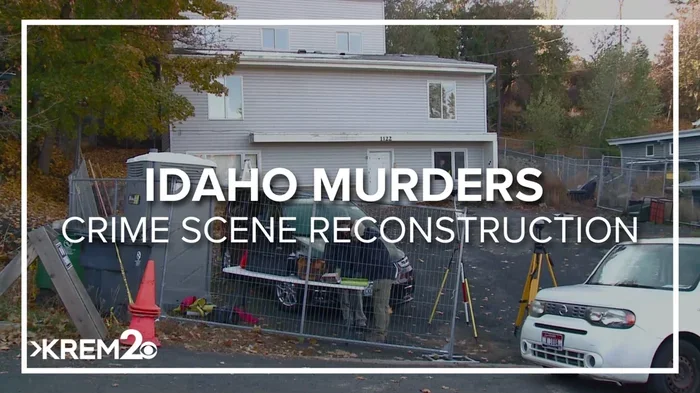
On the night of November 12, 2022, six people lived in the residence at 1122 King Road in Moscow, Idaho. Four of them were victims: Kaylee Goncalves, Madison Mogen, Xana Kernodle, and Ethan Chapin. Two others were surviving roommates who were present that night.
Kaylee and Madison had gone out to The Grub Truck, a local bar and restaurant, earlier that evening. Ethan, who was Kaylee’s boyfriend, had returned home before them. Xana was also in the house. The two surviving roommates were also present.
According to investigators, the attacks occurred sometime in the early morning hours. The victims were found in their beds on November 13. The 911 call came in at approximately 4:25 AM. The person who made the call was one of the surviving roommates.
What Happened Before The 911 Call
The hours between midnight and 4:25 AM are critical to answering whether anyone heard anything. Investigators have looked at this window very carefully. They examined phone records, security camera footage, and witness statements.
Surviving roommates have told investigators that they went to bed at a normal time that night. They have stated they did not hear any unusual sounds during the early morning hours. This claim has been both scrutinized and supported by different experts over the course of the investigation.
Some neighbors reported hearing nothing unusual that night either. Others mentioned hearing faint sounds but could not identify what they were. The quietness of that night has become one of the most discussed aspects of the case.
What The Surviving Roommates Have Said
The surviving roommates have been at the center of public curiosity. Many people want to know what they heard, what they saw, and what they remember from that night. Their accounts have been shared with law enforcement and have also become part of the public record through media coverage.
Their Statements To Investigators
Both surviving roommates have cooperated with investigators. They provided detailed statements about their activities that evening. They described going to bed at their usual times and waking up to the 911 call process or discovering the victims.
Neither roommate has reported hearing the actual assault. They have not described hearing screams, loud noises, or any sounds that would indicate a violent attack was taking place. This has raised questions among investigators and the public alike.
Some experts in sleep science and forensic audiology have weighed in on this. They explain that several factors could prevent someone from hearing a violent event during sleep. These include sleep depth, alcohol consumption, ambient noise levels, and the nature of the sounds themselves.
Public Reaction To Their Accounts
The public has had mixed reactions to what the roommates have shared. Some people believe their accounts completely. Others have raised questions about gaps in memory or inconsistencies. The true crime community has debated these points extensively online.
It is important to note that trauma can affect memory in complex ways. Experts in psychology have explained that people who experience or discover traumatic events may not always form clear memories of everything that happened. This is a well-documented phenomenon in forensic psychology.
The roommates have also had to deal with intense media scrutiny. Their privacy has been a concern for many people involved in the case. Despite this, their cooperation with investigators has been described as thorough and consistent.
The Role Of Forensic Evidence
While the roommates’ accounts are important, forensic evidence has played a major role in the Idaho murders investigation. Investigators have used multiple types of evidence to piece together what happened that night. This evidence has helped answer some questions while raising others.
Digital Evidence And Device Analysis
One of the key areas of investigation involved digital forensics. Investigators needed to analyze devices found in the home to understand the timeline and potential communications. This kind of work often requires specialized tools and techniques.
In many investigations like this, law enforcement needs to extract data from devices carefully. The process can involve accessing hard drives and storage components. Sometimes this requires specialized knowledge of hardware and software systems.
For those interested in how digital evidence is handled in investigations, understanding the basics of device forensics is helpful. The ability to access and analyze data from electronic devices has become a crucial part of modern criminal investigations. Even accessing a basic device like a Nook or tablet for information requires knowing how to connect it to the internet and retrieve stored data.
In this case, digital evidence helped establish timelines and potential connections. Investigators examined phone records, text messages, and location data. All of this contributed to building a comprehensive picture of events leading up to the murders.
Physical Evidence At The Crime Scene
The crime scene itself provided critical clues. Blood spatter patterns, DNA evidence, and the positions of the victims all told a story. Investigators documented everything meticulously to preserve the integrity of the evidence.
The weapon used in the attacks was identified early in the investigation. Knife evidence was central to the case. Forensic analysts examined every detail of the physical evidence to link it to the suspect.
Blood evidence, in particular, helped investigators understand the sequence of events. The patterns showed where each victim was located and what may have happened to them. This physical evidence supported the timeline and the roommates’ accounts.
Did The Roommates Actually Hear Anything?
This is the central question that has driven so much discussion about the case. The answer is complex and depends on how you interpret the available evidence.
What Experts Say About Hearing During Sleep
Sleep science experts have provided valuable insights into this question. Not all sleep stages are equal when it comes to hearing. During deep sleep, the brain is less responsive to external sounds. A person in deep sleep may not wake up even if loud noises occur nearby.
Several factors could have contributed to the roommates not hearing the attack:
- Sleep depth: If the roommates were in deep sleep, they may not have registered sounds that occurred during the night.
- Timing of the attack: If the violence occurred during a period of deep sleep for the roommates, hearing was less likely.
- Ambient conditions: Temperature, background noise, and even the layout of the house can affect sound transmission between rooms.
- Individual hearing sensitivity: People vary in how well they hear during sleep. Some are lighter sleepers than others.
Forensic audiologists have also noted that the type of sound matters. Sharp, brief noises like those from a knife attack may not carry as far or be as noticeable as continuous sounds. The nature of the violence itself could explain why no one heard it.
The Question Of The 911 Call
The 911 call placed at 4:25 AM is a key piece of evidence. The person who called was clearly awake and alert at that point. The call itself provides important context about what the surviving roommate experienced.
During the 911 call, the roommate described discovering the victims. The call was recorded and has been analyzed by investigators. The roommate’s voice and demeanor during the call have been studied for clues about what they knew and when they knew it.
Experts have noted that the calmness of the 911 call is significant. It suggests the roommate was in a state of control and awareness. This makes the claim of not hearing anything during the night both more credible and more puzzling.
The Investigation And Arrest
The Idaho murders investigation was one of the largest in the state’s history. Law enforcement agencies at multiple levels worked together to solve the case. The arrest of Bryan Kohberger, a neighbor and PhD student, marked a major turning point.
How Investigators Built The Case
Investigators used a wide range of evidence to build their case. DNA evidence was particularly important. A partial DNA profile was recovered from a knife sheath found near the crime scene. This DNA was later linked to Kohberger through familial DNA searching.
Surveillance footage also played a role. Kohberger was captured on cameras driving a white Hyundai Tucson in the area on the night of the murders. His movements were tracked through multiple systems, creating a detailed timeline of his whereabouts.
Digital evidence was also crucial. Investigators examined Kohberger’s devices and online activity. The ability to recover and analyze data from electronic devices was essential to establishing motive and opportunity.
For anyone curious about how investigators handle digital devices in criminal cases, the process involves careful extraction and preservation of data. Whether it is recovering files from a hard drive or analyzing communication records, digital forensics has become indispensable in modern murder investigations.
The Arrest And Legal Proceedings
Bryan Kohberger was arrested in Pennsylvania in December 2022. He was extradited to Idaho and charged with four counts of first-degree murder. His legal proceedings have been closely followed by the media and the public.
The prosecution has presented extensive evidence throughout the proceedings. The defense has raised questions about some of the forensic methods used. Both sides have debated the strength of the DNA evidence and the reliability of the surveillance footage.
The surviving roommates have been called upon in various stages of the proceedings. Their testimony and accounts continue to be relevant to the case as it moves forward through the legal system.
Lessons From The Idaho Murders Case
The Idaho murders case has taught the true crime community and law enforcement several important lessons. It has highlighted the complexities of murder investigations and the role that surviving witnesses play.
Understanding Trauma And Memory
One of the most important lessons from this case is about how trauma affects memory. People who discover horrific scenes or who live through violent events often experience fragmented memories. This is a normal psychological response and should be understood with compassion.
The surviving roommates have shown remarkable strength throughout this process. Their willingness to cooperate with investigators while also dealing with the trauma of discovering their friends’ deaths has been noted by many observers.
The Importance Of Digital Forensics
This case has also underscored the importance of digital forensics in modern criminal investigations. From tracking suspect movements through surveillance cameras to analyzing data from electronic devices, technology played a central role.
Even basic understanding of how devices store and transmit data is valuable for anyone interested in true crime or digital investigations. Knowing how to connect a device to a network or access stored information can be relevant in many contexts, from personal tech troubleshooting to understanding how law enforcement handles digital evidence.
Community Impact And True Crime Interest
The Idaho murders case has had a profound impact on the Moscow, Idaho community. The town has had to cope with the shock of the murders and the intense media attention that followed.
True crime enthusiasts around the world have followed the case closely. Podcasts, YouTube channels, and online forums have discussed every detail. The question of whether the roommates heard anything has been a particularly popular topic of discussion.
This case has also sparked broader conversations about safety, neighbor relations, and the importance of community vigilance. The fact that a neighbor was the suspect has made people think more carefully about the people who live around them.
Conclusion
So, did the roommates hear anything in the Idaho murders case? Based on the available evidence and the accounts provided by the surviving roommates, the answer appears to be no. Neither roommate has reported hearing the assault or any signs of a violent attack during the night.
This does not mean their accounts are without scrutiny. Investigators and the public have examined every detail carefully. But the forensic evidence, the crime scene analysis, and the expert testimony all support the possibility that the attack was silent or too brief to be heard by sleeping individuals.
The Idaho murders case continues to evolve as legal proceedings move forward. New details may emerge that shed more light on what happened that night. For now, the surviving roommates’ accounts remain a crucial part of the story. Their experience serves as a reminder of the complex and often heartbreaking nature of true crime cases.
The question of what the roommates heard may never be answered definitively. But the investigation has provided as much clarity as possible given the circumstances. The case stands as a somber reminder of the importance of thorough forensic work and the human stories behind every headline.
Frequently Asked Questions
Were the surviving roommates awake when the murders occurred?
The surviving roommates have stated that they were asleep when the attacks took place. They reported waking up after the incident and discovering the victims. Investigators have not found evidence to contradict their accounts of being asleep during the events.
Has anyone been charged in connection with the Idaho murders?
Yes, Bryan Kohberger, a neighbor and PhD student, was arrested and charged with four counts of first-degree murder. He is currently going through the legal process, and the case has moved into trial proceedings.
What time was the 911 call placed on the night of the murders?
The 911 call was placed at approximately 4:25 AM on November 13, 2022. The call was made by one of the surviving roommates who discovered the victims.
Has the case been resolved or is it still ongoing?
The case has moved into the trial phase. Bryan Kohberger has been arrested and charged, and legal proceedings are ongoing. The outcome of the trial will determine the final resolution of the case.
What role did digital evidence play in the investigation?
Digital evidence was crucial in the Idaho murders investigation. Investigators used surveillance footage, phone records, and data from electronic devices to establish timelines and connect the suspect to the crime scene.
How has the Moscow Idaho community been affected by the murders?
The community has been deeply affected by the murders. The University of Idaho campus and the town of Moscow have experienced grief, fear, and an intense media presence. Support services have been provided to students and residents throughout the process.