Can You Get Wi Fi On Nyc Subway Here Is The Answer
Yes, you can get Wi-Fi on the NYC Subway, but the experience varies by line and station. Can You Get Wi-Fi on NYC Subway depends on the MTA’s WiFi network, which covers many stations but has gaps. Read on to learn how to connect, what speeds to expect, and where the dead zones are.
Every day, millions of people ride the New York City subway. They commute to work, run errands, and explore the city. One question comes up again and again: Can You Get Wi-Fi on NYC Subway? The short answer is yes. But the full story is more interesting. The subway WiFi experience is not the same everywhere. Some stations have strong signals. Others drop you into a dead zone the moment the train enters a tunnel. This guide breaks it all down. You will learn how the network works, how to connect, what speeds you can expect, and what the future holds for underground internet in the city that never sleeps.
The MTA WiFi network has grown over the years. It is part of a larger effort to bring city subway connectivity to the masses. Yet many riders still face frustration. The subway Wi-Fi coverage is uneven. The login process can be confusing. And the speed often falls short of what you need. Understanding the system helps you make the most of it. Whether you are a daily commuter or a tourist navigating the New York City subway service, knowing what to expect saves time and stress. Let us dive into the details of subway internet access below ground.
Key Takeaways
- WiFi is available on many subway lines: The MTA’s WiFi network covers numerous stations, but not all.
- Connection is free: You do not need to pay for subway internet, just select the network and accept terms.
- Speed can be slow: Underground WiFi often has lower speeds than home or office connections.
- Dead zones exist: Some tunnels and stations lack coverage, especially on older lines.
- You can use offline maps: Download maps beforehand to avoid losing your way when WiFi drops.
- The future looks brighter: Plans for expanded connectivity aim to fill the gaps.
📑 Table of Contents
The Current State of WiFi on the NYC Subway
A Brief History of Subway WiFi
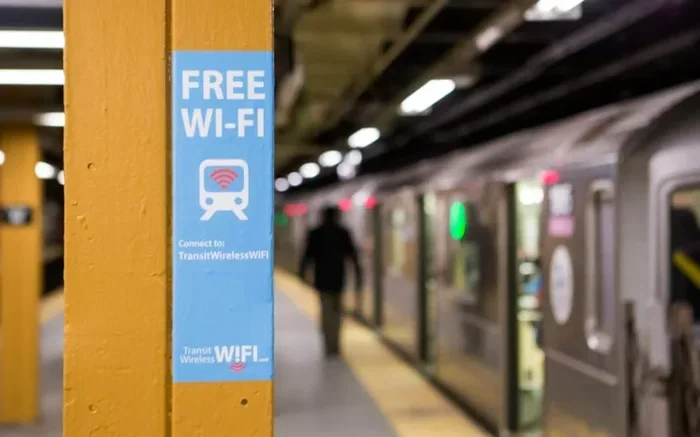
The idea of underground WiFi in NYC is not new. The MTA started rolling out wireless service in the late 2000s. The goal was simple. Keep people connected while they wait for trains and ride through tunnels. The network relies on a system of antennas and fiber-optic cables. These run along the tracks and inside stations. The MTA Wi-Fi network is built by Transit Wireless, a private company. They installed the hardware across hundreds of stations. The project took years to complete. It continues to evolve today.
Early on, subway WiFi was limited to a few lines. The first phase covered the IND and BMT lines in Brooklyn and Queens. Then the service expanded to the IRT lines in Manhattan. Today, the majority of underground and many above-ground stations have some form of WiFi on NYC trains. But coverage is not uniform. The newer stations tend to have better infrastructure. The older ones sometimes lag behind. This patchwork effect is why Can You Get Wi-Fi on NYC Subway still feels like a mystery to many riders.
Which Lines and Stations Have Coverage
The subway Wi-Fi coverage map is not always easy to find. However, the MTA provides some general guidance. Most stations in Manhattan have WiFi. Many stations in Brooklyn and Queens also have it. The Staten Island Railway is a separate system and has its own connectivity plans. Here are some general rules:
- IRT lines (1, 2, 3, 4, 5, 6, 7): Most stations have WiFi. The coverage is decent but can weaken in deep tunnels.
- BMT and IND lines (A, C, E, J, L, M, N, Q, R, W): These lines have good coverage in many stations. The L train, for example, has WiFi in most of its underground stops.
- PATH trains: These are not part of the MTA system. They have their own WiFi, which is generally reliable.
- Station depth matters: Deeper stations sometimes have weaker signals. The stations near the outer boroughs can be hit or miss.
If you are wondering about a specific stop, the best approach is to check the NYC subway stations WiFi coverage list on the MTA website. It is not perfect, but it gives you a starting point. Remember that even if a station has WiFi, the signal inside the train can drop as you move through tunnels. This leads to the next big question: how do you actually connect?
How to Connect to Subway WiFi
The Step-by-Step Connection Process
Connecting to subway internet access is straightforward once you know the steps. Follow this simple guide to get online:
- Open your phone or laptop WiFi settings.
- Look for a network named MTA WiFi or NYC Subway WiFi.
- Select the network. Do not worry; it is free.
- A browser window should pop up automatically.
- If it does not, open any web browser and visit any website.
- You will see a login or terms-of-use page.
- Accept the terms and click connect.
That is it. You are now on the MTA free WiFi network. The process is similar to connecting at an airport or a coffee shop. The key difference is that the signal can be unstable. You might connect at one station and lose the signal a minute later. This is normal. The underground WiFi New York system is designed for basic tasks like browsing, checking email, or reading news. It is not built for heavy downloads or video calls.
What You Need to Know Before You Log In
Before you connect, keep a few things in mind. First, the network is open and unsecured. Do not enter sensitive passwords or access bank accounts on it. Use a VPN if you handle private data. Second, the network can be slow during rush hour. Thousands of people share the same bandwidth. Third, some older devices may not see the network at all. The WiFi standard used is 802.11n, which is older but still functional. If your device only supports the newest standards, it should still work in most cases. Just do not expect lightning-fast subway Wi-Fi speed on a crowded train.
WiFi Speed and Reliability Underground
Real-World Speed Tests
Speed is the biggest complaint about subway WiFi. Many riders have tested the connection. The results vary widely. In a station with a strong signal, you might see download speeds of 10 to 20 Mbps. That is enough for streaming music or browsing social media. In a tunnel, speeds can drop to 1 or 2 Mbps. Sometimes they fall to zero. The subway Wi-Fi speed test results depend on several factors:
- Station depth: Shallow stations often have better signals than deep ones.
- Train speed: As the train moves, the signal hops between antennas. This can cause brief drops.
- Crowd density: More users mean slower speeds for everyone.
- Line age: Newer lines have better infrastructure than older ones.
For most people, the connection is good enough for quick tasks. You can send a text, check a map, or read an article. Streaming a video is a gamble. It will buffer and stall. If you need reliable underground internet for work, you should not depend on subway WiFi alone. Use it for light tasks and plan ahead.
Why Underground Internet Can Be Slow
The physics of underground WiFi is tricky. Radio signals struggle to penetrate deep into the earth. The tunnels are narrow and lined with concrete. This blocks and reflects signals. The MTA WiFi system uses small cells and antennas placed along the tracks. These bounce the signal to your device. But the farther you are from an antenna, the weaker the connection becomes. The tunnels between stations are the hardest places to get a signal. That is why Can You Get Wi-Fi on NYC Subway often means “Can You Get Wi-Fi on NYC Subway for a few seconds at a time.”
Another factor is the shared network. The MTA does not have unlimited backhaul capacity. The fiber-optic cables that feed the stations have a set amount of data they can carry. When thousands of people connect at once, the pipe gets full. This is why speeds slow down during the morning and evening rush. It is a shared resource, and it behaves like one.
Where WiFi Fails: Dead Zones and Black Spots
The Tunnels Without Signal
Every subway rider knows the feeling. You are on the train, connected, scrolling through your feed. Then the train enters a tunnel. The signal bars drop to zero. You are offline for a minute or two. This is the most common WiFi dead zone subway experience. The tunnels between stations are the biggest black spots. The antennas on the tracks do not cover every inch of the tunnel floor. There are gaps. The deeper the tunnel, the worse the gaps can be.
The subway WiFi not working problem is especially bad on older lines. The IND Eighth Avenue Line, for example, has long stretches of tunnel where the signal fades. The BMT Fourth Avenue Line also has its weak spots. These are not design flaws. They are simply the limits of current technology. The MTA and Transit Wireless are working to fill these gaps, but it takes time and money.
Stations That Still Lack Coverage
While most stations have WiFi, a handful still do not. The MTA has been rolling out service station by station. Some stations in outer boroughs are still waiting for installation. The NYC subway Wi-Fi rollout prioritized busy Manhattan stations first. This made sense for ridership numbers. But it left some communities with no access to city subway connectivity. If you are traveling to a less busy station, check the MTA coverage map. Do not assume you will have signal just because the station is underground.
The good news is that the list of uncovered stations is shrinking every year. The MTA has committed to expanding the network. The goal is full coverage across the entire system. That day is not here yet. But it is getting closer. Riders should stay informed about the subway WiFi coverage map updates. The MTA releases these periodically.
Tips for Getting the Best WiFi Experience
Download Before You Ride
The best way to beat subway WiFi limitations is to prepare ahead of time. Download the things you need before you leave home. This includes maps, podcasts, music, and articles. The NYC subway WiFi network is not reliable enough for streaming or large downloads. Use your home or office WiFi to get everything ready. Then you can enjoy your ride without worrying about the signal.
Offline maps are especially useful. Google Maps and Apple Maps both allow you to download offline areas. This means you can navigate the city even when underground WiFi New York fails. You will not get lost in the tunnels. You will also save battery life, since your phone will not keep searching for a signal. This small step makes a big difference for daily commuters.
Use Offline Apps and Maps
Beyond maps, many apps work offline. Language translation apps, note-taking apps, and reading apps can all function without a connection. If you are a tourist, download a translation app before you board the New York City subway service. You will be able to ask for directions or read signs even in a dead zone. For commuters, offline note-taking apps like Evernote or Apple Notes let you jot down ideas without needing the internet. The key is to treat the subway as a place to consume pre-downloaded content, not a place to rely on live data.
Another tip is to use lightweight apps. These use less data and load faster on slow connections. The subway Wi-Fi speed is often slow, so a simple text-based app will work better than a heavy image-heavy one. Switch to a data-saving mode on your browser if you need to look something up. This can help you get through a page even when the signal is weak.
The Future of WiFi on the NYC Subway
MTA’s Expansion Plans
The MTA is not resting on its laurels. The agency has plans to expand and improve subway internet access. The next phase of the WiFi rollout targets the remaining uncovered stations. The MTA is also working on a system-wide upgrade to improve capacity. This means faster speeds and fewer dead zones. The goal is to make Can You Get Wi-Fi on NYC Subway a question with a simple and consistent answer: yes, everywhere.
Transit Wireless continues to install new equipment. They are adding more antennas and upgrading the fiber-optic backbone. The work is happening behind the scenes. Most riders do not see it. But it is making a difference. The MTA WiFi network of the future will be faster and more reliable. It will support more users and handle more data. The vision is a fully connected subway system where staying online is as easy as it is on the street.
What Commuters Are Asking For
Riders have strong opinions about subway WiFi. The most common request is for faster and more consistent speeds. People want to be able to stream a podcast or join a video call without frustration. They also want better coverage in the tunnels. Some commuters are calling for a dedicated underground internet network that prioritizes transit users. The MTA listens to these requests. Public feedback shapes the rollout plans.
Another request is for better login experiences. The current system requires you to visit a webpage every time you connect. This can be annoying. Some riders want a seamless login that works automatically. The MTA is exploring ways to simplify this. The future of subway Wi-Fi coverage is not just about signal strength. It is also about user experience. The MTA wants the process to be as easy as connecting to a home network.
The push for better subway connectivity is part of a larger trend. Cities around the world are making public transit a connected place. London, Seoul, and Tokyo already have advanced subway WiFi systems. NYC is catching up. The investment in transit Wi-Fi pays off in many ways. It keeps riders productive. It makes the subway more attractive compared to driving. And it helps the city stay connected in an emergency.
Conclusion
Can You Get Wi-Fi on NYC Subway? Yes, you can. The MTA WiFi network covers many stations and lines. It is free to use and easy to connect to. But the experience is not uniform. Speed varies, dead zones exist, and some stations still lack coverage. You can make the most of subway internet access by downloading content ahead of time and using offline tools. The future looks promising. The MTA is expanding the network and working to fill the gaps. For now, treat underground WiFi as a helpful bonus, not a guarantee. Plan ahead, stay patient, and you will stay connected on your ride through the city.
Frequently Asked Questions
Is subway WiFi in NYC completely free?
Yes, the MTA WiFi network is free for all riders. You do not need to pay any fee or subscribe to a service. Just connect to the network, accept the terms of use, and you are online. There are no hidden charges or data caps.
Why does my WiFi drop on the subway?
Your signal drops because the train moves through tunnels that have gaps in antenna coverage. The deeper the tunnel, the weaker the signal becomes. The WiFi network uses small cells along the tracks, and they cannot cover every inch of the tunnel perfectly. This is why you lose connection between stations.
Can I stream video on the NYC subway WiFi?
Streaming video is not reliable on the subway WiFi. The speeds are often too slow and the connection is unstable. You might be able to start a video, but it will likely buffer frequently. It is better to download videos before you ride and watch them offline.
Does the MTA WiFi work on all subway lines?
No, the MTA WiFi does not cover every line or station yet. The majority of underground stations in Manhattan have coverage. Many stations in Brooklyn and Queens also have it. However, some older lines and outer borough stations are still being upgraded or lack coverage entirely.
How do I find out if a station has WiFi?
You can check the MTA website for the subway WiFi coverage map. The map shows which stations have WiFi and which are still being worked on. You can also look for the WiFi icon on station signs. If you see the MTA WiFi logo, the station likely has coverage.
Is the subway WiFi secure to use?
The MTA WiFi network is open and not encrypted. This means it is not secure for sensitive activities like online banking or entering passwords. You should avoid accessing private accounts on the network. If you must, use a VPN to encrypt your connection. For casual browsing and reading, it is fine.