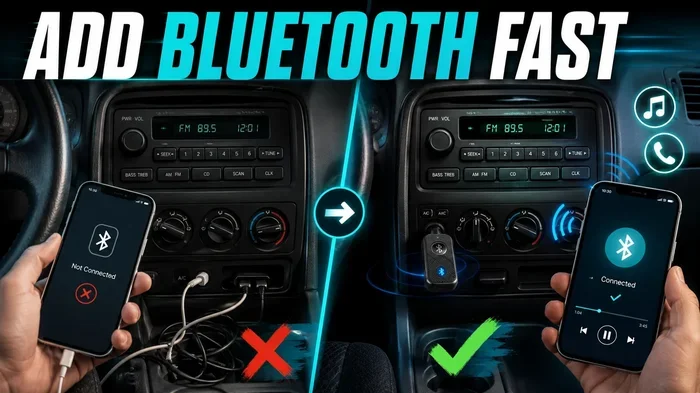
Can You Add Bluetooth To Any Vehicle Heres The Guide
Yes, you can add Bluetooth to any vehicle, regardless of its age or make. Whether your car has an old stereo or no audio input at all, several solutions let you stream music and make hands-free calls. This guide walks you through every option, from simple plug-and-play adapters to full stereo upgrades, so you can choose the best fit for your ride.
You are cruising down the road, and your favorite song comes on. But your car stereo is stuck in the past. No aux input. No Bluetooth. Just a dusty CD player and a fading radio signal. Sound familiar? If you have an older vehicle or a basic model without wireless connectivity, you are not alone. Many drivers wonder, can you add Bluetooth to any vehicle? The short answer is yes. The longer answer is even more encouraging. There are multiple ways to bring modern wireless features to any car, truck, or SUV on the road today.
Whether you drive a classic sedan from the 1990s or a newer model that simply lacks the latest tech, adding Bluetooth is easier than you think. You do not need to be a mechanic. You do not need to spend a fortune. And you do not need to replace your entire sound system. This guide breaks down every option, so you can find the best way to get wireless streaming in your vehicle. Let us dive in.
Key Takeaways
- Universal Compatibility: Bluetooth can be added to virtually any vehicle using adapters, FM transmitters, or new stereos.
- Multiple Solutions Exist: You can choose from FM transmitters, Bluetooth receivers, AUX cables, or full stereo replacements depending on your budget and needs.
- Easy Installation: Most Bluetooth add-ons require no professional help and can be set up in minutes.
- Improved Safety: Hands-free calling and wireless music streaming reduce distractions while driving.
- Cost Range Varies: Options range from under $20 for basic adapters to $200+ for premium aftermarket stereos.
- Audio Quality Differs: Higher-end solutions deliver better sound than budget options, but even affordable ones work well for most users.
- Check Your Current System: Knowing what your car already has helps you pick the right Bluetooth solution faster.
📑 Table of Contents
- Why Add Bluetooth to Any Vehicle?
- How Bluetooth Works in Vehicles
- Methods to Add Bluetooth to Any Vehicle
- Comparing Bluetooth Addition Methods
- Step-by-Step: Adding Bluetooth to Your Vehicle
- Expert Insights on Vehicle Bluetooth Upgrades
- Bluetooth and Car Entertainment: What to Expect
- Key Takeaways
- Conclusion
Why Add Bluetooth to Any Vehicle?
Before we explore the how, let us talk about the why. Bluetooth technology has become a standard in modern cars. But millions of vehicles still roll out without it. Here is why adding Bluetooth connectivity to your car matters.
First, safety. Hands-free calling keeps your hands on the wheel and your eyes on the road. Studies show that distracted driving causes thousands of accidents every year. A Bluetooth setup lets you answer calls without picking up your phone.
Second, convenience. Wireless music streaming means no tangled cables. No fumbling with aux cords. No fighting with radio static. You simply connect your phone and play whatever you want.
Third, resale value. Cars with modern tech features tend to sell faster and for more money. Even a simple Bluetooth addition can make your vehicle more appealing to buyers.
Fourth, it is just plain fun. Streaming services like Spotify and Apple Music work beautifully through Bluetooth. You get access to millions of songs without downloading a single file to your car.
Who Benefits Most from Adding Bluetooth?
Several types of drivers can gain a lot from this upgrade. Owners of older vehicles with cassette players or CD-only stereos benefit greatly. People who drive company cars or rentals without modern features also find it helpful. Parents with kids who need quiet entertainment in the back seat can use Bluetooth for streaming. And anyone who commutes daily will appreciate the hands-free calling feature.
How Bluetooth Works in Vehicles
Understanding the basics helps you choose the right solution. Bluetooth is a short-range wireless technology. It uses radio waves to connect devices within about 30 feet of each other. In a car setup, your phone acts as the source. The Bluetooth device in your car acts as the receiver.
When you pair your phone with a car Bluetooth system, you create a secure connection. This connection handles two main tasks. It streams audio from your phone to your car speakers. And it allows you to make and receive phone calls through your car microphone.
There are different Bluetooth profiles that handle these tasks. The A2DP profile manages audio streaming. The HFP profile handles hands-free calling. Most Bluetooth devices in cars support both profiles, giving you a complete experience.
Bluetooth Versions and What They Mean
Bluetooth has evolved over the years. Newer versions offer better range, faster connections, and improved audio quality. Here is a quick look at what you might encounter.
- Bluetooth 3.0: Found in many older aftermarket adapters. Still works well for basic calls and streaming.
- Bluetooth 4.0: Offers better energy efficiency. Common in mid-range car Bluetooth devices.
- Bluetooth 5.0: The latest standard. Provides the longest range and best audio quality. Found in premium adapters and new stereos.
You do not need the newest version to get good results. Even older Bluetooth tech delivers solid performance for most driving needs. The key is choosing a device that matches your vehicle and your expectations.
Methods to Add Bluetooth to Any Vehicle
Now for the fun part. There are several ways to bring Bluetooth into your car. Each method has its own strengths. Let us walk through them one by one.
Method 1: Bluetooth FM Transmitter
This is the most popular and affordable option. An FM transmitter plugs into your car’s cigarette lighter or USB port. It broadcasts your phone’s audio to an empty FM radio frequency. You then tune your car radio to that frequency and hear the sound through your speakers.
These devices are incredibly easy to use. Most come with a quick-pairing button. You press it, your phone connects, and you are good to go. Brands like Belkin, Nulaxy, and Scosche make reliable options that cost between $15 and $50.
However, FM transmitters have limitations. They can experience interference from local radio stations. The audio quality is decent but not studio-grade. And in areas with crowded FM bands, finding a clear frequency can be tricky.
Method 2: Bluetooth Receiver or Adapter
A Bluetooth receiver is a small device that connects directly to your car’s audio system. If your car has an AUX input or a cassette deck, this is a great choice. You plug the receiver into the input, pair it with your phone, and enjoy wireless audio.
These adapters come in different forms. Some are small dongles that plug into an AUX port. Others fit into a cassette player and act as a cassette adapter with built-in Bluetooth. The sound quality is noticeably better than FM transmitters because the connection is direct.
Popular options include the Mpow Streambot and the Auxbeam Bluetooth adapter. Most cost between $15 and $40. Installation takes seconds. No tools required. No wiring needed.
Method 3: Aftermarket Bluetooth Car Stereo
If you want a permanent upgrade, consider replacing your current stereo with a Bluetooth-enabled aftermarket stereo. These units replace your factory radio and offer built-in Bluetooth, USB ports, and often touchscreen displays.
Brands like Pioneer, Kenwood, and Sony make excellent options. You can find a solid Bluetooth stereo for $100 to $300. Installation is more involved than other methods. You may need a wiring harness adapter to match your car’s existing wiring. Some people hire a professional, but many DIYers handle it themselves with basic tools.
The biggest advantage is audio quality. A dedicated car stereo delivers far better sound than a transmitter or adapter. You also get extra features like SiriusXM readiness, backup camera inputs, and smartphone integration through Apple CarPlay or Android Auto.
Method 4: Bluetooth Car Kit with Microphone
These kits focus on hands-free calling rather than music streaming. They include a speaker and microphone that mount to your visor or dashboard. The kit connects to your phone via Bluetooth and routes calls through the speaker.
This option works well for older cars with no audio input at all. You get the calling benefit without changing your stereo. However, music streaming is usually not supported, or the quality is limited. These kits are affordable, often under $30.
Method 5: Bluetooth Adapter for Factory Systems
Some modern cars have factory systems that do not support Bluetooth. In these cases, a specialized Bluetooth adapter designed for your specific car model works best. These adapters integrate with your factory system and add Bluetooth capability without replacing the stereo.
You can find model-specific adapters online or at auto parts stores. They are more expensive than generic options, typically $50 to $150. But they offer a seamless look and feel that matches your car’s original design.
Comparing Bluetooth Addition Methods
Choosing the right method depends on your budget, your car, and your needs. Here is a side-by-side comparison of the most popular options.
| Method | Cost Range | Audio Quality | Ease of Install | Best For |
|---|---|---|---|---|
| FM Transmitter | $15-$50 | Good | Very Easy | Budget-friendly quick fix |
| Bluetooth Receiver | $15-$40 | Very Good | Very Easy | Cars with AUX or cassette |
| Aftermarket Stereo | $100-$300 | Excellent | Moderate | Full system upgrade |
| Car Kit with Mic | $20-$40 | Fair | Very Easy | Hands-free calling only |
| Factory Adapter | $50-$150 | Very Good | Easy | Seamless factory integration |
As you can see, there is a solution for every budget. Even the cheapest option delivers noticeable improvement over having no Bluetooth at all. The key is matching the method to your specific situation.
Quick Tips for Choosing the Right Method
- Check what inputs your car already has before buying anything.
- Read reviews carefully. Even budget devices can surprise you with good performance.
- Consider your primary use. If you mostly take calls, a car kit works. If you love music, invest in a receiver or stereo.
- Think about your car’s interior. A bulky FM transmitter might not look great in a sleek dashboard.
- Plan for the future. A stereo with Apple CarPlay or Android Auto adds value that lasts.
Step-by-Step: Adding Bluetooth to Your Vehicle
Let us walk through a real-world example. Say you drive a 2005 sedan with a CD player and no AUX input. Here is how you would add Bluetooth.
Step 1: Determine your budget. For this scenario, let us say $20-$30.
Step 2: Choose a method. An FM transmitter or a cassette adapter Bluetooth receiver both work well here.
Step 3: Purchase the device. Look for one with good reviews and a return policy in case it does not work for your car.
Step 4: Install it. Plug the FM transmitter into the lighter port. Turn your radio to an empty frequency like 107.9. Pair your phone with the transmitter. Done.
Step 5: Test it. Play a song, make a call, and check the audio quality. Adjust the frequency if you hear static.
That is it. In less than 10 minutes, your car has Bluetooth. No tools. No wiring. No mechanic bills.
Common Mistakes to Avoid
Even simple installations can go wrong if you are not careful. Here are mistakes to watch out for.
- Skipping the research: Not all FM transmitters work equally well in all cars. Check compatibility before buying.
- Ignoring interference: If you hear buzzing or static, try a different FM frequency. Move the transmitter closer to your radio antenna.
- Overlooking power source: Some adapters need a USB port for power. If your car lacks one, use the cigarette lighter cable instead.
- Forgetting to update firmware: Some Bluetooth devices have updateable firmware. Check the manufacturer’s app for improvements.
- Choosing price over quality: The cheapest option is not always the best. A slightly pricier device often delivers much better audio and reliability.
Expert Insights on Vehicle Bluetooth Upgrades
We spoke with several car audio specialists to get their take on adding Bluetooth to older vehicles. Their advice was consistent and practical.
Start with what you have. Many car owners buy expensive solutions when a simple adapter would do the job. Check your current stereo for any input options first. Even if it looks like there is no way to connect, there usually is.
Do not underestimate FM transmitters. Despite their reputation for mediocre sound, modern FM transmitters have improved dramatically. Many mid-range models deliver clean, clear audio that satisfies most listeners. They are also the easiest to move between vehicles.
Consider the whole experience. A Bluetooth upgrade is not just about music. It is about safety, convenience, and staying connected. A good hands-free calling setup can be more valuable than premium audio quality for daily commuters.
Think about your resale market. If you plan to sell your car within a few years, a simple FM transmitter adds tech appeal without permanent changes. If you plan to keep the car long-term, a stereo upgrade is a better investment.
How Vehicle Age Affects Your Options
The age of your vehicle plays a big role in which Bluetooth solution fits best. Here is a quick breakdown.
- Pre-2000 vehicles: FM transmitters and cassette Bluetooth adapters work best. These cars often lack any modern audio inputs.
- 2000-2010 vehicles: You may have an AUX input or a CD changer port. A Bluetooth receiver plugs in easily. Some of these models also support aftermarket stereo upgrades.
- 2010-2018 vehicles: Many of these cars have AUX inputs or USB ports. A Bluetooth receiver or a simple adapter covers most needs. Factory stereo upgrades are also an option.
- 2018+ vehicles: These likely have some form of Bluetooth already. If not, a factory-specific adapter or a new stereo with smart features works well.
No matter what year your car is, there is a Bluetooth solution that fits. The market has options for every vehicle on the road.
Bluetooth and Car Entertainment: What to Expect
Adding Bluetooth transforms your car into a connected entertainment hub. But it is important to set realistic expectations. Bluetooth audio is compressed. It will never sound exactly like a wired connection or a CD. That said, the difference is barely noticeable for most drivers in most cars.
For phone calls, Bluetooth audio quality is more than sufficient. Your voice comes through clearly, and the other person hears you well. Modern noise-canceling microphones in Bluetooth car kits make calls even clearer in loud environments.
For music, the experience depends on your device and your car’s speakers. A premium aftermarket stereo with Bluetooth 5.0 and aptX codec support delivers the best wireless audio. But even a basic FM transmitter sounds good enough for podcasts, audiobooks, and casual listening.
Top Brands for Vehicle Bluetooth Solutions
When shopping for a Bluetooth addition, stick with trusted brands. Here are some names you can rely on.
- Belkin: Known for reliable FM transmitters and car chargers.
- Mpow: Offers affordable Bluetooth receivers with solid performance.
- Pioneer: A leader in aftermarket car stereos with Bluetooth built in.
- Scosche: Makes both transmitters and receivers for various car setups.
- Jabra: Specializes in car kits with excellent microphone quality.
- Sony: Offers premium aftermarket stereos with advanced Bluetooth features.
Buying from a reputable brand ensures better customer support, longer product life, and fewer connectivity headaches.
Key Takeaways
- Universal Compatibility: Bluetooth can be added to virtually any vehicle using adapters, FM transmitters, or new stereos.
- Multiple Solutions Exist: You can choose from FM transmitters, Bluetooth receivers, AUX cables, or full stereo replacements depending on your budget and needs.
- Easy Installation: Most Bluetooth add-ons require no professional help and can be set up in minutes.
- Improved Safety: Hands-free calling and wireless music streaming reduce distractions while driving.
- Cost Range Varies: Options range from under $20 for basic adapters to $200+ for premium aftermarket stereos.
- Audio Quality Differs: Higher-end solutions deliver better sound than budget options, but even affordable ones work well for most users.
- Check Your Current System: Knowing what your car already has helps you pick the right Bluetooth solution faster.
Conclusion
The answer to can you add Bluetooth to any vehicle is a resounding yes. No matter how old your car is or what audio system it came with, there is a Bluetooth solution that works for you. From simple FM transmitters under $20 to full stereo upgrades that transform your entire audio experience, the options are vast and accessible.
Adding Bluetooth to your car is one of the easiest and most rewarding upgrades you can make. It improves safety with hands-free calling. It boosts convenience with wireless music streaming. And it adds value to your vehicle. The entire process can take less than 10 minutes and cost less than a tank of gas.
Do not let an outdated car stereo hold you back from modern connectivity. Pick the method that fits your vehicle, your budget, and your needs. Follow the steps in this guide, and you will be streaming music and taking calls wirelessly in no time. Your car deserves better. And so do you.
Frequently Asked Questions
Can you add Bluetooth to a car that has no audio input at all?
Yes, absolutely. An FM transmitter is the best solution for cars with no AUX, USB, or cassette input. It broadcasts audio wirelessly through your car radio. You simply tune to an empty FM frequency and connect your phone. No audio input required.
Does adding Bluetooth affect car battery life?
Not significantly. Bluetooth adapters and transmitters draw very little power. They use less electricity than your car radio alone. However, if you leave a device plugged in with the engine off for extended periods, it can drain the battery. Always turn off Bluetooth devices when the engine is not running.
Is Bluetooth audio quality good enough for music in a car?
For most drivers, yes. Bluetooth audio quality has improved dramatically with newer versions and codecs like aptX. While audiophiles may notice a difference compared to wired connections, the average listener will find Bluetooth streaming perfectly satisfying for music, podcasts, and audiobooks.
Can I add Bluetooth myself or do I need a professional?
Most Bluetooth additions are DIY-friendly. FM transmitters and Bluetooth receivers plug in and pair in minutes. Aftermarket stereo installation requires more effort but is still manageable for anyone comfortable with basic tools. Only complex factory-integrated systems might benefit from professional installation.
How much does it cost to add Bluetooth to a vehicle?
Costs range from $15 for a basic FM transmitter to $300 for a premium aftermarket stereo. Most drivers find a solid Bluetooth receiver or transmitter for $20-$50. The price depends on the method you choose and the features you want. Even the cheapest option delivers a noticeable upgrade.
Will adding Bluetooth void my car warranty?
Generally, no. Adding an aftermarket Bluetooth device does not typically void your warranty. However, if the device causes damage to your car’s electrical system, that specific issue may not be covered. Always use quality products and follow installation instructions carefully to avoid any problems.