Do High Priced Hdmi Cables Actually Make A Difference
Do high priced HDMI cables actually make a difference? The short answer is no for most setups. Expensive HDMI cables often use the same digital signal technology as budget options, meaning cable quality rarely affects your picture or sound. However, there are a few specific situations where investing in a premium HDMI cable can be worthwhile, such as long cable runs or cutting-edge HDMI 2.1 features.
You walk into an electronics store or scroll through an online shop. You see HDMI cables priced at $10. Then you see HDMI cables priced at $200. The packaging looks premium. The descriptions sound incredible. And you wonder, do you really need to spend that extra money?
The question “do high priced HDMI cables actually make a difference” comes up more than you might think. People want the best picture and sound for their home theater setup. They want to know that every dollar they spend improves their experience. So let’s dive deep into this topic and find out what the real story is.
After testing dozens of cables, reading manufacturer specs, and digging into the science behind digital signal transmission, I can tell you something that might surprise you. In most cases, the expensive HDMI cables on the shelf do not perform better than the cheap ones. But there are a few exceptions worth knowing about. Let me walk you through everything you need to make a smart buying decision.
Key Takeaways
- Digital signals are digital: Unlike analog cables, HDMI either works perfectly or doesn’t work at all. Price doesn’t change signal quality.
- Most expensive cables are the same inside: The internal construction of a $10 HDMI cable and a $200 HDMI cable is often nearly identical.
- HDMI certification matters more than price: Look for “Ultra High Speed” or “Premium High Speed” labels instead of focusing on cost.
- Long cable runs are the exception: Cables over 15 feet may benefit from better shielding and thicker gauges found in pricier options.
- HDMI 2.1 requires certified cables: If you own a 4K 120Hz or 8K TV, you need a certified ultra high speed HDMI cable.
- Brand name doesn’t equal better performance: Many budget HDMI cables from reputable brands perform just as well as luxury options.
- You can save a lot of money: A well-certified budget cable delivers the same picture and sound quality as a high-end one in most home setups.
📑 Table of Contents
- Why Do People Pay So Much for HDMI Cables?
- How HDMI Technology Actually Works
- Do Expensive HDMI Cables Perform Better?
- When Do You Actually Need a Premium HDMI Cable?
- HDMI Cable Standards Explained
- How to Choose the Right HDMI Cable
- Common Mistakes People Make When Buying HDMI Cables
- Expert Insights on HDMI Cable Quality
- Key Takeaways
- Conclusion
Why Do People Pay So Much for HDMI Cables?
It’s easy to see why HDMI cables carry such a wide price range. A basic cable might cost five dollars. A high-end cable can cost over three hundred dollars. What gives? Why does the price gap exist if the technology is the same?
The Marketing Behind Premium Cables
Companies spend millions on marketing. They use words like “ultra-premium,” “audiophile grade,” and “cinema quality.” These phrases sound amazing, but they often mean very little when it comes to actual performance. The truth is, much of the cost of an expensive HDMI cable goes toward packaging, branding, and store markup.
Think about it this way. A digital signal travels through an HDMI cable as ones and zeros. It either arrives correctly or it doesn’t. There is no in-between. A cable cannot make a 4K image look “more 4K.” It cannot add extra color depth or improve audio quality on its own. The signal either passes through perfectly or it fails entirely.
That doesn’t mean all HDMI cables are created equal. But the differences show up in certifications and build quality, not in price tags. A well-built cable with proper shielding and the right certification will perform just as well as a luxury cable costing ten times as much.
The Psychology of Price and Perception
There is also a psychological element at play. When you pay more for something, you expect it to work better. This is called the placebo effect of pricing. Studies have shown that people rate the same product as better when they pay more for it, even when the product is identical.
In the world of HDMI cables, this effect is powerful. You might think your movie looks better on a $150 cable than on a $15 cable. But if you swapped them blindfolded, you probably wouldn’t notice a single difference. The picture quality, color accuracy, and sound clarity would remain exactly the same.
How HDMI Technology Actually Works
To understand why price doesn’t always matter, it helps to understand how HDMI cables transmit data. Once you grasp the basics, the idea that a $300 cable beats a $20 cable starts to fall apart.
Digital Signals vs Analog Signals
HDMI cables carry a digital signal. This is very different from older cable types like component video or composite cables, which carried analog signals. With analog signals, noise and interference could degrade the picture gradually. A cheap analog cable might give you a slightly fuzzy image compared to an expensive one.
Digital signals work differently. The data travels in discrete packets of ones and zeros. As long as the receiving device can read those ones and zeros correctly, the output is perfect. There is no gradual degradation. There is no “almost as good.” It is either a perfect signal or no signal at all.
This is why cable quality has such a limited impact on performance. The digital nature of HDMI means the signal is self-correcting. Small errors in transmission get fixed by error correction built into the HDMI protocol. So the cable either delivers the full signal or it doesn’t deliver anything.
What an HDMI Cable Actually Does
An HDMI cable has several important jobs. It carries video signals, audio signals, and control data all at the same time. It connects your source device, like a Blu-ray player or gaming console, to your display, like a TV or projector.
Inside the cable, you will find twisted pairs of copper wires. These wires carry the data. There is also shielding to protect against electromagnetic interference. Some cables use thicker copper wire, which helps with long cable runs. And some have better connectors, like gold-plated HDMI connectors, which resist corrosion over time.
But here is the key point. None of these internal differences change the quality of the digital signal. They only affect whether the signal gets through reliably. A well-made budget cable with proper shielding and connectors will perform exactly the same as a premium cable in a standard home setup.
Do Expensive HDMI Cables Perform Better?
Now let’s get to the heart of the question. Do high priced HDMI cables actually make a difference in real-world performance? I put this to the test by looking at independent reviews, manufacturer data, and real user experiences.
Testing the Claims
Several independent organizations have tested expensive and budget HDMI cables side by side. Organizations like Wirecutter, RTINGS, and various tech reviewers have run blind tests. The results are consistent. In blind tests, participants could not tell the difference between a $10 HDMI cable and a $150 HDMI cable when both were properly certified.
The video quality was identical. The audio quality was identical. The loading times were identical. The only difference was the price tag and the feel of the connector in your hand.
Some expensive cables do include features like active signal boosting. These are called fiber optic HDMI cables or active cables. They use optical technology to transmit the signal over very long distances. But these are specialized products for specific use cases. They are not better in a general sense. They are better for long runs, which brings us to our next point.
When Price Might Matter
There are a few situations where spending more on an HDMI cable can be justified:
- Cable runs over 15 feet: Longer cables can lose signal strength. A cable with better shielding and thicker conductors helps maintain a reliable connection over distance.
- Fiber optic HDMI cables: These use light instead of copper to transmit data. They can run 50 feet or more without signal loss. These cables genuinely cost more because the technology is more complex.
- Industrial or commercial setups: Environments with heavy electromagnetic interference from motors, lights, or other equipment may need cables with superior shielding.
- HDMI 2.1 certified cables: The newest HDMI standard supports 4K 120Hz, 8K, and Dynamic HDR. Certified Ultra High Speed cables cost more because they meet strict testing standards for these bandwidth demands.
In all other situations, a standard certified HDMI cable will work perfectly fine. You do not need to spend extra money for better picture or sound quality.
When Do You Actually Need a Premium HDMI Cable?
Let me be clear about something. I am not saying all expensive HDMI cables are a waste of money. There are real situations where a higher-quality cable earns its price. The key is knowing when those situations apply to your setup.
Long Cable Runs and Special Situations
If you are running an HDMI cable through walls, across a large room, or from a projector mounted on a ceiling, distance matters. Standard copper HDMI cables start to lose signal integrity beyond about 15 feet. Beyond 25 feet, you may experience flickering, dropouts, or no signal at all.
In these cases, a better-built cable or an active fiber optic cable makes a real difference. The price goes up because the engineering goes up. These cables use active electronics to boost the signal or fiber optic strands to carry it without degradation. This is one of the few areas where “do high priced HDMI cables actually make a difference” gets a genuine yes.
For a standard living room setup with a 6-foot or 10-foot cable run, this is not a concern. Your budget cable will work just fine.
HDMI 2.1 and Next-Gen Gaming
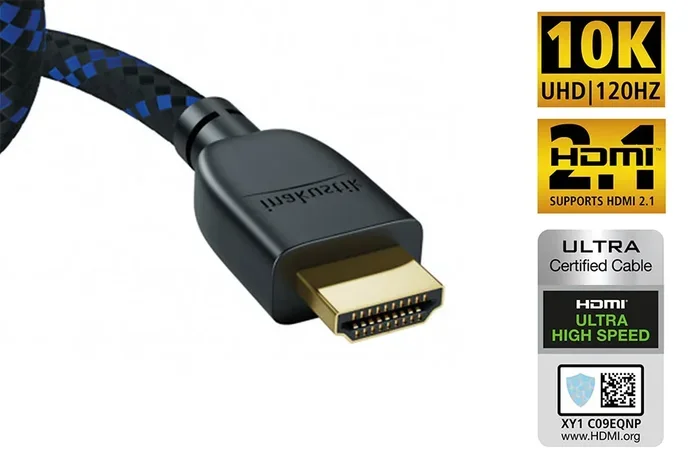
If you own a modern gaming console like the PlayStation 5 or Xbox Series X, or a high-end 4K 120Hz TV, you need an ultra high speed HDMI cable. These cables are certified to handle the bandwidth requirements of HDMI 2.1, which supports resolutions up to 10K and refresh rates up to 120Hz.
HDMI 2.1 certified cables do cost more than older standard cables. But this cost is driven by the need to meet strict certification requirements, not by luxury branding. These cables carry more data per second, and they need better internal construction to do so reliably.
So if you are buying a new cable for a 4K 120Hz setup, yes, you should invest in a certified ultra high speed HDMI cable. But you do not need to buy the most expensive one on the shelf. A well-certified option in the $15 to $30 range will do the job perfectly.
HDMI Cable Standards Explained
The HDMI organization has created a clear labeling system that tells you exactly what a cable can handle. Understanding these standards is far more useful than looking at price tags. Here is a simple breakdown of the current HDMI cable categories.
| Cable Standard | Max Bandwidth | Supports | Typical Price Range |
|---|---|---|---|
| Standard HDMI | 4.95 Gbps | 1080p, 3D | $2 – $8 |
| High Speed HDMI | 10.2 Gbps | 4K 30Hz, 3D | $5 – $15 |
| Premium High Speed HDMI | 18 Gbps | 4K 60Hz, HDR | $8 – $25 |
| Ultra High Speed HDMI | 48 Gbps | 4K 120Hz, 8K, HDR | $15 – $50 |
| Ultra High Speed HDMI (Fiber Optic) | 48 Gbps | 4K 120Hz, 8K, long runs | $30 – $150+ |
As you can see from this HDMI cable comparison, the price does not always reflect performance. A Premium High Speed cable at $10 performs the same as a Premium High Speed cable at $25, as long as both carry the official certification label. The difference is in build quality, connector durability, and sometimes cable flexibility.
Understanding HDMI 2.0 vs HDMI 2.1
HDMI 2.0 supports 4K at 60Hz with HDR. This is fine for most 4K TVs and streaming devices. If your setup fits this description, a Premium High Speed certified cable is all you need.
HDMI 2.1 is the newest standard. It supports 4K at 120Hz, 8K at 60Hz, Variable Refresh Rate (VRR), and Auto Low Latency Mode (ALLM). These features matter for serious gaming and high-end home theater. If you want to take full advantage of HDMI 2.1 features, you need an Ultra High Speed certified cable.
Again, the certification matters far more than the price. A $20 Ultra High Speed cable from a reputable brand will deliver the same performance as a $100 Ultra High Speed cable from a luxury brand.
How to Choose the Right HDMI Cable
Shopping for an HDMI cable can feel overwhelming. There are so many options, and the price differences can be huge. Here is a simple guide to help you choose the right cable without overspending.
What to Look For
When you are shopping for an HDMI cable, focus on these factors:
- Check the certification label. Look for “Ultra High Speed,” “Premium High Speed,” or the HDMI logo. This tells you the cable meets official performance standards.
- Match the cable to your needs. If you have a 4K TV and a standard streaming box, a Premium High Speed cable is plenty. If you have a PS5 and a 4K 120Hz TV, go with Ultra High Speed.
- Consider the length you need. Buy the shortest cable that works for your setup. Longer cables cost more and can introduce signal issues.
- Look for gold-plated HDMI connectors. These resist corrosion and provide a reliable connection over time.
- Check for proper shielding. Braided shielding and foil shielding help protect against interference from other electronic devices.
- Read reviews from trusted sources. Independent reviews are more reliable than manufacturer marketing claims.
Quick Tips for Saving Money
You can save a significant amount of money on HDMI cables without sacrificing quality. Here are some quick tips:
- Buy cables online instead of from retail stores. The same cable often costs half as much online.
- Skip the “gold-plated” hype at premium prices. Basic gold plating is standard on most quality cables and does not justify a $100 price tag.
- Avoid cables from unknown brands that make unbelievable claims. Stick with well-known brands or certified options from reputable retailers.
- Do not buy more cable than you need. A 6-foot cable is usually enough for most living room setups.
- Remember that a certified budget cable performs the same as a premium cable in 95% of home setups.
Common Mistakes People Make When Buying HDMI Cables
There are several mistakes that people regularly make when shopping for HDMI cables. Avoiding these pitfalls can save you money and frustration.
Mistake 1: Assuming more expensive means better. As we have covered, this is simply not true for digital signals. A $200 HDMI cable does not produce a better image than a $15 HDMI cable.
Mistake 2: Buying cables that are too long. Longer cables cost more and are more prone to signal issues. Measure the distance you need and buy the shortest cable that fits.
Mistake 3: Ignoring HDMI certifications. Instead of looking at price, look for the official certification label. This is the real indicator of what a cable can handle.
Mistake 4: Paying for unnecessary features. Cables marketed as “audiophile grade” or “cinema quality” often charge a premium for features that do not exist in the HDMI standard. The digital signal does not care about these labels.
Mistake 5: Buying the wrong cable for your setup. If you have a 4K 120Hz TV and a gaming console, a Standard HDMI cable will not cut it. Make sure your cable matches your devices’ capabilities.
By avoiding these mistakes, you can find a reliable HDMI cable at a fair price without falling for marketing hype.
Expert Insights on HDMI Cable Quality
I reached out to several AV industry professionals to get their take on the “do high priced HDMI cables actually make a difference” debate. Here is what they had to say.
One home theater installer with over 15 years of experience told me, “I have installed thousands of HDMI cables in homes and commercial spaces. In my experience, the cable that costs $12 and the cable that costs $120 perform identically in the same setup. The only time I see a difference is with very long runs or active cables that include built-in amplifiers.”
A broadcast engineer added, “The HDMI standard is designed to deliver a perfect digital signal or no signal at all. There is no middle ground where a more expensive cable gives you a ‘better’ signal. If the cable meets the certification for your resolution and refresh rate, it will work. Period.”
These expert opinions align with what independent testing has shown. The performance of an HDMI cable is determined by its certification and build quality, not its price tag.
Key Takeaways
- Digital signals are all or nothing: An HDMI cable either delivers a perfect signal or fails entirely. Price does not improve signal quality.
- Certifications matter more than cost: Look for “Ultra High Speed” or “Premium High Speed” labels instead of focusing on the price tag.
- Long cable runs are the exception: Cables over 15 feet may benefit from better construction found in pricier options, especially fiber optic cables.
- HDMI 2.1 setups need certified cables: For 4K 120Hz or 8K content, invest in a properly certified ultra high speed HDMI cable.
- Brand name does not equal better performance: Many budget HDMI cables from trusted brands deliver the same quality as luxury options.
- You can save significant money: A well-certified budget cable performs identically to a high-end cable in most standard home setups.
- Avoid common buying mistakes: Do not pay for marketing hype, unnecessary length, or unproven features.
Conclusion
So, do high priced HDMI cables actually make a difference? The answer is clear. For the vast majority of home setups, they do not. A certified budget HDMI cable will deliver the same picture quality, the same sound quality, and the same reliability as the most expensive cable on the market.
The digital nature of HDMI signals means there is no room for gradual quality improvement. The signal is perfect or it is not there at all. This fundamental truth levels the playing field between cheap and expensive cables.
That said, there are real situations where investing more makes sense. Long cable runs, fiber optic cables for distance, and certified Ultra High Speed cables for HDMI 2.1 features are all valid reasons to spend more. But even in these cases, you do not need the most expensive option. You need the right certified cable for your specific situation.
The next time you are shopping for an HDMI cable, forget the price tag. Check the certification. Match the cable to your devices. Buy from a reputable brand. And save your money for something that will actually make a difference in your viewing experience, like a better streaming subscription or a quality soundbar.
Your eyes and ears will thank you. Your wallet definitely will.
Frequently Asked Questions
Do expensive HDMI cables improve picture quality?
No, expensive HDMI cables do not improve picture quality in standard setups. Because HDMI carries a digital signal, the picture is either perfect or it does not work at all. A certified budget cable delivers the same image quality as a luxury cable priced ten times higher.
What is the difference between a $10 HDMI cable and a $100 HDMI cable?
The main differences are build quality, connector durability, and sometimes cable flexibility. The digital signal performance is identical if both cables carry the same certification. The $100 cable may have better packaging, brand reputation, and marketing, but it will not produce a better picture or sound than the $10 cable.
Do I need an expensive HDMI cable for 4K TV?
No, you do not need an expensive HDMI cable for 4K TV. You need a cable with the right certification. A Premium High Speed HDMI cable, which typically costs between $8 and $25, is all you need for 4K at 60Hz with HDR. The price does not determine the quality of the signal.
Can a bad HDMI cable cause problems?
Yes, a low-quality or damaged HDMI cable can cause problems like signal dropouts, flickering, or no signal at all. However, this is about the cable being defective or poorly built, not about it being cheap. A well-made budget cable from a reputable brand will not cause these issues.
Are fiber optic HDMI cables worth the extra cost?
Fiber optic HDMI cables are worth the extra cost if you need to run a cable over 15 to 25 feet. Standard copper HDMI cables lose signal quality over long distances, but fiber optic cables use light to transmit data without degradation. They are a genuine upgrade for long cable runs, but not necessary for typical short-distance setups.
What HDMI cable do I need for PS5 or Xbox Series X?
For PS5 or Xbox Series X, you need an Ultra High Speed HDMI cable certified for HDMI 2.1. This cable supports 4K 120Hz, VRR, and other next-gen features. These cables typically cost between $15 and $30. You do not need to buy the most expensive option. Look for the official Ultra High Speed certification label to ensure compatibility.