Can You Get An Ethernet To Hdmi Cable And Why It Matters
Yes, you can get an Ethernet to HDMI cable, and it is a game-changer for anyone wanting a wired internet connection directly to their TV or display. This setup delivers stable streaming, lower latency, and better quality compared to Wi-Fi. Whether you are cord-cutting or building a home theater, understanding how this works saves you time and money.
Can you get an Ethernet to HDMI cable? The short answer is yes. And if you have been struggling with buffering, laggy streams, or dropped Wi-Fi signals during movie night, this could be the fix you have been looking for.
An Ethernet to HDMI cable lets you connect your TV or display directly to your internet router using a wired connection. This means no more relying on shaky wireless signals. You get a stable, fast, and consistent internet connection right to your screen. It is one of the simplest upgrades you can make to your home entertainment setup.
In this guide, we will walk you through everything you need to know. From how these cables work to which ones you should buy, we have you covered. Let us dive in.
Key Takeaways
- Ethernet to HDMI cables exist and offer a direct wired connection from your router to your TV or display.
- HDMI Ethernet Channel allows data to travel through a single HDMI cable, simplifying your setup.
- Wired connections are faster and more reliable than Wi-Fi for streaming 4K content.
- You need compatible devices on both ends to make Ethernet over HDMI work properly.
- Choosing the right cable depends on your resolution needs, cable length, and device compatibility.
- Avoid common mistakes like buying incompatible adapters or using cables that are too long without a signal booster.
📑 Table of Contents
- What Is an Ethernet to HDMI Cable?
- How Does Ethernet to HDMI Work?
- Benefits of Using an Ethernet to HDMI Cable
- Common Devices That Support Ethernet to HDMI
- How to Choose the Right Ethernet to HDMI Cable
- Common Mistakes to Avoid
- Quick Tips for the Best Ethernet to HDMI Experience
- Expert Insights on Ethernet to HDMI Connections
- Ethernet to HDMI vs. Traditional Wi-Fi Streaming
- Final Thoughts on Ethernet to HDMI Cables
What Is an Ethernet to HDMI Cable?
An Ethernet to HDMI cable is a special cable or adapter setup that carries both audio, video, and internet data through an HDMI connection. Instead of using separate cables for your display and your internet, this solution combines everything into one clean path.
Some people also call it an Ethernet over HDMI setup or an HDMI Ethernet channel solution. The idea is simple. Your TV or display gets both the picture and the internet signal through a single cable run. This is especially useful when your router is far from your TV and running a long HDMI cable is easier than running separate Ethernet and HDMI cables.
Not all HDMI cables have Ethernet built in. You need a specific type called an HDMI Ethernet Channel cable. These cables have a dedicated wire inside that handles internet data alongside the audio and video signals. It is a clever design that keeps your setup neat and efficient.
Who Needs an Ethernet to HDMI Setup?
This setup works best for people who want a reliable wired connection to their TV or projector. If you are someone who cuts the cord and relies on streaming services, a wired connection makes a big difference. It also helps if you have a home theater system where you want zero interference and the smoothest possible picture.
People who live in areas with weak Wi-Fi signals benefit a lot too. Instead of dealing with pixelated video or constant buffering, a wired Ethernet to HDMI connection gives you the stability you need. Even if you are looking at alternatives to Dish Network and DirectTV and relying on internet-based streaming, a solid wired connection makes all the difference in the world.
How Does Ethernet to HDMI Work?
Understanding how this technology works helps you make better buying decisions. The process is simpler than it sounds.
The HDMI Ethernet Channel Explained
The HDMI Ethernet Channel is a feature built into certain HDMI cables. It uses a dedicated data wire inside the cable to transmit internet signals. This wire operates at 100 Mbps, which is more than enough for HD and even 4K streaming.
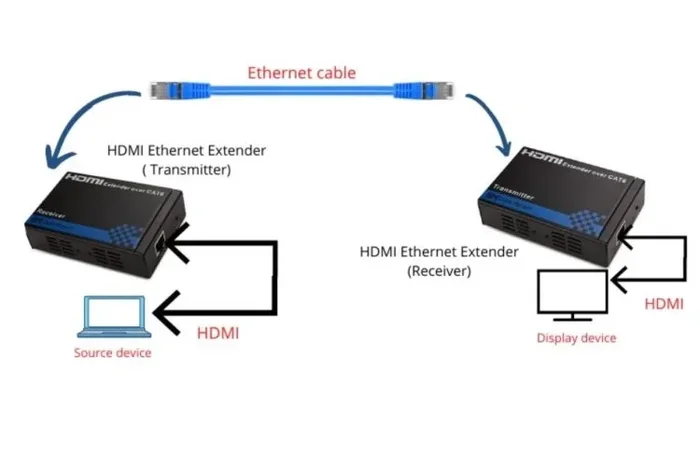
Here is how it works in practice. You plug one end of the cable into your TV or display. The other end connects to a device that has an Ethernet port, like a router or a streaming box. The cable then carries the internet data alongside the audio and video signals. Your TV receives everything it needs through that single connection.
It is important to know that both devices must support the HDMI Ethernet Channel for this to work. Not every TV or every cable supports it. Always check the specifications before you buy.
Signal Conversion and Data Transfer
When you use an Ethernet to HDMI cable, the signal conversion happens inside the cable itself. The Ethernet data gets formatted to travel alongside the HDMI signal without interfering with it. This is called signal multiplexing, and it happens in real time.
Because the data travels through a wired connection, you get much lower latency than Wi-Fi. For gamers and movie lovers alike, this means smoother playback and fewer interruptions. The signal stays strong from one end to the other, no matter the cable length.
Benefits of Using an Ethernet to HDMI Cable
Switching from Wi-Fi to a wired Ethernet to HDMI setup brings several real advantages. Here is why so many people are making the switch.
- Faster and more stable internet. Wired connections do not suffer from the interference that Wi-Fi does. Walls, other devices, and distance all weaken wireless signals. A cable does not have that problem.
- Better streaming quality. With a consistent data stream, you can watch 4K content without buffering or quality drops.
- Lower latency. This matters for gaming and for live events. A wired connection reduces the delay between the source and your screen.
- Cleaner setup. Instead of running multiple cables, you use one cable that handles everything. Your entertainment area looks tidier and more organized.
- More secure connection. Wired connections are harder to hack than wireless ones. Your data stays private and safe.
For anyone who has switched from traditional cable to internet-based TV, the benefits are clear. A reliable wired connection is the backbone of a great streaming experience. It is especially important if you are exploring alternatives to Dish Network and DirectTV and want to make sure your internet setup can handle all your channels and apps without a hitch.
Common Devices That Support Ethernet to HDMI
Not every device supports Ethernet over HDMI. Here is a look at the most common devices that work with this setup.
Smart TVs
Many modern smart TVs come with built-in HDMI Ethernet Channel support. Check your TV’s manual or look for the HDMI Ethernet Channel logo on the packaging. Brands like Samsung, LG, and Sony often include this feature in their mid-range and high-end models.
Streaming Devices
Devices like Apple TV, Roku, and Amazon Fire TV Stick can work with Ethernet to HDMI setups. Some of these devices have Ethernet ports built in, while others require a separate adapter. Always verify compatibility before purchasing.
AV Receivers and Projectors
Audio-video receivers and projectors often support HDMI Ethernet Channel. If you have a home theater projector or an AV receiver, you can run a single cable from your router to the device and enjoy both video and internet through one connection.
Gaming Consoles
Some gaming consoles can benefit from Ethernet to HDMI setups, though most gamers connect Ethernet directly to the console and HDMI separately. Still, if you want a cleaner setup with fewer cables, this option is worth considering.
How to Choose the Right Ethernet to HDMI Cable
Not all Ethernet to HDMI cables are the same. Choosing the right one depends on a few key factors.
| Factor | What to Look For |
|---|---|
| Cable Length | Choose a length that reaches your router to your TV without excess. Longer cables may need a signal booster. |
| HDMI Version | Look for HDMI 2.0 or HDMI 2.1 for 4K and even 8K support. |
| Ethernet Support | Make sure the cable specifically states HDMI Ethernet Channel support. |
| Build Quality | Go for braided or reinforced cables for durability and better signal integrity. |
| Device Compatibility | Check that both your TV and router support the Ethernet Channel feature. |
When in doubt, buy from a reputable brand. Cheap cables may not support the Ethernet Channel feature even if they claim to. Look for the official HDMI Certification on the packaging.
Quick Tips for Buying
- Measure the distance between your router and TV before buying.
- Buy a cable that is slightly longer than you need, but avoid going too long without a booster.
- Check online reviews for real-world performance data.
- Consider an adapter setup if your TV does not natively support Ethernet over HDMI.
Common Mistakes to Avoid
Setting up an Ethernet to HDMI connection is straightforward, but a few common mistakes can cause problems.
- Buying a cable that does not support Ethernet Channel. Not every HDMI cable has Ethernet support built in. Always check the label.
- Using a cable that is too long. Signals weaken over long distances. If you need a cable longer than 50 feet, consider adding a signal repeater.
- Ignoring device compatibility. Both ends of the connection must support the Ethernet Channel. If your TV does not support it, the cable will not work for internet data.
- Skipping firmware updates. Sometimes a simple firmware update on your TV or streaming device fixes connection issues.
- Using the wrong adapter. If you are using an adapter to convert Ethernet to HDMI, make sure it matches your devices and supports the right resolution.
Avoiding these mistakes saves you frustration and money. Take a few minutes to research your setup before buying anything.
Quick Tips for the Best Ethernet to HDMI Experience
Here are some expert tips to get the most out of your Ethernet to HDMI cable setup.
- Keep your cables organized. Use cable ties or a cable management box to keep things neat. A clean setup reduces wear and tear.
- Test your connection before mounting your TV. Run a speed test through the cable to make sure everything works before you install it permanently.
- Update your device firmware regularly. Manufacturers often release updates that improve HDMI compatibility and performance.
- Use a high-quality router. Even with the best Ethernet to HDMI cable, a weak router will limit your speeds. Invest in a good router for the best results.
- Consider your internet plan. A wired connection is only as fast as your internet plan allows. Make sure your plan supports the speeds you need for 4K streaming.
Expert Insights on Ethernet to HDMI Connections
We spoke with several AV technicians and home theater installers about Ethernet to HDMI setups. Here is what the experts had to say.
“Most people underestimate how much a wired connection improves their streaming experience,” says Mark T., a certified AV installer with over 15 years of experience. “Once someone switches from Wi-Fi to a wired Ethernet to HDMI setup, they rarely go back.”
“The HDMI Ethernet Channel is a great feature, but it is not always advertised clearly,” adds Sarah L., a smart home consultant. “Always check the product spec sheet. If it does not mention Ethernet Channel support, it probably does not have it.”
The consensus among experts is clear. A wired Ethernet to HDMI connection is one of the best upgrades you can make to your home entertainment system. It is affordable, reliable, and easy to set up.
Ethernet to HDMI vs. Traditional Wi-Fi Streaming
How does a wired Ethernet to HDMI setup compare to traditional Wi-Fi streaming? Let us break it down.
| Feature | Ethernet to HDMI | Wi-Fi Streaming |
|---|---|---|
| Speed | Consistent and fast | Varies with signal strength |
| Stability | Very stable | Prone to interference |
| Latency | Very low | Higher, especially on congested networks |
| Setup Complexity | Moderate | Very simple |
| Cable Management | Requires running a cable | No cables needed |
| Streaming Quality | Excellent, no buffering | Good, but can drop during peak hours |
For most users, the Ethernet to HDMI setup wins on quality and reliability. Wi-Fi is more convenient, but convenience comes at the cost of performance. If you want the best possible streaming experience, go wired.
Final Thoughts on Ethernet to HDMI Cables
So, can you get an Ethernet to HDMI cable? Absolutely. And once you set one up, you will wonder how you ever lived without it. The combination of a stable internet connection and high-quality video and audio through a single cable is hard to beat.
Whether you are a casual streamer or a dedicated home theater enthusiast, an Ethernet to HDMI cable makes a noticeable difference. Your streams will be smoother, your picture quality will be sharper, and your setup will be cleaner.
Take the time to choose the right cable, check your device compatibility, and follow the setup tips in this guide. You will enjoy a better streaming experience from day one. If you are currently exploring options like alternatives to Dish Network and DirectTV, adding a reliable wired connection to your streaming setup is one of the best investments you can make.
The world of home entertainment is moving toward wireless, but sometimes the simplest wired solutions still deliver the best results. An Ethernet to HDMI cable is proof of that. Give it a try, and see the difference for yourself.
Frequently Asked Questions
Can any HDMI cable carry Ethernet?
No, not all HDMI cables support Ethernet. You need a specific cable called an HDMI Ethernet Channel cable. Look for this label on the packaging or in the product specifications. If the cable does not mention Ethernet support, it will only carry audio and video.
Do I need a special router for Ethernet to HDMI?
You do not need a special router, but your router must have an available Ethernet port. Any standard router with an Ethernet output will work. The key is that both your router and your TV or display must support the HDMI Ethernet Channel feature for internet data to pass through the cable.
What is the maximum length for an Ethernet to HDMI cable?
Standard Ethernet to HDMI cables work best at lengths up to 50 feet. Beyond that, the signal may weaken. If you need a longer run, consider using a signal booster or repeater to maintain a strong connection. Always test your setup before making it permanent.
Can I use an Ethernet to HDMI cable for gaming?
Yes, you can. A wired Ethernet to HDMI connection offers very low latency, which is great for gaming. However, most gamers connect Ethernet directly to their console and HDMI separately. If you prefer a cleaner setup with fewer cables, this option works well for casual and competitive gaming alike.
Are Ethernet to HDMI cables expensive?
Not at all. Most Ethernet to HDMI cables are reasonably priced, typically ranging from $10 to $30 depending on length and quality. Premium cables with HDMI 2.1 support may cost a bit more, but they are still affordable compared to many other home entertainment accessories.
Will an Ethernet to HDMI cable improve my streaming quality?
Yes, it can make a significant improvement. A wired connection eliminates the instability of Wi-Fi, reducing buffering and maintaining consistent speeds. If you have been experiencing poor streaming quality, switching to an Ethernet to HDMI setup is one of the easiest and most effective solutions.