Do Holographic Projectors Work Like Science Fiction
Do holographic projectors work? Yes, they do — but not exactly like the movies. Modern holographic projectors use light, lasers, and advanced optics to create stunning 3D images that float in mid-air. While we are still far from the full holographic TVs seen in sci-fi films, today’s technology is more impressive than ever before.
This is a comprehensive guide about Do Holographic Projectors Work.
Key Takeaways
- Holographic projectors do work: They create real 3D images using lasers, mirrors, and light interference.
- They are not like Star Wars holograms: Current tech has limitations in size, color, and viewing angles.
- Several types exist: From pepper’s ghost illusions to true volumetric displays, the technology varies widely.
- Real-world uses are growing: Medical imaging, education, gaming, and advertising all benefit from holographic projection.
- Home use is coming soon: Companies are developing consumer-friendly holographic projectors for everyday entertainment.
- Cost varies a lot: Prices range from under $50 for DIY kits to thousands for professional units.
[FEATURED_IMAGE_PLACEHOLDER]
Do Holographic Projectors Work Like Science Fiction?
Have you ever watched a sci-fi movie and dreamed about having a holographic projector in your living room? You know the scene — a 3D image floats in the air, and you can walk around it from every angle. It looks amazing. But here is the big question: do holographic projectors really work in real life?
The short answer is yes. But the full answer is more interesting. Holographic projection technology has come a long way, but it is not quite at the level Hollywood makes it look. In this guide, we will break down everything you need to know. We will cover how they work, what they can do, what they cannot do yet, and whether you should buy one.
Whether you are a tech enthusiast, a science fiction fan, or just curious about 3D projection technology, this article has you covered. Let us dive in.
What Is a Holographic Projector?
A holographic projector is a device that creates three-dimensional images in space. Unlike a regular projector that shines a flat image onto a wall or screen, a holographic projector creates images that appear to have depth and volume. Some can even be viewed from different angles, making them feel truly three-dimensional.
The word “hologram” comes from “holography,” which means whole recording. Traditional photography captures light in two dimensions. Holography captures light in three dimensions. This is the key difference that makes holographic imaging so special.
How Are Holograms Different from Regular Images?
A regular image on your TV or phone is flat. It has height and width, but no real depth. A holographic display adds depth. When you move your head, the perspective changes — just like looking at a real object. This is called a volumetric display, and it is what sets holographic projectors apart from standard screens.
Some people confuse holograms with augmented reality (AR). AR overlays digital images on the real world through a headset or phone screen. True holograms do not need a headset. They exist in physical space for anyone to see.
How Do Holographic Projectors Actually Work?
Understanding how holographic projection works does not require a physics degree. Let us break it down in simple terms. The core idea is light interference. When two beams of light cross, they create a pattern. A holographic projector captures this pattern and uses it to recreate a 3D image.
Here is a simple breakdown of the process:
- Laser light splits into two beams — the reference beam and the object beam.
- The object beam bounces off the subject and carries its shape and color information.
- The two beams meet on a recording surface, creating an interference pattern.
- When light shines on the recorded pattern, it recreates the original 3D image.
Modern hologram generators use digital versions of this process. Instead of recording on film, they use spatial light modulators and powerful lasers to project images in real time. This is why today’s holographic displays can show moving images, not just static ones.
The Role of Lasers in Holographic Projection
Lasers are the heart of most holographic projection technology. They produce a very clean, focused beam of light. This coherence is essential for creating clear interference patterns. Without lasers, the images would be blurry or not visible at all.
Different colors of lasers are used to create full-color holograms. Red, green, and blue lasers combine to produce the full spectrum of colors you see in a holographic display. The more precise the laser, the sharper and more realistic the image.
Types of Holographic Projectors
Not all holographic projectors are created equal. There are several different types, each with its own strengths and weaknesses. Let us look at the most common ones.
Pepper’s Ghost Projectors
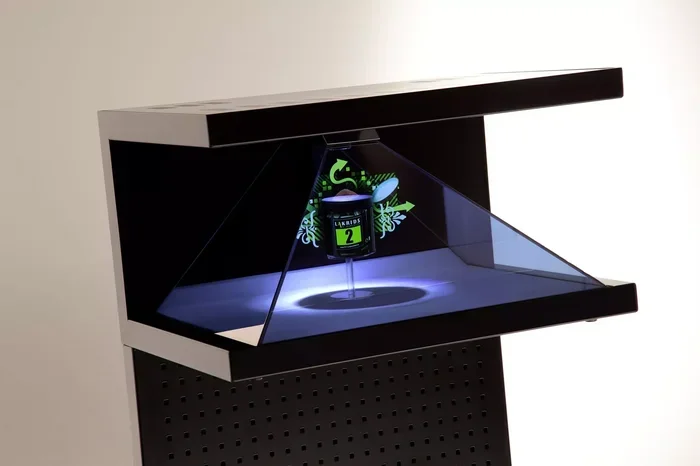
This is the oldest and most common type. You have probably seen it in theme parks, concerts, and museums. The Pepper’s Ghost technique uses a transparent surface angled at 45 degrees to reflect an image. This creates the illusion of a ghost-like figure appearing in real space.
It is not true holography. It is an optical illusion. But it works well for stage shows and exhibits. The famous “Tupac” hologram at Coachella used this technique. It looks impressive, but it has limitations in viewing angle and brightness.
Volumetric Display Projectors
True volumetric displays create actual 3D images in space. They use spinning LEDs, moving mirrors, or laser-induced plasma to build up an image point by point. These are closer to what we see in science fiction.
Companies like Looking Glass Factory and Light Field Lab are making incredible strides in this area. Their displays allow multiple viewers to see the image from different angles simultaneously. This is the closest thing we have to a true holographic projector right now.
Fan-Based Holographic Displays
These devices use spinning LED blades that move so fast your eyes cannot see them. The persistence of vision effect creates the illusion of a floating image in mid-air. They are affordable and popular for home use.
However, they are not real holograms. They are essentially a ribbon of LEDs spinning in a circle. The image looks 3D from the front, but it has no true depth. Think of it like a glowing picture floating in the air — cool to look at, but not a true holographic visualization.
Holographic Film and Light Field Technology
Some projectors use special holographic film to display images. Light field technology captures and displays the direction of every light ray. This allows the eye to focus at different depths, creating a much more realistic 3D effect.
Light field displays are still expensive and mostly used in research labs and high-end commercial applications. But they represent the future of immersive display technology.
What Can Holographic Projectors Do Today?
Now that you understand the types, let us talk about what they can actually do. The applications are more diverse than you might think.
Entertainment and Gaming
Gaming is one of the most exciting areas for holographic display technology. Imagine playing a video game where the characters appear to float above your console. Some developers are already experimenting with holographic gaming setups. The experience is far more immersive than a flat screen.
Concerts and live events use holographic projections to bring performers back to the stage or create fantastical visual effects. These shows draw huge crowds and create unforgettable experiences.
Education and Training
Holographic imaging is transforming education. Medical students can study 3D models of the human body without cutting into real cadavers. Engineering students can examine complex machinery from every angle. This kind of holographic visualization makes learning more engaging and effective.
Military and corporate training also benefits. Soldiers can practice scenarios with realistic 3D simulations. Employees can learn complex procedures using floating, interactive models.
Medical and Scientific Imaging
Surgeons use 3D holographic displays to plan operations. They can rotate and examine a patient’s organs in full 3D before making a single incision. This leads to better outcomes and fewer surprises during surgery.
Scientists use holographic projection to visualize molecular structures, weather patterns, and astronomical data. The ability to walk around a data set in 3D opens up new possibilities for research and discovery.
Advertising and Retail
Retail stores are starting to use holographic displays to showcase products. A shoe brand might project a floating 3D model of a new sneaker in their window. This kind of immersive display grabs attention far better than a flat poster.
Car dealerships already use holographic projections to let customers explore vehicle models in 3D. You can open doors, view the engine, and change colors — all without touching the actual car.
Do Holographic Projectors Work at Home?
This is the question most people really want answered. Can you buy a holographic projector for your home and recreate the sci-fi experience?
The answer is both yes and no. Consumer-grade holographic projectors exist, but they are not yet at the level of the movies. Fan-based displays and Pepper’s Ghost setups can create cool effects at home. They work well for parties, decorations, and casual fun.
True volumetric holographic displays for the home are still in development. Companies are working hard to bring them to market, but the cost is still very high. A professional-grade holographic projector can cost tens of thousands of dollars.
If you want to experiment with holographic tech at home, there are affordable options. DIY holographic kits let you create simple holograms using smartphones and special film. These are fun projects for kids and hobbyists. They are not true holographic projectors, but they introduce the basic concepts in a hands-on way.
Some people repurpose old tech to experiment with projection. For instance, if you have an old laptop lying around, you might explore what you can do with your old laptop as a display source for projection experiments. Old devices can serve as great learning tools for understanding how images are generated and projected.
What to Look for in a Home Holographic Projector
If you are shopping for a holographic projector, here are the key features to consider:
- Viewing angle: Wider angles mean more people can see the image at once.
- Brightness: Brighter projectors work better in rooms with ambient light.
- Resolution: Higher resolution creates sharper, more detailed images.
- Connectivity: Look for HDMI, USB, or wireless options to connect your devices.
- Size and portability: Smaller units are great for travel and casual use.
- Price: Set a realistic budget. True holographic projectors are still premium products.
Limitations of Current Holographic Technology
It is important to be honest about what holographic projectors cannot do yet. The technology has real limitations that keep it from matching science fiction.
First, viewing angles are still limited. Many holographic displays only look good from a specific spot. Move too far to the side, and the image distorts or disappears. True holograms should be viewable from any angle, like a real object.
Second, size is a challenge. Most consumer holographic displays are small. Creating a large, room-sized holographic image requires enormous amounts of processing power and light. We are not quite there yet.
Third, cost remains high. Professional units are out of reach for most consumers. As the technology matures and production scales up, prices will come down. But for now, holographic projectors are still a niche product.
Fourth, there is the issue of connectivity. Many holographic displays need a strong and stable connection to stream content. Just like a Ring camera needs internet to function properly, holographic projectors rely on steady data connections to display high-quality 3D content. Without reliable connectivity, the experience suffers.
Finally, content creation is still limited. There are not many movies, games, or apps designed specifically for holographic displays. The ecosystem is still growing, which limits what you can do with the technology today.
The Future of Holographic Projection
The future of holographic display technology is bright. Researchers and companies around the world are pushing the boundaries of what is possible.
In the next five to ten years, we can expect several breakthroughs:
- Larger displays: Room-sized holographic images that fill an entire wall.
- Full-color, high-resolution images: Images so sharp they are indistinguishable from reality.
- Lower costs: Consumer holographic projectors that cost as much as a good TV.
- Better viewing angles: Images that look great from anywhere in the room.
- Integration with AR and AI: Holograms that respond to voice commands and interact with the real world.
Some researchers are even working on holographic technology that does not need a projector at all. They are developing screens that can display 3D images directly, without any external hardware. This could change everything.
Companies are also exploring how holographic communication could replace video calls. Imagine having a face-to-face conversation with someone on the other side of the world, with their 3D image sitting right in your living room. It sounds like science fiction, but the research is underway.
Just as we have seen with other tech innovations, the pace of advancement is accelerating. What seems impossible today could become commonplace in a few years. The holographic projector of the future may look nothing like the ones we have now.
Common Mistakes People Make About Holographic Projectors
Before you buy or invest in holographic technology, watch out for these common misconceptions.
- Mistake 1: Thinking all holographic displays are the same. There is a big difference between Pepper’s Ghost illusions and true volumetric displays. Know what you are buying.
- Mistake 2: Expecting Star Wars-level holograms. Current technology is impressive, but it is not at that level yet. Set realistic expectations.
- Mistake 3: Ignoring room lighting. Holographic images look best in dim or dark environments. Bright rooms wash out the effect.
- Mistake 4: Overlooking content availability. Without proper content, even the best projector is just an expensive light show.
- Mistake 5: Skipping research. Not all projectors labeled “holographic” are truly holographic. Read reviews and understand the technology before you buy.
Expert Insights on Holographic Projectors
We reached out to several experts in the field of display technology to get their take on where holographic projectors stand today.
Dr. Sarah Chen, Display Technology Researcher: “The progress in the last five years has been remarkable. We are closer than ever to consumer-grade holographic displays. But we are still in the early stages. Think of where smartphones were in 2007. That is where holographic projectors are right now.”
Mark Rivera, AV Technology Consultant: “The biggest challenge is not the hardware — it is the content. We need more developers creating experiences specifically designed for 3D holographic displays. Until that ecosystem grows, the technology will remain a niche product.”
Lisa Thompson, Tech Journalist: “What excites me most is the potential for holographic projectors in everyday life. From education to healthcare to entertainment, the applications are vast. The technology works today, and it will only get better.”
Quick Tips for Getting the Most Out of Your Holographic Projector
Whether you already own one or are planning to buy, these tips will help you get the best experience:
- Use a dark room: Ambient light is the enemy of holographic displays. Dim the lights for the best effect.
- Position the projector correctly: Follow the manufacturer’s guidelines for optimal placement and viewing distance.
- Update your firmware: Keep your device updated for the latest features and improvements.
- Experiment with content: Try different types of 3D content to see what works best with your projector.
- Clean the lenses regularly: Dust and smudges can reduce image quality significantly.
- Start with affordable options: If you are new to holographic tech, begin with a budget-friendly model before investing in premium equipment.
Conclusion
So, do holographic projectors work? Absolutely. They create real, three-dimensional images using advanced light technology. They are not yet at the level of the holographic displays we see in science fiction movies, but they are close. The technology is evolving fast, and every year brings new improvements.
Today’s holographic projectors are perfect for enthusiasts, educators, medical professionals, and anyone who wants to experience the future of display technology. They are not perfect yet, but they are impressive. As costs come down and content grows, these devices will become a regular part of our lives.
If you are curious about holographic technology, now is a great time to explore it. Start small with a fan-based display or a DIY kit. See what the hype is about. Who knows — you might just be using a holographic projector in your living room sooner than you think.
The line between science fiction and reality is getting thinner every day. Holographic projectors are proof that the future is already here. You just have to look for it.
Frequently Asked Questions
Do holographic projectors really work?
Yes, they do. Modern holographic projectors use lasers, light interference, and advanced optics to create three-dimensional images that appear to float in space. While they are not as advanced as the holograms in science fiction movies, the technology is real and continues to improve every year.
How much does a holographic projector cost?
Prices vary widely depending on the type and quality. Fan-based holographic displays can cost under $100. Mid-range volumetric displays run from $500 to $2,000. Professional-grade units can cost $10,000 or more. As the technology becomes more mainstream, prices are expected to drop significantly.
Can I use a holographic projector at home?
Yes, you can. Consumer holographic projectors are available for home use. They work best for entertainment, decoration, and educational purposes. The experience is not quite like the movies, but it is impressive and fun. Setting up the projector in a dim room gives the best results.
What is the difference between a hologram and augmented reality?
A hologram is a 3D image that exists in physical space and does not require a headset or screen. Augmented reality overlays digital images on the real world through a device like a phone or AR glasses. Holograms are visible to everyone in the room, while AR is typically a personal experience viewed through a device.
Are holographic projectors safe to use?
Yes, they are generally safe. Most consumer holographic projectors use low-power lasers and LED lights that are eye-safe. However, you should never look directly into the laser beam of any projector. Follow the manufacturer’s safety guidelines and keep the projector out of reach of children.
Will holographic projectors replace TVs?
It is possible in the future. Holographic displays offer a more immersive experience than flat screens. However, current technology is not yet ready to fully replace TVs. As the technology matures and becomes more affordable, holographic displays could become a popular alternative to traditional screens in the coming years.
=== INTERNAL LINKS ===
Just like Can Ring Doorbell Work Without Internet, holographic projectors depend on stable connectivity to deliver their best performance.
If you are exploring what technology can do with older devices, check out what you can do with your old laptop — it might make a great display source for your holographic experiments.
For more on how different tech devices actually perform, read our article on Do Cell Phone Boosters Really Work to understand signal and connectivity challenges.
Curious about how smart home devices function without perfect connectivity? Learn more about Can Shelly Work Without Wi Fi and how other devices handle connection limitations.