Can You Use An Inflatable Movie Screen Indoors At Home
Yes, you can use an inflatable movie screen indoors, and it is a fun way to create a home theater experience. These screens are portable, easy to set up, and work great in living rooms, basements, or bedrooms. However, you need to consider room size, ambient light, and projector compatibility before you get started.
Have you ever wanted to turn your living room into a mini cinema? An inflatable movie screen makes that dream pretty easy. But here is the big question: can you actually use one indoors? The short answer is yes. You can absolutely use an inflatable movie screen indoors at home, and it is a lot of fun.
People love the idea of hosting movie nights without dragging equipment outside. Whether you have a spacious basement, a large living room, or even a big bedroom, an inflatable screen can transform any space. But there are things you need to know before you buy one and start inflating.
In this guide, we will walk you through everything. We will cover how indoor use works, what to watch out for, and how to get the best picture quality. By the end, you will know exactly whether an indoor inflatable screen is right for your setup.
Key Takeaways
- Indoor Use Is Possible: Inflatable movie screens work well indoors as long as you have enough space and the right setup.
- Room Size Matters: You need adequate ceiling height and floor space to inflate and use the screen safely.
- Ambient Light Affects Quality: Indoor lighting can reduce image sharpness, so dimming the room helps a lot.
- Projector Compatibility Is Key: Not every projector works the same way with an inflatable screen, so check brightness and resolution.
- Setup and Take Down Are Easy: Most inflatable screens inflate in minutes and deflate just as fast for storage.
- Safety Tips Exist: Keep the screen away from heat sources and secure it properly to avoid accidents.
📑 Table of Contents
- What Is an Inflatable Movie Screen?
- Can You Use an Inflatable Movie Screen Indoors?
- Benefits of Using an Inflatable Screen Indoors
- Potential Challenges of Indoor Use
- How to Set Up Your Inflatable Screen Indoors
- Tips for the Best Indoor Viewing Experience
- Common Mistakes to Avoid
- Inflatable Screen vs. Other Indoor Projection Options
- Final Thoughts
What Is an Inflatable Movie Screen?
An inflatable movie screen is a portable display that you blow up using a built-in fan. It stretches a white fabric surface tight over a frame, creating a smooth and flat projection area. These screens come in different sizes, from small 80-inch options to huge 200-inch displays.
They are popular for outdoor movie nights because they are lightweight and easy to carry. You can pack one in a carrying bag and take it to the backyard, the beach, or a camping trip. But many people wonder if they can use the same screen inside their home.
How Do They Work?
The screen uses a small electric fan to inflate the frame. Once the air fills the tubes, the fabric becomes taut and ready for projection. Most models take between 30 seconds and two minutes to fully inflate. You plug the fan into a standard wall outlet, and you are almost ready to watch.
The material on the screen is designed to reflect light evenly. This means your projector can cast a clear and bright image across the surface. The smoother the fabric, the better the picture quality will be.
Can You Use an Inflatable Movie Screen Indoors?
Yes, you can use an inflatable movie screen indoors. Many people do this regularly for family gatherings, game nights, or just a cozy evening in. The key is choosing the right room and setting up the screen properly.
Indoor use actually has some advantages over outdoor use. You do not have to worry about wind blowing the screen over or bugs flying into the projection area. The environment is controlled, which means you can focus on getting the best picture possible.
Best Rooms for Indoor Use
Not every room works equally well. Here are the best spaces to consider:
- Living Room: If you have enough open wall space, a living room works great. You can set the screen up in front of the sofa for a classic theater feel.
- Basement: Basements tend to be darker, which is perfect for projection. The low ceiling can be a challenge for taller screens, but a medium-sized screen fits well.
- Bedroom: A large bedroom can work for smaller screens. It creates a very personal and cozy viewing experience.
- Garage: If your garage is clean and has enough height, it makes an excellent indoor-style theater space.
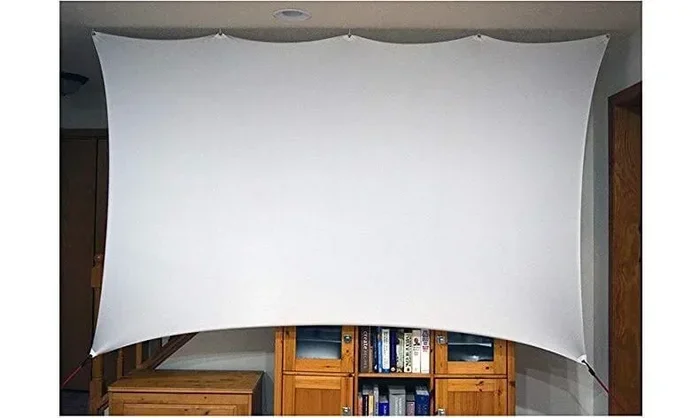
When you think about using a screen like this, you might also wonder about alternatives. For instance, some people ask, “Can I use a sheet as a projector screen?” The answer is yes, but an inflatable screen gives you a much tighter and smoother surface. You can read more about that here.
Benefits of Using an Inflatable Screen Indoors
There are several reasons why indoor use of an inflatable screen is a great idea. Let us look at the main benefits.
Easy Setup and Take Down
One of the biggest advantages is how simple it is to set up. You unroll the screen, plug in the fan, and wait about a minute. When you are done watching, you unplug it, let the air out, and fold it up. No tools are needed. No complicated assembly. This makes it perfect for people who want a quick movie night without a lot of hassle.
Compare this to a fixed home theater setup. Those require mounting brackets, wall brackets, and sometimes even professional installation. An inflatable screen removes all of that.
Portability
Inflatable screens are lightweight and come with carrying cases. You can move them from room to room easily. Want to set up in the living room on Friday and the basement on Saturday? Just deflate and go. This portability is a huge plus for families who like to switch up their viewing spots.
Affordable Alternative to Fixed Screens
A quality fixed projector screen can cost several hundred dollars. An inflatable screen often costs less and still delivers a great viewing experience. It is a budget-friendly way to get a big-screen feel in your home.
For more ideas on creating a projection setup at home, check out this guide on using a projector on your wall. It covers wall projection tips that work well alongside inflatable screens.
Potential Challenges of Indoor Use
While indoor use is definitely possible, there are some challenges you should know about. Being prepared helps you avoid disappointment.
Ambient Light Issues
Indoor environments have lamps, ceiling lights, and sometimes sunlight coming through windows. All of this extra light can wash out the projected image. The picture might look faded or less vibrant compared to a dark outdoor setting.
Here is how to fix this:
- Turn off all lights in the room.
- Close curtains or blinds to block outside light.
- Use blackout curtains if you watch movies during the day.
- Position the screen away from windows.
If you are curious about how dark environments affect screen quality, you might enjoy reading about painting your projector screen black to improve contrast.
Room Size and Ceiling Height
Inflatable screens need space to expand fully. A large 150-inch screen needs both floor space and enough ceiling height. If your room has a low ceiling, the screen might touch the top and look wrinkled. Always measure your room before you buy a screen.
As a rule of thumb, leave at least 12 inches of clearance between the top of the inflated screen and the ceiling. This keeps the fabric taut and prevents tears.
Ventilation and Heat
The built-in fan on the screen generates a small amount of heat. In a small, enclosed room, this can cause the air to feel warm after a while. Make sure the room has some airflow. Opening a window or using a fan in the room helps keep things comfortable.
Never place the screen near a heater, fireplace, or other heat source. The fabric is made of synthetic materials that can melt or discolor if exposed to high heat.
How to Set Up Your Inflatable Screen Indoors
Setting up an inflatable movie screen indoors is straightforward. Follow these steps for the best results.
Step 1: Choose the Right Spot
Pick a flat area with enough room for the screen to inflate fully. Make sure there are no low hanging lights, ceiling fans, or fragile items above the screen. Clear the floor space so you have room to walk around the screen once it is up.
Step 2: Unroll and Position
Lay the screen flat on the ground in your chosen spot. Make sure the projection side faces the direction you will be watching from. Smooth out any wrinkles on the fabric before you start inflating.
Step 3: Connect the Fan
Plug the built-in fan into a nearby power outlet. Turn it on and watch the screen inflate. Most screens are fully inflated within one to two minutes. Check that the fabric is tight and smooth across the frame.
Step 4: Set Up Your Projector
Place your projector on a stable surface or mount it on a tripod. Position it at the correct distance from the screen. The distance depends on the screen size and your projector’s throw ratio. You can find this information in your projector’s manual.
If you want to watch streaming content, you can project Netflix from your laptop to the projector easily with an HDMI cable or wireless connection.
Step 5: Adjust and Enjoy
Turn off the lights, hit play, and enjoy your movie. Adjust the projector focus and keystone settings if the image looks blurry or tilted. A few small tweaks make a big difference in picture quality.
Tips for the Best Indoor Viewing Experience
Want to get the most out of your indoor inflatable screen? Here are some expert tips that make a real difference.
Use a High-Brightness Projector
Indoor environments have more ambient light than a dark outdoor night. A projector with at least 2,000 lumens works well for indoor use. If your room is not completely dark, consider a projector with 3,000 lumens or more. The brighter the projector, the better the image will look against the screen.
Choose the Right Screen Size
Not every room can handle a massive screen. Measure your available wall space and ceiling height first. For a typical living room, a 100-inch to 120-inch screen strikes a good balance between size and practicality.
Keep the Screen Clean
Dust and fingerprints show up more on a projection screen than on a wall. Wipe the screen surface gently with a soft, dry cloth before each use. This keeps the image sharp and clear.
Secure the Screen
Even indoors, the screen can shift if the fan is powerful or if there is a draft from an open door. Place the screen against a wall or use sandbags on the base to keep it stable. This prevents the screen from wobbling during your movie.
Consider the Flooring
Inflatable screens can be heavy at the base. Place a rug or mat underneath to protect your flooring. This also adds a nice theater-style feel to your setup.
Common Mistakes to Avoid
Avoiding common mistakes saves you time and protects your equipment. Here are the ones people make most often.
- Forgetting to measure the room: A screen that is too tall for your ceiling will not inflate properly. Always check the dimensions first.
- Ignoring ambient light: Leaving the room lights on makes the image hard to see. Dim the lights or turn them off completely.
- Placing the projector too close or too far: Wrong distance leads to a blurry or oversized image. Check the throw ratio before setting up.
- Inflating on an uneven surface: A bumpy floor causes the screen to lean or wobble. Use a flat, level surface whenever possible.
- Leaving the screen inflated for days: The fabric needs to breathe. Deflate the screen after each use to extend its lifespan.
If you are looking for more creative screen solutions, you might enjoy learning about making your own projector screen. It is a fun DIY project that pairs well with inflatable screen use.
Inflatable Screen vs. Other Indoor Projection Options
How does an inflatable screen compare to other ways of watching movies indoors? Let us look at a few alternatives.
| Feature | Inflatable Screen | Wall Projection | Fixed Screen |
|---|---|---|---|
| Setup Time | 1-2 minutes | Instant | Already mounted |
| Picture Quality | Very good | Good | Excellent |
| Portability | Excellent | None | Poor |
| Cost | Low to medium | Free | High |
| Storage | Easy to fold | N/A | Bulky |
| Durability | Good | N/A | Excellent |
As you can see, the inflatable screen offers a great balance of quality, portability, and affordability. It is not the absolute best in every category, but for most people, it is the most practical choice.
Some people also ask about using their existing wall as a projection surface. You can find more about that in our article on using a projector on your wall. The truth is, a dedicated screen like an inflatable option almost always gives you a better result than a bare wall.
Final Thoughts
Using an inflatable movie screen indoors is a fantastic way to bring the cinema experience into your home. The setup is simple, the equipment is portable, and the results are impressive. Whether you are hosting a family movie night, watching a big game, or just enjoying a quiet evening, an indoor inflatable screen delivers.
The key is to plan ahead. Measure your room, control the lighting, and use a compatible projector. Avoid common mistakes like ignoring ambient light or placing the screen in a cramped space. With the right preparation, your indoor movie nights will be something to look forward to every week.
So go ahead. Inflate that screen, grab some popcorn, and enjoy the show. Your living room is about to become your personal theater.
Frequently Asked Questions
Can I leave my inflatable movie screen inflated all the time indoors?
It is not recommended. Leaving the screen inflated for long periods can stress the seams and fabric. Deflate it after each use to extend its lifespan and keep it in good condition for the next movie night.
What size inflatable screen do I need for a small room?
For a small room, a 80-inch to 100-inch screen works best. It fills the wall without overwhelming the space. Measure your wall and ceiling height before purchasing to make sure the screen fits comfortably.
Do I need a special projector to use with an inflatable screen indoors?
No, you do not need a special projector. Any standard projector with sufficient brightness will work. For indoor use, aim for a projector with at least 2,000 lumens to get a clear and bright image even with some ambient light.
Can I use an inflatable screen in a room with low ceilings?
Yes, but you need to choose a smaller screen size. Low ceilings limit the maximum screen height. A compact or medium-sized inflatable screen will work well in rooms with low ceilings without touching the top.
Is it safe to use an inflatable movie screen indoors with kids and pets?
Generally yes, but you should take precautions. Secure the screen so it cannot tip over. Keep the fan and power cord out of reach of children and pets. Never leave the screen unattended while it is plugged in and inflated.
Can I use blackout curtains to improve my indoor projection setup?
Absolutely. Blackout curtains are one of the best ways to control ambient light indoors. They block outside light and help create a darker viewing environment, which significantly improves picture quality on your inflatable screen.