Do I Need A Projector Stand Here Is What You Should Know
A projector stand is not always necessary, but it can dramatically improve your viewing experience by providing the right height, stability, and placement. Whether you are setting up a home theater or a backyard movie night, choosing the right stand makes a big difference. This guide walks you through everything you need to know about projector stands, including types, benefits, and common mistakes to avoid.
This is a comprehensive guide about Do I Need A Projector Stand.
Key Takeaways
- Not everyone needs a projector stand: Wall mounting and ceiling mounting are great alternatives depending on your space.
- Multiple types exist: From simple tripod stands to adjustable floor stands, there is an option for every budget and setup.
- Height matters: The right stand ensures your projector sits at the correct throw distance for a sharp, focused image.
- Stability is key: A wobbly stand ruins your movie night, so always choose one that feels sturdy and secure.
- DIY options work too: You can build or repurpose items instead of buying a dedicated stand.
- Consider your room layout first: Room size, seating distance, and screen placement should guide your decision.
[FEATURED_IMAGE_PLACEHOLDER]
What Is A Projector Stand And Why You Might Need One
A projector stand is a dedicated stand or mount designed to hold your projector at the right height and angle for optimal image projection. It keeps your device stable, elevated, and positioned correctly relative to your screen or wall.
You might wonder why this even matters. Well, where you place your projector directly affects image quality, throw distance, and overall viewing comfort. A projector sitting on a wobbly table or the floor can produce distorted images, get bumped easily, or even overheat if airflow is blocked.
A proper stand solves all of these problems. It gives you a dedicated, stable platform that is purpose-built for your projector. Think of it like a camera tripod. You would not just set a expensive camera on the ground and hope for the best, right? The same logic applies here.
That said, not everyone needs a dedicated stand. Some people prefer wall mounting or ceiling mounting their projector. Others might use a shelf or a repurposed item. The right choice depends entirely on your setup, budget, and room layout. This guide will help you figure out what works best for you.
Types Of Projector Stands Available
Not all projector stands are the same. Different types serve different needs, and knowing your options helps you make a smarter purchase. Let us break down the most common types you will find on the market.
Tripod Stands
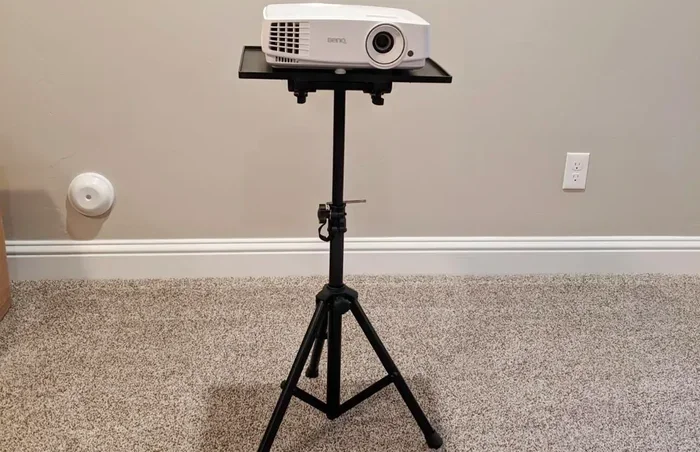
Tripod stands are the most popular and affordable option. They have three legs that fold out for stability and usually include an adjustable center column. You can raise or lower the height to match your screen and seating position.
These stands are lightweight and portable, which makes them great for outdoor movie nights or people who move their projector around often. Most tripod stands cost between $20 and $80, making them accessible for almost any budget.
However, tripod stands can be less stable than other options. If you have pets or kids around, a bump could knock your projector off balance. Also, they take up more floor space than you might expect.
Adjustable Floor Stands
Adjustable floor stands look more like professional speaker stands. They have a single vertical pole with a flat base and a platform at the top. The height is usually adjustable with a twist-lock mechanism.
These stands offer better stability than tripods. They also have a smaller footprint, which is great for smaller rooms. Many adjustable floor stands come with cable management features, so your cords stay neat and out of the way.
The downside is that they are less portable. Once you set one up, you usually leave it in place. They also tend to cost more, typically ranging from $50 to $150.
Tabletop Stands
Tabletop stands are compact and designed to sit on a desk, shelf, or table. They are perfect for smaller projectors or for people who do not need a lot of height adjustment.
These are great for office presentations or small home theater setups. They keep your projector at eye level when seated, which reduces neck strain during long viewing sessions. They are also very affordable, often under $30.
The limitation is obvious. You need a flat, stable surface nearby, and your projector must be lightweight enough to sit on it safely.
Pipe Mount Stands
Pipe mount stands attach to standard plumbing pipes or vertical poles. They are common in commercial settings like conference rooms and classrooms. Some creative home users also install them in basements or dedicated media rooms.
These stands are incredibly stable and keep your projector securely in place. They also allow for easy angle adjustment by loosening a clamp. The main drawback is that you need a compatible pipe or pole already in your room.
How To Choose The Right Projector Stand
Choosing the right projector stand is not as simple as picking the cheapest option. Several factors play into making the right decision. Let us walk through what matters most.
Consider Your Projector Weight
Every projector has a listed weight, and your stand must be rated to hold at least that much weight. Always check the weight capacity before you buy. A stand that cannot support your projector is a safety hazard.
Lightweight portable projectors under 5 pounds can use almost any stand. Heavier projectors over 10 pounds need a more robust option like an adjustable floor stand or a wall mount.
Think About Throw Distance
Throw distance is the space between your projector and the screen. If your projector is too close or too far, the image will be blurry or too small. Your stand height directly affects this distance.
Before buying a stand, measure your room. Figure out where your screen will be and how far the projector needs to sit from it. Then choose a stand that gets your projector to the right height for that distance. This is where many people make mistakes, so take your time with measurements.
Check Stability And Build Quality
A projector stand should feel solid and sturdy when you touch it. Shake it gently in the store or read reviews online for feedback on stability. A wobbly stand will ruin your image quality every time someone walks nearby.
Look for stands with wide bases and rubber feet. These grip the floor better and reduce vibration. If you are buying a tripod, make sure the legs lock firmly in place.
Portability Matters For Some Setups
If you plan to use your projector in different rooms or take it outside, portability becomes important. Tripod stands and lightweight tabletop stands win here. Heavy floor stands are better suited for permanent installations.
Budget Considerations
Projector stands range from about $15 to $200. You do not need to spend a lot to get a good one. For most home users, a $30 to $60 stand works perfectly fine. Save the higher-end options for heavy projectors or professional setups.
| Type | Price Range | Best For | Stability |
|---|---|---|---|
| Tripod Stand | $20 – $80 | Portability and outdoor use | Moderate |
| Adjustable Floor Stand | $50 – $150 | Home theater and permanent setups | High |
| Tabletop Stand | $15 – $35 | Small projectors and presentations | Moderate |
| Pipe Mount Stand | $40 – $100 | Commercial and dedicated media rooms | Very High |
Projector Stand vs Wall Mount vs Ceiling Mount
A projector stand is just one way to position your projector. Let us compare it against the two other popular options so you can see which fits your situation best.
Projector Stand
A stand is the most flexible option. You can move it anywhere, adjust the height easily, and set it up in minutes. It works well in living rooms, bedrooms, and outdoor spaces. The main downside is that it takes up floor space and can be a tripping hazard if cords are not managed well.
Wall Mount
Wall mounting your projector frees up floor space and creates a clean, minimalist look. It is a great choice for dedicated home theater rooms. However, you need to drill into your wall and position the mount correctly. If you want to try this approach, check out our guide on Can I Use A Projector On My Wall for helpful tips on wall placement and safety.
Ceiling Mount
Ceiling mounts keep your projector completely out of the way. They are popular in classrooms and boardrooms. The setup is more complex and requires professional installation in many cases. You also need enough ceiling height to avoid blocking the projector beam.
Quick Comparison
- Flexibility: Stand wins. You can move it anytime.
- Clean Look: Wall and ceiling mounts win.
- Ease of Setup: Stand wins again. No drilling required.
- Cost: Stands are generally the most affordable option.
- Stability: Wall and ceiling mounts are more permanent and stable.
For most casual home users, a projector stand offers the best balance of convenience, cost, and performance. Wall and ceiling mounts are better for permanent, dedicated setups where aesthetics matter more than flexibility.
Common Mistakes People Make With Projector Stands
Even with the right projector stand, mistakes can ruin your experience. Here are the most common errors and how to avoid them.
Ignoring Ventilation
Projectors generate heat, and they need airflow to stay cool. Some stands have enclosed platforms that trap heat. Over time, this can damage your projector and shorten its lifespan. Always choose a stand with open sides or ventilation holes.
Wrong Height Placement
Placing your projector too low or too high creates keystone distortion and ruins image quality. The projector lens should be at the same height as the center of your screen for the best results. Take time to measure before you finalize your setup.
Using An Unstable Surface
Never place your projector on an unstable or uneven surface. A wobbly table or a stand on carpet can cause the image to shake. If your floor is uneven, use a stand with adjustable feet or place a flat board underneath the base.
Forgetting About Cable Management
Loose cables on the floor are a safety hazard and look messy. Use cable ties, cable clips, or a stand with built-in cable channels to keep everything organized. This also prevents someone from accidentally unplugging your projector during a movie.
Skipping The Weight Check
This cannot be stressed enough. Always verify that your stand can handle your projector’s weight. An overloaded stand can collapse, potentially damaging your projector and creating a safety risk.
Not Considering Screen Placement First
Many people buy a stand first and then figure out where to put the screen. This backwards approach often leads to a poor setup. Always decide on your screen location and seating position first, then choose a stand that fits those parameters.
Expert Insight: According to AV installation professionals, the ideal projector placement puts the lens at the vertical center of the screen. This minimizes keystone correction and preserves the full resolution of your image. A quality stand makes achieving this placement simple and repeatable.
Quick Tips For Getting The Most Out Of Your Projector Stand
- Use a bubble level: Place a small level on your stand to make sure it is perfectly horizontal before you set up your projector.
- Paint your screen black: If you are projecting on a wall, check out our guide on Can I Paint My Projector Screen Black to boost contrast and color depth.
- Use blackout curtains: For the best image quality in a room with windows, consider using blackout curtains as a projector screen or to block ambient light.
- Clean your projector lens regularly: Dust settles on the lens and degrades image quality over time. A quick wipe before each use makes a big difference.
- Test your setup before movie night: Run a test image at least 30 minutes before guests arrive so you can adjust focus, keystone, and height if needed.
- Store your stand properly: If you have a portable stand, collapse and store it in a dry place to extend its lifespan.
DIY Alternatives To Buying A Projector Stand
Not ready to spend money on a dedicated stand? You have options. Many people create effective projector platforms from items they already own.
A sturdy wooden crate or a stack of sturdy boxes can work in a pinch. Just make sure the surface is flat and the stack is stable. Some people use a sturdy shelf mounted on brackets for a permanent solution.
You can also build a simple stand from lumber. A basic design involves four legs, a flat platform on top, and adjustable feet. This is a weekend project that costs under $20 in materials. Search online for free plans and you will find plenty of simple designs to follow.
Just remember that DIY solutions may not look as polished as a store-bought stand. They also might not offer height adjustment. But for a casual setup or a one-time outdoor movie night, they work just fine.
If you want to get creative with your screen setup too, check out our article on Can I Make My Own Projector Screen for budget-friendly DIY screen ideas that pair perfectly with any stand or mounting solution.
Final Verdict: Do You Really Need A Projector Stand
The short answer is no, you do not absolutely need a projector stand. You can place your projector on a table, shelf, or even the floor. But a dedicated stand makes a noticeable difference in image quality, stability, and convenience.
If you plan to use your projector regularly, investing in a proper stand is worth it. It protects your device, improves your viewing angle, and keeps your setup organized. For occasional use, a DIY solution or a tabletop stand may be all you need.
Consider your room, your projector, and your budget. If you have a permanent home theater setup, an adjustable floor stand or wall mount is ideal. If you want flexibility and portability, a tripod stand is hard to beat. And if you are on a tight budget, a DIY platform gets the job done.
The most important thing is to get your projector at the right height and angle for your specific room. Take your measurements, think about your seating position, and choose accordingly. A little planning goes a long way toward a great viewing experience every time.
Frequently Asked Questions
Can I use a regular table instead of a projector stand?
Yes, you can use a regular table as long as it is sturdy, flat, and the right height. Make sure the table can support your projector’s weight and that the surface is level. The main downside is that tables are not adjustable, so you may not be able to fine-tune your projector height for the best image quality.
How high should a projector stand be?
The ideal height depends on your screen size and seating position. As a general rule, the projector lens should be at the same vertical height as the center of your screen. For most living rooms, this means a stand height between 3 and 5 feet. Measure your specific setup before purchasing a stand.
Is a projector stand necessary for outdoor movie nights?
A projector stand is not strictly necessary for outdoor use, but it is highly recommended. Placing your projector on the ground exposes it to dust, moisture, and the risk of being bumped. A tripod stand keeps your projector elevated, stable, and safe from ground-level hazards.
Can I mount my projector on the wall instead of using a stand?
Absolutely. Wall mounting is a popular alternative to using a stand. It saves floor space and creates a cleaner look. If you are considering this option, check out our guide on Can I Use A Projector On My Wall for step-by-step advice on safe and effective wall mounting.
What is the cheapest option for a projector stand?
The cheapest option is usually a basic tripod stand, which you can find for as little as $15 to $25. Tabletop stands are also very affordable, often under $30. If you want to spend nothing at all, a sturdy stack of boxes or a wooden crate can serve as a temporary projector platform.
Do I need a special stand for a short-throw projector?
Short-throw projectors have different placement requirements than standard projectors. They need to be placed much closer to the screen, which means your stand height and position will be different. Check your projector’s manual for the recommended throw distance and mounting height before choosing a stand.
Conclusion
A projector stand is a simple accessory that can transform your viewing experience. It provides stability, proper height, and a dedicated platform that keeps your projector safe and performing at its best. Whether you choose a tripod, an adjustable floor stand, a tabletop model, or a DIY solution, the key is to match your stand to your specific needs and room setup.
Remember to consider your projector’s weight, your throw distance, and your screen placement before making a purchase. Avoid common mistakes like ignoring ventilation or placing your projector at the wrong height. And if you are not ready to buy a stand, a well-placed shelf or DIY platform can work just as well for casual use.
Now that you know what to look for, you are ready to set up your projector the right way. Grab your stand, do your measurements, and get ready for a movie night that looks and feels professional. Your setup will thank you for it.
Frequently Asked Questions
What is Do I Need A Projector Stand?
Do I Need A Projector Stand is an important topic with many practical applications.