The Complete Definition Of Radio Broadcasting Explained
Radio broadcasting is the process of transmitting audio content to a wide audience using radio waves. It has evolved from early AM and FM signals to modern digital and internet-based streaming. Understanding radio broadcasting means exploring how a radio station sends programs through the air to millions of listeners worldwide.
Key Takeaways
- Radio broadcasting sends audio content to listeners through radio waves using transmitters and antennas.
- AM and FM are the two most common types, but digital and internet radio are growing fast.
- The history of radio broadcasting spans over a century, from early experiments to modern streaming.
- A radio station needs key equipment like transmitters, towers, and studios to function properly.
- Radio broadcasting still plays a major role in entertainment, news, and emergency communication today.
📑 Table of Contents
- What Is Radio Broadcasting?
- How Radio Broadcasting Works
- Types Of Radio Broadcasting
- The History Of Radio Broadcasting
- Key Components Of Radio Broadcasting
- How Radio Broadcasting Reaches Audiences
- Common Mistakes People Make With Radio Broadcasting
- Quick Tips For Aspiring Radio Broadcasters
- Expert Insights On The Future Of Radio Broadcasting
- Conclusion
What Is Radio Broadcasting?
Radio broadcasting is the process of sending audio programs through the air to reach listeners at a distance. A radio station creates content like music, talk shows, news, and sports commentary. Then it uses radio waves to transmit that content to anyone with a receiver.
The beauty of radio broadcasting is its simplicity. You do not need an internet connection or a cable subscription. All you need is a radio receiver and a signal. That is why radio has remained popular for over a hundred years.
When a station broadcasts, it uses a radio frequency to carry the audio signal. This signal travels through the air and is picked up by antennas in radios. The radio then turns that signal back into sound. This entire process happens in seconds, making broadcast media one of the fastest ways to reach people.
Today, radio broadcasting includes traditional over-the-air signals and newer digital methods. We will explore all of that in this guide. Whether you are curious about how your favorite station works or thinking about starting one, this article covers the full picture.
How Radio Broadcasting Works
Understanding how radio broadcasting works is easier than you might think. The process involves three main steps: creation, transmission, and reception. Let us break each one down.
Step 1: Content Creation
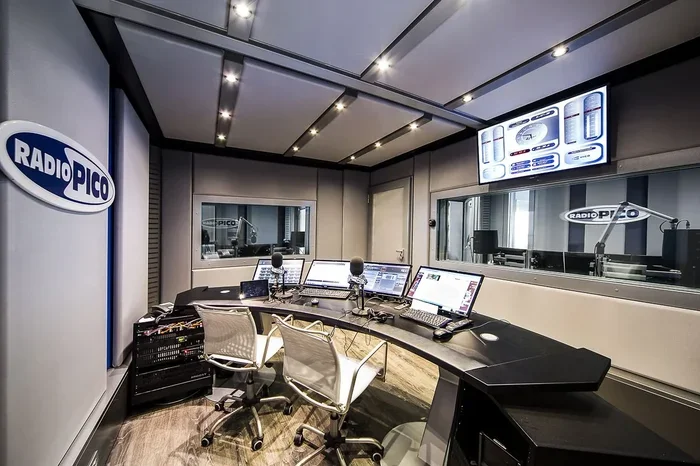
Everything starts in a studio. A radio station has hosts, producers, and technicians who create programs. They record music, conduct interviews, and read news updates. All of this audio gets mixed and prepared for broadcast.
The studio is the creative heart of any radio broadcasting operation. It is where the content comes to life. Modern studios use digital audio workstations and mixing boards to produce high-quality sound.
Step 2: Signal Transmission
Once the content is ready, it needs to reach the audience. This is where transmission comes in. The audio signal is sent from the studio to a transmitter. The transmitter boosts the signal and sends it out through a radio tower and antenna.
The transmitter converts the audio into radio waves. These waves travel through the air at the speed of light. A radio frequency determines which channel or station the signal lands on. For example, FM radio uses frequencies between 88 and 108 megahertz.
The strength of the transmitter determines how far the signal travels. A powerful station can cover hundreds of miles. This is why you can pick up stations from faraway cities in your car.
Step 3: Reception
The final step is reception. Your radio receiver catches the radio waves in the air. It decodes the signal and turns it back into sound through its speakers. This happens almost instantly.
Listeners tune their radios to a specific frequency to find their favorite station. That is why you turn the dial to 98.5 FM or 720 AM. Each number corresponds to a different radio frequency assigned to a station.
Some people also listen to radio broadcasting through Bluetooth-enabled devices that receive the signal wirelessly. This adds convenience to the listening experience.
Types Of Radio Broadcasting
Radio broadcasting comes in several forms. Each type uses different technology and serves different purposes. Let us look at the main types.
AM Radio Broadcasting
AM stands for Amplitude Modulation. It was the first type of radio broadcasting developed. AM radio uses changes in signal amplitude to carry audio. AM stations typically broadcast on lower frequencies, which allows their signals to travel long distances, especially at night.
AM radio is popular for talk shows, news, and sports broadcasts. Many people rely on AM for local news and emergency alerts. However, AM audio quality is lower than FM because it is more susceptible to interference.
FM Radio Broadcasting
FM stands for Frequency Modulation. FM radio broadcasting uses changes in signal frequency to carry audio. FM stations operate at higher frequencies, which gives them better sound quality and less static.
Most music stations use FM because listeners prefer clearer sound. FM signals do not travel as far as AM signals, but they provide a much better listening experience for music and detailed programming.
Digital Radio Broadcasting
Digital radio is the modern evolution of radio broadcasting. It converts audio into digital data before transmission. This results in crystal-clear sound with no static or interference.
Digital radio also allows stations to broadcast multiple channels on a single frequency. This means more content for listeners. Some countries have fully adopted digital radio standards like DAB (Digital Audio Broadcasting).
Internet Radio Broadcasting
Internet radio streams audio content over the web. It does not use traditional radio waves or transmitters. Instead, it relies on internet connections to deliver programs to listeners.
Internet radio has exploded in popularity. People can listen to stations from around the world on their phones and computers. It has expanded the reach of broadcast media far beyond what traditional towers can cover.
The History Of Radio Broadcasting
The story of radio broadcasting is a fascinating journey. It spans over a century of innovation and cultural change.
Early Experiments
In the late 1800s, scientists like Guglielmo Marconi experimented with wireless communication. They discovered that audio signals could travel through the air without wires. These early experiments laid the foundation for all future radio communication.
By the 1920s, the first commercial radio stations began broadcasting regularly. People gathered around their radios to listen to news, music, and drama. Radio became a shared family experience in homes across the world.
The Golden Age
The 1930s through the 1950s are known as the golden age of radio broadcasting. Families relied on radio for entertainment and information. Popular shows, soap operas, and live concerts filled the airwaves.
During this era, radio was the dominant form of home entertainment. It connected communities and shaped public opinion. Radio networks emerged, allowing stations to share content across large regions.
Modern Era
Television and the internet challenged radio’s dominance. But radio broadcasting adapted. Stations started focusing on niche content, local news, and music formats that television could not offer.
Today, radio has embraced digital technology. Internet streaming, podcasts, and smart speakers have given radio broadcasting a new lease on life. The core concept remains the same: sending audio content to an audience through the air or online.
Key Components Of Radio Broadcasting
A radio station is made up of several essential components. Each part plays a vital role in getting content to your ears.
The Transmitter
The transmitter is the engine of radio broadcasting. It takes the audio signal from the studio and boosts it for transmission. Without a powerful transmitter, the signal would not reach listeners.
Transmitters come in different sizes and power levels. A local community station might use a small transmitter with a range of a few miles. A national broadcaster uses powerful transmitters that can cover entire countries.
The Antenna And Tower
The antenna sends the radio waves into the air. It is usually mounted on a tall tower. The height of the tower affects how far the signal travels. Taller towers mean wider coverage.
Radio towers are often the most visible part of a broadcasting facility. They stand high above buildings and landscapes to ensure the signal reaches as many receivers as possible.
The Studio Equipment
The studio is where all the content is created. It houses microphones, mixing boards, computers, and audio software. A well-equipped studio ensures that the radio content sounds professional and clear.
Modern studios also use digital consoles and automation systems. These tools allow stations to run 24-hour programming with minimal staff. The studio is truly the creative hub of radio broadcasting.
The Receiver
The receiver is what the listener uses. It could be a traditional radio, a car stereo, a smartphone app, or a smart speaker. The receiver picks up the radio signal and converts it back into sound.
Listeners have more options than ever today. Many people now use Bluetooth devices to stream radio broadcasting content. For example, some enthusiasts connect their old radios to modern Bluetooth systems for a better experience. You can learn how to make an old Bose Wave radio Bluetooth-enabled for a modern twist on classic listening.
How Radio Broadcasting Reaches Audiences
Radio broadcasting reaches millions of people every day. Understanding how it connects with audiences helps explain its lasting power.
Local Reach
Local radio stations serve their communities with targeted content. They play local music, cover community events, and provide traffic and weather updates. This local focus makes radio a trusted source of information for neighborhoods and towns.
Local radio is especially important during emergencies. When power outages or natural disasters strike, radio often remains the most reliable way to communicate with the public. Its ability to reach people without internet or cable makes it indispensable.
National And International Reach
Large radio networks can broadcast across entire nations. National stations provide news, sports, and entertainment to a broad audience. Some stations even reach international listeners through shortwave and online streaming.
The reach of radio broadcasting continues to grow with digital platforms. Internet radio removes geographic barriers entirely. A listener in one country can tune into a station from another continent with ease.
The Role Of Radio In Entertainment
Radio has always been a key part of the entertainment world. From live music performances to comedy shows and drama series, radio broadcasting offers a wide variety of entertainment options.
Many famous artists got their start on the radio. DJs became cultural icons who shaped music trends and public taste. Today, radio continues to introduce new music and connect artists with their audiences.
Radio also plays a big role in sports broadcasting. Millions of listeners tune in to follow live games and commentary. The excitement of a live sports broadcast on radio broadcasting is a unique experience that television cannot fully replicate.
Common Mistakes People Make With Radio Broadcasting
Even experienced broadcasters make mistakes. Here are some common ones to avoid.
- Ignoring audio quality: Poor sound quality drives listeners away. Always invest in good microphones and mixing equipment.
- Skipping regular programming: Consistency builds trust. Create a reliable schedule so your audience knows when to tune in.
- Neglecting audience feedback: Listeners want to feel heard. Engage with your audience through calls, texts, and social media.
- Overlooking technical maintenance: Transmitters and towers need regular upkeep. A technical failure can take your station offline for hours.
- Copying others without originality: Find your unique voice and style. The radio market is crowded, and originality sets you apart.
Quick Tips For Aspiring Radio Broadcasters
- Start small: Begin with a local community station or an online radio show to build your skills.
- Invest in training: Learn about audio engineering, scriptwriting, and on-air presentation.
- Know your audience: Understand who you are broadcasting for and what they want to hear.
- Stay updated on technology: The radio broadcasting industry evolves fast. Keep learning about new tools and platforms.
- Be consistent: Show up on time, prepare your content, and deliver quality every time you go on air.
Expert Insights On The Future Of Radio Broadcasting
Industry experts believe that radio broadcasting will continue to evolve. The rise of smart speakers and voice assistants is changing how people access radio content. AI-powered automation is making it easier for smaller stations to produce professional-quality programming.
Some experts predict that hybrid models combining traditional over-the-air broadcasting with internet streaming will become the standard. This would give stations the best of both worlds: wide coverage through towers and global reach through the web.
Others point out that radio broadcasting remains uniquely personal. Unlike algorithms that feed you content based on your past behavior, radio introduces you to new music and ideas unexpectedly. That element of surprise keeps listeners engaged and curious.
The industry is also addressing concerns about online safety. As radio moves more into digital spaces, understanding the dangers of online communication becomes important for both broadcasters and listeners. Protecting personal data and ensuring secure streaming are priorities for the future.
Conclusion
Radio broadcasting is a powerful and enduring form of communication. It has survived over a century of technological change because it delivers value in a simple, accessible way. From the first crackling AM signals to today’s crisp digital streams, radio has always found a way to connect people with the content they love.
The definition of radio broadcasting is straightforward: sending audio content to a wide audience through radio waves or internet streams. But the impact of that simple act is enormous. It entertains, informs, and connects communities around the world.
Whether you are a lifelong listener or someone considering a career in broadcasting, understanding how radio broadcasting works gives you a deeper appreciation for this medium. The next time you tune into your favorite station, you will know exactly what is happening behind the scenes to bring that music or talk show to your ears.
The future of radio broadcasting is bright. New technologies will continue to expand how content is created, transmitted, and enjoyed. One thing is certain: radio will remain a vital part of our cultural landscape for generations to come.
Frequently Asked Questions
What is the simple definition of radio broadcasting?
Radio broadcasting is the process of sending audio programs to listeners using radio waves or internet streams. A radio station creates content and transmits it through the air or online so that anyone with a receiver can listen.
How does radio broadcasting differ from podcasting?
Radio broadcasting sends content over the air through transmitters and antennas to a wide audience in real time. Podcasting delivers pre-recorded audio files that listeners download or stream on demand. Both are forms of audio content, but their delivery methods and timing are different.
Can I listen to radio broadcasting without internet?
Yes, traditional AM and FM radio broadcasting does not require an internet connection. You only need a radio receiver and a signal from a nearby transmitter. This is one of the biggest advantages of radio over streaming services.
What equipment do I need to start a radio station?
You need a studio with microphones and mixing equipment, a transmitter to send the signal, an antenna and tower for broadcast coverage, and a receiver for testing. Many modern stations also use digital audio workstations and automation software to streamline operations.
Is radio broadcasting still popular today?
Yes, radio broadcasting remains very popular. Millions of people listen to radio every day for music, news, sports, and entertainment. While digital platforms have grown, radio continues to be a trusted and accessible medium, especially during emergencies and in rural areas.
What role does radio broadcasting play in emergencies?
Radio broadcasting is one of the most reliable communication tools during emergencies. It works without internet or cable and can reach people even when power grids fail. Local stations often serve as the primary source of real-time updates during natural disasters and public safety events.
=== META TITLE ===
The Complete Definition Of Radio Broadcasting Explained
=== URL SLUG ===
definition-of-radio-broadcasting
=== SEO TITLE ===
The Complete Definition Of Radio Broadcasting Explained