Can You Replace Normal Sockets With Usb Charging Ports
Yes, you can replace normal sockets with USB charging ports to make your home smarter and more convenient. This upgrade eliminates the need for bulky adapters and frees up wall outlets for other devices. USB wall outlets are easy to install, affordable, and perfect for modern living. Keep reading to learn everything you need about usb socket replacement and how it can transform your space.
Imagine never hunting for a charger again. Picture your wall outlet doing double duty — powering your lamp and charging your phone at the same time. That is exactly what happens when you swap a regular socket for a usb wall outlet. More and more homeowners are making this switch, and for good reason. It is simple, affordable, and makes everyday life a little easier.
If you have been wondering whether can you replace normal sockets with usb charging ports, the short answer is yes. But there is a lot more to know before you grab a screwdriver. This guide walks you through every step, from choosing the right usb power outlet to avoiding common mistakes. By the end, you will feel confident enough to tackle the project yourself.
Key Takeaways
- USB outlets replace traditional sockets: You can swap out regular wall outlets for ones with built-in USB ports.
- Two main types exist: USB-A and USB-C outlets serve different charging needs.
- Installation is beginner-friendly: Most people can handle the job with basic tools and a little patience.
- Costs range from $5 to $30 per outlet: Much cheaper than hiring an electrician for every port.
- Safety matters: Always turn off the breaker and use UL-listed products.
- USB wall plates come in many styles: Match them to your decor easily.
- Future-proof your home: USB outlets prepare your space for the next generation of devices.
📑 Table of Contents
- What Are USB Charging Outlets?
- Types of USB Wall Outlets
- Can You Replace Normal Sockets With USB Charging Ports?
- Benefits of Switching to USB Outlets
- USB Outlet vs Regular Outlet: A Comparison
- How Much Does USB Outlet Installation Cost?
- Common Mistakes to Avoid
- Expert Tips for the Best Results
- Key Takeaways
- Frequently Asked Questions
- Conclusion
What Are USB Charging Outlets?
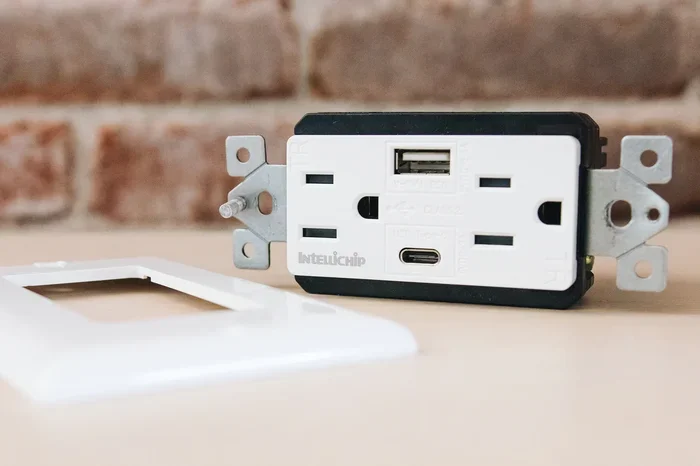
A usb charging outlet looks like a regular wall socket but has one or two USB ports built right in. Instead of plugging in a bulky wall adapter, you connect your device directly into the outlet. These outlets come in different shapes and sizes. Some fit into a single gang box, while others replace larger switch plates. The most common types use usb type c outlet technology, which charges devices faster than older USB-A ports.
The beauty of a usb receptacle is that it replaces an existing outlet. You do not need to tear open a wall or run new wiring. The electrical wiring behind the outlet stays the same. You simply remove the old socket and connect the new one in its place. This makes usb outlet replacement one of the easiest home upgrades you can do.
How Do USB Outlets Work?
Inside a usb power outlet, there is a small chip that regulates the power flowing to your device. This chip steps down the 120-volt household current to the 5 volts that USB devices need. It also manages the amperage so your phone or tablet charges safely. Good quality outlets include built-in safeguards against overcurrent and overheating. This means your devices stay protected every time you plug them in.
Some advanced models offer smart detection. They sense what device you have connected and adjust the power output accordingly. This is especially helpful if you charge multiple gadgets from the same outlet. A usb charging station built into your wall keeps everything organized and efficient.
Types of USB Wall Outlets
Not all usb wall outlet options are the same. Before you buy, it helps to understand what is available. Here are the main types you will encounter.
USB-A Outlets
The USB-A port is the classic rectangular shape most people recognize. It has been the standard for years and works with older devices. If you have legacy gadgets like e-readers, older speakers, or basic flash drives, a USB-A outlet works great. However, newer phones and tablets are moving away from USB-A.
USB-C Outlets
A USB type C outlet uses the oval-shaped connector that has become the modern standard. USB-C delivers faster charging speeds and supports higher wattage. Most new phones, laptops, and tablets use USB-C. If you want a future-proof setup, this is the type to choose. Many usb wall plate options now come with USB-C as the default port.
Combo Outlets
Combo outlets give you the best of both worlds. They include one or two standard plug sockets alongside one or two USB ports. This means you can plug in a desk lamp and charge your phone from the same outlet. Combo usb wall plate covers are extremely popular for bedrooms, kitchens, and offices.
Can You Replace Normal Sockets With USB Charging Ports?
The answer is a resounding yes. Replacing normal sockets with USB ports is one of the most straightforward electrical projects a homeowner can attempt. You do not need advanced electrical skills. You just need to follow a few safety steps and use the right tools. Thousands of people complete this swap every weekend without any issues.
Before you start, make sure you understand your local electrical codes. Some areas require a licensed electrician for any outlet replacement. In most cases, swapping a standard outlet for a usb wall outlet falls within the scope of a DIY project. Always check with your local building department if you are unsure.
What You Will Need
- A usb outlet replacement kit (available at most hardware stores)
- A screwdriver (Phillips and flathead)
- A voltage tester
- A wire stripper
- A drill (only if mounting a new box)
Step-by-Step Installation
First, turn off the power at the circuit breaker. Use your voltage tester to confirm the outlet is dead. Next, remove the face plate and unscrew the old outlet from the electrical box. Carefully pull the outlet out, noting how the wires are connected. Take a photo before disconnecting anything — this makes reinstallation much easier.
Disconnect the wires from the old outlet. Connect them to the new usb power outlet following the manufacturer’s instructions. Usually, black wires go to brass screws, white wires to silver screws, and green or bare wires to the ground screw. Push the wires back into the box, screw the outlet in place, and attach the face plate. Finally, turn the breaker back on and test the outlet.
Benefits of Switching to USB Outlets
There are many reasons homeowners are making the switch from traditional sockets to usb wall outlets. Here are the biggest advantages.
Clutter-Free Charging
How many usb wall adapter bricks are cluttering your outlets right now? Each one takes up space and creates visual noise. A usb charging port built into the wall eliminates all of that. Your outlets stay clean, and your counters stay tidy. This alone is reason enough for many people to make the switch.
More Outlets Available
When you use a wall adapter, that outlet is taken. Other devices cannot use it. A usb socket replacement frees up the outlet for something else. You can plug in a fan, a lamp, or a phone charger — all at the same time. This is especially valuable in kitchens and home offices where outlets are scarce.
Faster and Safer Charging
Modern usb type c outlet models charge devices faster than most wall adapters. They also provide safer charging through built-in surge protection. Your expensive gadgets are less likely to suffer damage from power spikes. A quality usb power outlet protects your devices while making your life more convenient.
Increased Home Value
Buyers love modern, updated homes. USB outlet installation is a small upgrade that makes a big impression. It signals that a home has been thoughtfully maintained. If you ever decide to sell, these outlets are a nice selling point that sets your home apart.
USB Outlet vs Regular Outlet: A Comparison
Not sure if a usb wall outlet is right for you? Let us compare the two options side by side.
| Feature | Regular Outlet | USB Charging Outlet |
|---|---|---|
| Charging capability | None — requires adapter | Built-in USB ports |
| Outlet space used | One outlet per adapter | One outlet plus USB port |
| Charging speed | Depends on adapter | Optimized for device |
| Cost per unit | $1–$3 | $5–$30 |
| Installation difficulty | Easy | Easy (same process) |
| Aesthetic impact | Standard look | Cleaner, modern look |
| Device compatibility | Universal | USB-compatible devices |
| Future-proofing | No | Yes |
As you can see, the benefits of a usb charging outlet far outweigh the small extra cost. The installation process is identical to a regular outlet, so there is no added difficulty. The only real trade-off is the slightly higher upfront price per unit.
How Much Does USB Outlet Installation Cost?
One of the best things about usb wall outlet upgrades is the low cost. A single usb outlet replacement unit costs between $5 and $30, depending on the brand and features. If you do it yourself, your only expense is the outlet. If you hire an electrician, expect to pay $75 to $150 per outlet for labor.
For a typical home with 10 to 15 outlets, a full usb power outlet upgrade might cost $50 to $450 for materials. That is a small price for the convenience and modern feel you get in return. Many homeowners choose to replace just the most-used outlets first — like those in the bedroom, kitchen, and office — and upgrade the rest over time.
Money-Saving Tips
- Buy usb wall plate options in bulk for a discount.
- Replace outlets in high-use rooms first to get the most value.
- Look for combo outlets that include both USB-A and USB-C ports.
- Check for sales at hardware stores — these outlets go on sale frequently.
Common Mistakes to Avoid
Even a simple project like usb socket replacement can go wrong if you are not careful. Here are the most common mistakes people make.
Skipping the Voltage Tester
Never assume the power is off just because you flipped the switch. Always use a voltage tester to confirm the outlet is dead. Touching live wires can cause serious injury or even death. This is the single most important safety step in any electrical project.
Buying the Wrong Outlet Type
Not all usb wall outlet models fit every electrical box. Some are designed for single-gang boxes, while others need a larger cutout. Measure your box before you buy. Also, check whether you need a USB-A or USB-C model based on your devices.
Overloading the Circuit
A usb power outlet still draws power from the same circuit as a regular outlet. If you already have many devices on one circuit, adding USB charging may push it over the limit. Spread your USB outlets across different circuits to avoid tripping breakers.
Ignoring Grounding
Older homes may have ungrounded outlets. A usb receptacle requires a proper ground connection for safety. If your home has two-prong outlets with no ground wire, consult an electrician before attempting any replacement.
Expert Tips for the Best Results
Want your usb wall outlet project to go smoothly? Follow these expert tips.
- Label your breaker: Put a piece of tape on the breaker switch so everyone in your household knows it controls the outlets you are working on.
- Take photos before disconnecting: A quick phone photo of the wire connections saves a lot of confusion later.
- Use quality brands: Stick with reputable brands like Leviton, Legrand, or Hubbell for your usb wall plate choices. Cheap outlets can be a fire hazard.
- Test before closing up: Plug in a USB device and verify it charges before you push the wires back into the wall.
- Consider USB-C only: If you are outfitting a new home or doing a full renovation, go with USB-C outlets exclusively. They handle almost everything today.
Key Takeaways
- USB outlets replace traditional sockets easily: The installation process is nearly identical to a standard outlet swap.
- USB-A and USB-C options exist: Choose USB-C for faster speeds and future compatibility.
- Combo outlets save space: They give you both standard plugs and USB ports in one device.
- Costs are very reasonable: $5 to $30 per outlet for DIY projects, $75 to $150 with professional labor.
- Safety comes first: Always turn off the breaker and use a voltage tester before touching any wires.
- Upgrade in stages: Start with high-use rooms and expand over time as budget allows.
Frequently Asked Questions
Can I install a USB outlet myself without hiring an electrician?
Yes, most homeowners can install a usb wall outlet themselves. The process is similar to replacing any standard outlet. As long as you turn off the breaker and follow the wiring instructions, it is a safe and manageable DIY project. If you feel unsure at any point, it is always wise to consult a licensed electrician.
Do USB outlets charge devices as fast as wall adapters?
Quality usb type c outlet models charge devices just as fast, if not faster, than most wall adapters. The key is to choose an outlet with adequate amperage — look for at least 3.0 amps for fast charging. Cheaper models may charge more slowly, so invest in a reputable brand for the best results.
Can I use a regular USB cable with a USB wall outlet?
Absolutely. Any standard USB cable works with a usb power outlet. Whether you use the cable that came with your device or a third-party cable, it will connect to the USB ports on the outlet just like it connects to any charger. No special cables are required.
Are USB wall outlets safe for overnight charging?
Yes, modern usb wall outlet units are designed to be safe for extended use. They include built-in protections against overcurrent, overheating, and short circuits. That said, it is still a good practice to use surge-protected outlets and avoid daisy-chaining multiple devices on one circuit for long periods.
What is the lifespan of a USB outlet?
A well-made usb charging outlet typically lasts 10 to 15 years, similar to a standard outlet. The USB ports may wear out slightly faster than the electrical connections, but quality brands engineer their usb receptacle products for heavy daily use. If the USB ports stop working but the outlet still functions, you can replace just the outlet unit.
Can USB outlets work with all USB devices?
Most usb wall outlet models work with any device that charges via USB. This includes smartphones, tablets, e-readers, Bluetooth speakers, smartwatches, and even some laptops. If your device uses a USB cable to charge, it will work with a usb wall plate outlet. Just make sure the outlet provides enough wattage for larger devices like laptops.
Conclusion
So, can you replace normal sockets with USB charging ports? Without a doubt. This simple upgrade brings real convenience to your daily life. You get cleaner walls, more available outlets, and faster charging for all your devices. The cost is low, the installation is easy, and the results are immediately noticeable.
Whether you are updating a single bedroom or renovating your entire home, usb outlet replacement is one of the smartest investments you can make. Start with the rooms where you charge devices the most — the bedroom, kitchen, and home office — and expand from there. Choose quality usb wall plate options from trusted brands, and always prioritize safety during installation.
Your future self will thank you every time you plug in a device without searching for an available outlet or hunting down a lost adapter. Make the switch today and enjoy the simplicity of usb charging at home. It is a small change that makes a big difference in how you live day to day.