The History Of Network Operating Systems Explained
The history of network operating systems traces a remarkable journey from early mainframe computing to today’s cloud-based platforms. Network operating systems made it possible for multiple computers to share resources, files, and connections seamlessly. Early systems like Unix and Novell NetWare paved the way for modern networking. Understanding this history helps us appreciate how far network technology has come. This guide covers every major era and milestone in the evolution of network operating systems.
Key Takeaways
- Early foundations: The 1960s and 1970s laid the groundwork for all modern network operating systems with mainframe computing and primitive protocols.
- Novell NetWare dominated the 1980s: It became the gold standard for LAN operating systems and file sharing in businesses worldwide.
- The client-server model changed everything: Windows NT and Unix-based systems introduced powerful distributed computing capabilities in the 1990s.
- Modern NOS platforms are cloud-driven: Today’s network management relies on virtualization, containers, and software-defined networking.
- Security evolved alongside functionality: From basic passwords to advanced encryption, network security history mirrors the growth of networking itself.
- Mobile and IoT networks are the next frontier: The basic components of a cell phone and connected devices are driving a new era of network operating systems.
📑 Table of Contents
- What Is a Network Operating System?
- The Early Foundations: 1960s and 1970s
- The 1980s: LANs and the Rise of Dedicated NOS
- The 1990s: Client-Server and the Windows Revolution
- The 2000s: Virtualization and Cloud Networking
- Modern Network Operating Systems: 2010s to Present
- The Future of Network Operating Systems
What Is a Network Operating System?
A network operating system is software that runs on a server and allows computers to communicate, share files, and access resources across a network. Think of it as the traffic controller for a digital highway. Without it, computers would sit isolated, unable to talk to each other.
The history of network operating systems is really a story about people wanting to connect machines. Early computers were huge, expensive, and completely standalone. But engineers always dreamed bigger. They wanted machines to work together. That dream sparked decades of innovation.
Today, network operating systems power everything from office file servers to global cloud platforms. Understanding where they came from helps you understand where they are going. Let’s walk through the timeline together.
The Early Foundations: 1960s and 1970s
Mainframes and the Birth of Networking
The story of network operating systems begins with mainframe computers. In the 1960s, machines like the IBM System/360 filled entire rooms. These early basic elements of a computer system were powerful but completely isolated. One mainframe served many users through dumb terminals — devices with screens and keyboards but no processing power of their own.
Researchers at places like MIT and Bell Labs started experimenting with ways to connect computers. The goal was simple but revolutionary: share data between machines. Early network protocols were crude by today’s standards, but they planted the seeds for everything that followed.
In 1969, ARPANET launched. It was the precursor to the modern internet. Four university computers connected for the first time. This moment marked the birth of early computer networks. The operating systems that managed these connections were rudimentary, but they proved a concept: computers could talk to each other.
Unix and the Rise of Multi-User Systems
Unix emerged in the early 1970s at AT&T Bell Labs. It was a game-changer for network operating systems. Unix supported multiple users simultaneously and could handle network connections. Its design philosophy — small, modular tools that work together — influenced decades of software development.
Many modern server operating systems trace their roots back to Unix. Linux, which we’ll discuss later, is a direct descendant. Even macOS has Unix at its core. The distributed computing concepts Unix introduced became the blueprint for future network operating systems.
During this era, network administrators were rare specialists. They wrote custom code to manage connections between machines. There were no graphical interfaces or point-and-click tools. Everything was done through command lines and manual configuration.
The 1980s: LANs and the Rise of Dedicated NOS
Local Area Networks Change the Game
The 1980s brought personal computers into offices and homes. Suddenly, companies had dozens or hundreds of individual machines. The problem? They couldn’t easily share files or printers. This need sparked the LAN operating systems revolution.
A local area network connected computers within a building or campus. But without a proper network operating system, these networks were chaotic. Files ended up on the wrong machines. Printers didn’t work reliably. Users needed a centralized way to manage everything.
This is where dedicated NOS products stepped in. They provided the structure that early networks desperately needed. Companies could now manage shared resources from a single server.
Novell NetWare: The King of the 1980s
Novell NetWare launched in 1983 and quickly became the dominant network operating system for businesses. It solved a real problem: file sharing across a network. NetWare let organizations set up a central file server. Users on different computers could access shared folders, printers, and data.
NetWare’s file sharing networks were remarkably stable for the time. It used a protocol called IPX/SPX, which worked well in local environments. Network management tools in NetWare gave administrators control over user accounts, permissions, and resource allocation.
At its peak, Novell NetWare powered the networks of countless businesses, schools, and government offices. It taught a generation of IT professionals what client-server architecture looked like in practice. Even though NetWare eventually faded, its influence on network operating systems was enormous.
Other Notable 1980s NOS Platforms
NetWare wasn’t alone. Several other network operating systems gained traction during this decade:
- Banyan VINES: A competitor to NetWare that offered advanced directory services.
- LAN Manager from Microsoft: An early attempt at peer-to-peer networking for Windows environments.
- AppleTalk: Apple’s proprietary networking system that made it easy to connect Macs in offices.
Each of these platforms contributed something to the evolution of network operating systems. They proved that networking was not a luxury — it was a necessity.
The 1990s: Client-Server and the Windows Revolution
Windows NT Enters the Scene
The 1990s transformed network operating systems forever. Microsoft released Windows NT in 1993, and it was built from the ground up as a true server operating system. Unlike previous Windows versions, NT supported advanced network protocols, user authentication, and centralized administration.
Windows NT introduced the concept of a domain. A domain let network administrators manage hundreds or thousands of user accounts from a single point. This was a massive leap forward in network management. Organizations no longer needed to configure each machine individually.
The client-server architecture became the standard model. Servers handled data, files, and services. Client computers — the machines users sat at — simply requested and displayed information. This separation of roles made networks more scalable and easier to maintain.
The Internet Changes Everything
The rise of the World Wide Web in the mid-1990s had a profound impact on network operating systems. TCP/IP, the protocol suite that powers the internet, became the dominant networking standard. NOS platforms that didn’t support TCP/IP quickly fell behind.
Novell eventually added TCP/IP support to NetWare. Microsoft built TCP/IP deeply into Windows NT and its successors. The basic elements of a computer system had not changed much, but the way those systems communicated had transformed completely.
During this period, network security became a major concern. As more networks connected to the internet, vulnerabilities grew. Firewalls, antivirus software, and encryption became standard tools in the network administrator toolkit. The history of network operating systems shows a clear pattern: as connectivity grew, so did the need for security.
Linux Enters the Networking World
Linux started as a hobby project by Linus Torvalds in 1991. But it quickly grew into a powerful network operating system. Because it was open source, developers around the world could contribute to its codebase. This collaborative model accelerated innovation.
By the late 1990s, Linux was a serious contender in the server operating systems market. It offered stability, security, and zero licensing costs. Many internet service providers and web hosting companies chose Linux servers. Its influence on network operating systems continues to this day.
Linux also popularized the idea of free, open-source software in enterprise networking. This philosophy challenged the proprietary models of companies like Novell and Microsoft and expanded the options available to network administrators.
The 2000s: Virtualization and Cloud Networking
Virtual Machines and Network Virtualization
The 2000s brought virtualization to network operating systems. Instead of running one operating system per physical server, companies could now run multiple virtual servers on a single machine. This dramatically reduced hardware costs and improved efficiency.
VMware led the charge in virtualization. Microsoft followed with Hyper-V. Linux introduced KVM. These technologies changed how network operating systems were deployed and managed. A single piece of hardware could now host dozens of virtual network servers.
Network virtualization went a step further. It allowed administrators to create virtual networks that were completely independent of the physical hardware. This flexibility became essential for modern data centers and cloud computing environments.
The Cloud Computing Era
Cloud computing emerged in the late 2000s and reshaped network operating systems yet again. Services like Amazon Web Services and Microsoft Azure offered virtualized networking resources on demand. Companies no longer needed to manage physical servers in their own buildings.
The role of the network administrator shifted dramatically. Instead of managing hardware and cables, they configured software-defined networks. Network management became more automated and scalable. Cloud networking platforms handled tasks that once required entire teams of specialists.
Today, many network operating systems exist primarily as software. They run on virtual machines or containers in the cloud. The physical hardware is abstracted away. This trend toward software-defined everything continues to accelerate.
Modern Network Operating Systems: 2010s to Present
Software-Defined Networking
Software-defined networking, or SDN, represents the latest major shift in network operating systems. SDN separates the control plane from the data plane. This means network administrators can manage traffic flow through software rather than configuring each individual router or switch manually.
SDN makes network management faster and more flexible. Changes that once took hours can now be applied in seconds. This approach is especially valuable in large-scale environments like cloud data centers and enterprise campuses.
OpenFlow was one of the early SDN protocols. It gave developers a standardized way to program network behavior. Today, SDN principles are built into many modern network operating systems and cloud platforms.
Mobile Networks and IoT
The explosion of mobile devices and Internet of Things (IoT) gadgets created new demands for network operating systems. The basic components of a cell phone — processors, radios, and antennas — all rely on sophisticated network software to function. Mobile network operating systems must handle seamless handoffs between cell towers, manage bandwidth, and maintain security.
IoT devices present unique challenges. Many have limited processing power and memory. Their network operating systems must be lightweight yet secure. Managing millions of connected devices requires new approaches to network management and automation.
5G networks are the latest frontier. They promise faster speeds, lower latency, and the ability to connect far more devices simultaneously. The network operating systems that manage 5G infrastructure are among the most complex ever built.
Containerization and Microservices
Container technology, led by Docker and Kubernetes, has become a dominant force in modern network operating systems and cloud infrastructure. Containers package applications with their dependencies, making them portable and easy to deploy across different environments.
Kubernetes manages containers at scale. It handles networking, load balancing, and service discovery automatically. This level of automation was unimaginable in the early days of network operating systems. Yet it’s now standard practice in modern IT operations.
Microservices architecture — where applications are broken into small, independent services — relies heavily on sophisticated network operating systems. Each microservice communicates over the network, and the NOS must ensure reliable, fast, and secure connections between them.
Network Security in Modern NOS
Security has always been a concern in network operating systems, but modern threats have made it more critical than ever. Today’s network security history includes ransomware attacks, supply chain vulnerabilities, and state-sponsored cyber espionage.
Modern network operating systems incorporate advanced security features. These include built-in firewalls, intrusion detection systems, encryption at rest and in transit, and zero-trust architecture. The principle of zero trust means no user or device is trusted by default, even if they are inside the network perimeter.
When you connect to public hotel WiFi, your browsing history could potentially be visible to the network operator. This is just one example of why modern network operating systems must prioritize security at every level. Understanding network security is essential for anyone studying the history of network operating systems.
The Future of Network Operating Systems
The future of network operating systems is exciting and uncertain. Artificial intelligence and machine learning are being integrated into network management tools. AI can predict failures, optimize traffic, and detect anomalies faster than any human could.
Edge computing is another major trend. Instead of sending all data to centralized cloud servers, processing happens closer to where data is generated. This requires new types of network operating systems that can manage distributed resources efficiently.
Quantum computing, while still in its early stages, could eventually reshape network protocols and network security entirely. Quantum encryption promises unbreakable communication channels. The network operating systems that support quantum networks will be fundamentally different from anything we use today.
One thing is clear: the history of network operating systems shows a pattern of constant evolution. Every decade brings new challenges and new solutions. The next generation of network operating systems will likely be shaped by AI, quantum computing, and the ever-growing demand for connectivity.
Looking back at the journey from mainframes to cloud platforms, the progress is staggering. What started as simple file-sharing tools in the 1980s has become the invisible infrastructure powering our digital world. The history of network operating systems is not just a technical story — it’s a story about human connection and the relentless drive to bring machines together.
As network operating systems continue to evolve, they will face new challenges. Privacy concerns, regulatory requirements, and the sheer scale of global networks will push developers to innovate. The lessons from the past — simplicity, modularity, and security — will remain essential guiding principles.
Whether you are a student, an IT professional, or simply curious about how the digital world works, understanding the history of network operating systems gives you valuable context. Every time you send an email, stream a video, or connect to a wireless network, you are benefiting from decades of innovation in network operating systems. The story is far from over, and the next chapter promises to be just as transformative as the ones that came before.
Frequently Asked Questions
What was the first network operating system?
The first dedicated network operating systems emerged in the early 1980s. Novell NetWare, released in 1983, is widely considered the first commercially successful NOS. Before that, mainframe-based systems and early Unix variants handled basic network functions, but they were not purpose-built for local area networking.
How did Novell NetWare influence modern network operating systems?
Novell NetWare introduced many concepts that are standard today. It pioneered centralized file sharing, user authentication, and network administration tools. Its influence can be seen in modern Windows Server, Linux distributions, and cloud networking platforms that all follow the client-server model NetWare helped establish.
What is the difference between a regular operating system and a network operating system?
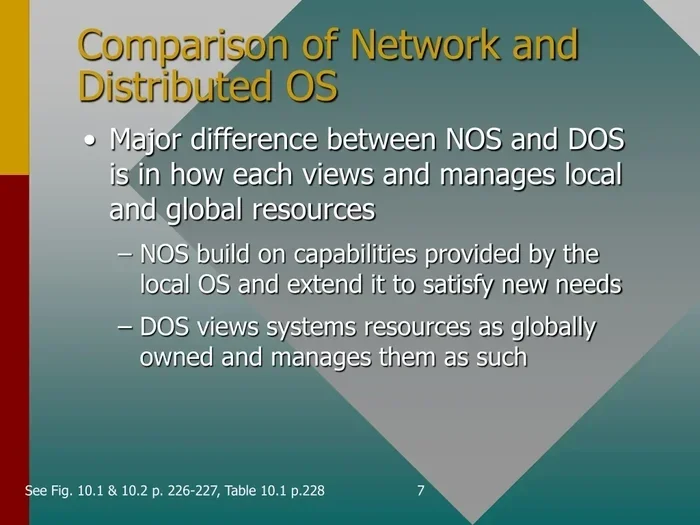
A regular operating system runs a single computer and manages its local resources. A network operating system runs on a server and manages network resources. It handles file sharing, user authentication, printer access, and communication between multiple devices across a network.
Are network operating systems still relevant today?
Absolutely. While the form has changed, network operating systems are more relevant than ever. Modern cloud platforms, software-defined networking, and container orchestration tools are all descendants of traditional NOS. The core functions of managing, securing, and optimizing network resources remain essential.
What role did Unix play in the development of network operating systems?
Unix was foundational to the development of network operating systems. Its multi-user capabilities, modular design, and early support for network protocols made it the blueprint for future systems. Linux, a Unix-like operating system, remains one of the most widely used platforms for network servers today.
Will artificial intelligence replace network administrators?
AI will not replace network administrators but will change their role. AI-powered tools can automate routine tasks like monitoring, troubleshooting, and configuration. Administrators will focus more on strategy, security policy, and complex problem-solving. The history of network operating systems shows that technology always augments human expertise rather than replacing it entirely.
=== CONCLUSION ===
The history of network operating systems is a fascinating journey through decades of innovation. From isolated mainframes in the 1960s to the cloud-native platforms of today, network operating systems have continuously adapted to meet new demands. Each era brought breakthroughs that made networks faster, more secure, and more accessible.
Novell NetWare proved that file sharing was essential. Windows NT showed the power of centralized administration. Linux demonstrated the strength of open-source collaboration. Cloud computing and virtualization transformed how we deploy and manage networks. And today, AI, edge computing, and 5G are pushing the boundaries even further.
Understanding this history gives you a deeper appreciation for the technology you use every day. The next time you connect to a network, send a file, or stream content, remember the decades of progress behind it. The history of network operating systems reminds us that connectivity is not just a technical achievement — it is a human one.