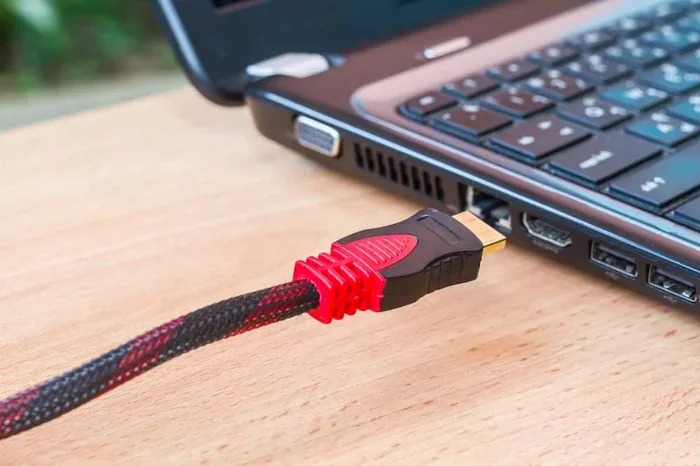
Can I Use Hdmi 2 0 Cable On A 1 4 Port And What Happens
Yes, you can use an HDMI 2.0 cable on a 1.4 port. The connection will work, but you may not get the full benefits of HDMI 2.0. Your device will automatically downgrade to HDMI 1.4 standards, which limits features like 4K at 60Hz and HDR.
This is a comprehensive guide about Can I Use Hdmi 2 0 Cable On 1 4 Port.
Key Takeaways
- Full Backward Compatibility: HDMI 2.0 cables work perfectly fine on HDMI 1.4 ports without any damage or issues.
- Automatic Signal Downgrade: Your devices will negotiate the best common standard, which means HDMI 2.0 features get scaled back.
- Resolution Limits Apply: You may be capped at 4K at 30Hz instead of 4K at 60Hz when using HDMI 1.4.
- No Physical Damage Risk: Plugging a newer cable into an older port is completely safe for your equipment.
- Check Your Device Specs: Understanding your port version helps you set realistic expectations for picture and audio quality.
- Simple Fix for Better Performance: If you need HDMI 2.0 features, upgrading the port or device is the only real solution.
[FEATURED_IMAGE_PLACEHOLDER]
Can I Use HDMI 2.0 Cable On A 1.4 Port And What Happens
If you have an HDMI 2.0 cable lying around and a device with an HDMI 1.4 port, you might be wondering whether it will even work. The short answer is yes. You can absolutely plug an HDMI 2.0 cable into an HDMI 1.4 port. But the real question is what you actually get out of that connection.
Here is the thing. HDMI cables are designed to be backward compatible. That means a newer cable will work with an older port. However, the connection will only operate at the speed and capability of the oldest device in the chain. So if you plug a fancy HDMI 2.0 cable into an HDMI 1.4 port, you get HDMI 1.4 performance. It is really that simple.
In this article, we will break down exactly what happens when you use an HDMI 2.0 cable on a 1.4 port. We will cover compatibility, resolution limits, bandwidth differences, and whether it is even worth using that cable at all. By the end, you will know exactly what to expect and how to get the best results from your setup.
Understanding HDMI Versions And What They Mean
Before diving into the cable and port compatibility, it helps to understand what these version numbers actually mean. HDMI versions are not just random labels. They represent specific standards that define what a cable or port can do.
What Is HDMI 1.4?
HDMI 1.4 was released back in 2009. It became the standard for many TVs, monitors, and AV receivers for several years. This version supports 4K resolution, but only at 30Hz. That means the picture updates 30 times per second. For movies and still images, that is fine. But for fast-moving video and gaming, it can feel a bit choppy.
HDMI 1.4 also introduced the ARC (Audio Return Channel) feature. This lets you send audio from your TV back to a soundbar or receiver using just one cable. It also supports 3D content and an Ethernet channel for network sharing between devices.
What Is HDMI 2.0?
HDMI 2.0 came out in 2013 and brought some big improvements. The biggest upgrade was support for 4K at 60Hz. That doubles the frame rate compared to HDMI 1.4. This makes a huge difference for gaming and sports broadcasts where smooth motion matters a lot.
HDMI 2.0 also expanded the bandwidth significantly. It goes from 10.2 Gbps in HDMI 1.4 to 18 Gbps in HDMI 2.0. More bandwidth means more data can flow through the cable every second. This allows for higher resolution, better color depth, and support for HDR (High Dynamic Range) content.
Other HDMI 2.0 features include support for up to 32 audio channels and dynamic metadata for HDR. These enhancements make a noticeable difference in picture and sound quality when your entire setup supports them.
What Happens When You Connect HDMI 2.0 Cable To 1.4 Port
Now let us get to the heart of the matter. What actually happens when you plug an HDMI 2.0 cable into an HDMI 1.4 port? The answer is straightforward, but there are some important details to understand.
The Connection Will Work
First and most importantly, the connection works. There is no risk of damage to your cable or your device. HDMI cables use a standardized design that has remained consistent across all versions. The physical connector on an HDMI 2.0 cable is identical to the one on an HDMI 1.4 cable. So you can plug and unplug without any worries.
When you connect the cable, the devices on both ends will perform a handshake. This is an automatic process where the source device and the display negotiate the best supported settings. Since the HDMI 1.4 port is the limiting factor, the negotiation will settle on HDMI 1.4 capabilities. Your HDMI 2.0 cable will simply act as an HDMI 1.4 cable in this scenario.
Resolution And Refresh Rate Limitations
This is where things get interesting. When you use an HDMI 2.0 cable on a 1.4 port, you are limited to HDMI 1.4 specifications. That means the maximum resolution you can get is 4K, but only at 30Hz. If you were hoping to enjoy 4K at 60Hz, that is not going to happen with an HDMI 1.4 port.
For most casual viewing, 4K at 30Hz is perfectly fine. You will watch movies and browse content without any issues. But if you are a gamer or if you want buttery smooth motion, the 30Hz limit can be frustrating. Fast-paced action and competitive games will not look as fluid as they would with HDMI 2.0.
Here is a quick comparison of what you get with each version:
- HDMI 1.4: 4K at 30Hz, 1080p at 120Hz, 10.2 Gbps bandwidth, basic HDR support.
- HDMI 2.0: 4K at 60Hz, 1080p at 240Hz, 18 Gbps bandwidth, full HDR support with dynamic metadata.
Audio Quality Impact
The audio experience also gets scaled back when you use an HDMI 2.0 cable on a 1.4 port. HDMI 1.4 supports up to 8 audio channels, while HDMI 2.0 can handle up to 32 channels. In practical terms, most people will not notice a huge difference because standard surround sound setups use 5.1 or 7.1 channels, which both versions support.
However, if you are using advanced audio formats like Dolby Atmos through HDMI, HDMI 1.4 may not deliver the full experience. HDMI 2.0 handles these formats much better. So if high-quality audio is important to you, the port version does matter.
HDR And Color Support
HDR is one of the biggest visual upgrades in modern displays. HDMI 1.4 introduced basic HDR support, but HDMI 2.0 expanded on it significantly. With HDMI 2.0, you get dynamic metadata, which allows the content to adjust brightness and color on a scene-by-scene or frame-by-frame basis.
When you use an HDMI 2.0 cable on a 1.4 port, you may still get HDR, but the experience will be limited. The HDR content might not look as vibrant or detailed as it would with a full HDMI 2.0 connection. The color range and contrast adjustments will be more basic.
Some devices handle this negotiation better than others. A few TVs and monitors with HDMI 1.4 ports can still pass through HDR signals, but they may not support all the advanced HDR features that HDMI 2.0 offers.
Is It Safe To Use HDMI 2.0 Cable On 1.4 Port
One of the most common concerns people have is whether using a newer cable with an older port could damage their equipment. The answer is a reassuring no. HDMI cables are designed with universal compatibility in mind.
The HDMI standard has always maintained backward compatibility. This means that newer cables work with older ports, and older cables work with newer ports. The physical design of the HDMI connector has not changed between versions 1.4 and 2.0. You are using the same shape, size, and pin configuration.
There is no risk of electrical damage, short circuits, or hardware harm. Your HDMI 2.0 cable will simply communicate with your HDMI 1.4 device using the protocols that HDMI 1.4 understands. The cable will automatically adjust its capabilities to match the port.
Some people worry that using the wrong cable might cause overheating or signal interference. These concerns are unfounded. HDMI cables are built to handle a range of signal conditions. If the port cannot handle the full bandwidth of HDMI 2.0, the cable and device will simply negotiate a lower bandwidth that both can handle safely.
When You Might Notice Issues
While it is completely safe, there are a few situations where you might notice minor issues. These are not caused by the cable or port being incompatible. They happen because of the limitations of the HDMI 1.4 standard.
- Flickering at high resolutions: If you try to push 4K at 60Hz through an HDMI 1.4 port, the connection might fail or flicker. The port simply cannot handle that bandwidth.
- No HDR on some setups: Certain HDMI 1.4 devices may not pass through HDR signals correctly, resulting in a standard dynamic range picture.
- Audio sync issues: In rare cases, the audio and video might not sync perfectly when the connection is forced to use older protocols.
If you encounter any of these issues, they are not signs of damage. They are simply the natural result of using an HDMI 2.0 cable with an HDMI 1.4 port. The fix is to either accept the HDMI 1.4 limitations or upgrade your port or device.
Does The Cable Quality Matter
You might wonder if the quality of your HDMI 2.0 cable matters when it is being used on an HDMI 1.4 port. The answer is yes, but not in the way you might think.
Since the connection will operate at HDMI 1.4 speeds, a premium HDMI 2.0 cable will not give you any extra performance over a basic HDMI 1.4 cable. Both cables will deliver the same picture and sound quality when connected to an HDMI 1.4 port. The expensive cable is essentially wasted in this scenario.
That said, using a well-built cable is never a bad idea. A high-quality HDMI cable tends to have better shielding and more durable connectors. This can lead to a more stable connection over time, especially if you are running the cable over long distances.
If you are buying a new cable and you know your port is HDMI 1.4, there is no need to spend extra on an HDMI 2.0 or HDMI 2.1 cable. A standard HDMI 1.4 cable will do the exact same job. Save your money and spend it elsewhere in your setup.
Quick Tips For Cable Selection
- Check your port version first: Look at your device manual or the port label to know what HDMI version you are working with.
- Buy for your oldest device: If your setup has mixed HDMI versions, buy a cable that matches the oldest port.
- Do not overpay: An expensive cable does not improve picture quality on an HDMI 1.4 port.
- Look for the HDMI logo: Cables with the official HDMI certification mark meet the standard specifications for that version.
- Keep cables short: Shorter cables reduce signal loss and give you a more reliable connection.
When Should You Upgrade From HDMI 1.4 To HDMI 2.0
Using an HDMI 2.0 cable on a 1.4 port works fine, but it does not unlock the full potential of HDMI 2.0. If you want to take advantage of 4K at 60Hz, full HDR support, and better audio formats, you need an HDMI 2.0 port.
Signs You Need To Upgrade
How do you know if it is time to upgrade your setup? Here are some clear signs that you would benefit from moving to HDMI 2.0.
- You game on a 4K TV: If you play video games at 4K resolution, you want 60Hz for smooth gameplay. HDMI 1.4 only gives you 30Hz, which is not ideal for most modern games.
- You watch a lot of HDR content: Streaming services like Netflix and Disney Plus offer HDR content. To see it the way the creators intended, you need HDMI 2.0 or higher.
- Your sports look choppy: Fast-moving sports content can look less smooth at 30Hz. Upgrading to HDMI 2.0 gives you 60Hz for a much better viewing experience.
- You use advanced audio: If you have a home theater setup with Dolby Atmos or similar formats, HDMI 2.0 provides better audio support.
- You have multiple 4K devices: If your gaming console, Blu-ray player, and streaming box all support 4K at 60Hz, your HDMI 1.4 port is holding them back.
How To Upgrade
Upgrading from HDMI 1.4 to HDMI 2.0 is easier than you might think. Here are a few options.
- Upgrade your TV or monitor: Most modern 4K TVs and monitors come with HDMI 2.0 ports as standard. If your current device only has HDMI 1.4, consider upgrading to a newer model.
- Use an HDMI 2.0 AV receiver: If you have an older TV with HDMI 1.4 ports, you can connect an HDMI 2.0 AV receiver. The receiver processes the HDMI 2.0 signal and sends it to your TV using the HDMI 1.4 port. This is not ideal, but it works for some setups.
- Check for firmware updates: Some devices receive firmware updates that add HDMI 2.0 support. Check the manufacturer website for your specific model.
- Use a display port: If your PC or monitor supports DisplayPort, you can use that instead of HDMI for higher bandwidth and better performance.
Common Mistakes People Make With HDMI Cables
There are several common mistakes that people make when dealing with HDMI cables and ports. Avoiding these can save you a lot of frustration and help you get the best performance from your setup.
Assuming All HDMI Cables Are The Same
Not all HDMI cables are created equal. While they all use the same connector, they support different bandwidths and features. Using an older HDMI 1.4 cable on an HDMI 2.0 port will limit your connection to HDMI 1.4 speeds. Similarly, using an HDMI 2.0 cable on an HDMI 1.4 port limits you to HDMI 1.4 speeds.
Believing A More Expensive Cable Gives Better Picture Quality
In most home setups, a $10 HDMI cable performs exactly the same as a $100 HDMI cable. The digital signal either works perfectly or it does not. There is no in-between with gradual quality improvement. Pay for the right version, not the highest price tag.
Ignoring Cable Length
Longer HDMI cables can lose signal quality, especially at higher resolutions. If you need to run a cable more than 15 feet, consider using an active HDMI cable or a signal booster. This ensures you get a clean, stable connection without any dropouts.
Not Checking Both Ends Of The Connection
Your connection quality depends on the oldest device in the chain. If your source device has an HDMI 2.0 port but your TV has an HDMI 1.4 port, the entire connection is limited to HDMI 1.4. Always check both ends and every device in between.
Final Thoughts
So, can you use an HDMI 2.0 cable on a 1.4 port? Absolutely yes. The connection is safe, it works, and you will not damage anything. But you will not get the full HDMI 2.0 experience either. The connection will operate at HDMI 1.4 speeds and capabilities, which means 4K at 30Hz and basic HDR support at best.
If your current setup works for your needs, there is no urgent reason to change anything. But if you want better resolution, smoother frame rates, and full HDR support, you will need to upgrade to an HDMI 2.0 port or a device that has one. Understanding the difference between HDMI versions helps you make smart buying decisions and set realistic expectations for your entertainment setup.
The most important takeaway is that compatibility is not the issue. HDMI is designed to be backward compatible, so you can mix and match cables and ports without worry. The real question is always about performance. Know what your port supports, and you will know exactly what to expect from your connection.
Frequently Asked Questions
Will using an HDMI 2.0 cable on a 1.4 port damage my devices?
No, it will not cause any damage. HDMI cables are built to be backward compatible. The devices will simply negotiate the best common standard, which in this case is HDMI 1.4. Your equipment will work exactly as it normally would.
Can I get 4K resolution with an HDMI 2.0 cable on a 1.4 port?
Yes, you can get 4K resolution, but only at 30Hz. HDMI 1.4 supports 4K at 30Hz, which is sufficient for watching movies and browsing content. However, you will not get 4K at 60Hz, which is one of the main benefits of HDMI 2.0.
Do I need to buy a new cable if my port is HDMI 1.4?
Not necessarily. If you already have an HDMI 2.0 cable, you can keep using it. It will work fine on an HDMI 1.4 port. If you are buying a new cable, there is no need to spend extra on an HDMI 2.0 cable when your port only supports HDMI 1.4. A basic HDMI 1.4 cable will serve you just as well.
What is the difference between HDMI 1.4 and HDMI 2.0 bandwidth?
HDMI 1.4 has a bandwidth of 10.2 Gbps, while HDMI 2.0 has a bandwidth of 18 Gbps. This difference is what allows HDMI 2.0 to support higher resolutions, faster refresh rates, and advanced features like dynamic HDR metadata. When you use an HDMI 2.0 cable on a 1.4 port, the connection is limited to 10.2 Gbps.
Can I use HDR content with an HDMI 2.0 cable on a 1.4 port?
You may be able to use basic HDR content, but the experience will be limited. HDMI 1.4 introduced basic HDR support, but it does not include all the advanced features of HDMI 2.0, such as dynamic metadata. The HDR content may still display, but it might not look as vibrant or detailed as it would with a full HDMI 2.0 connection.
How can I check which HDMI version my port supports?
You can check your device manual, look for labels on the port itself, or visit the manufacturer website for your specific model. Many TVs and monitors list the HDMI version in their specifications. If you cannot find the version, look at the year of manufacture. Devices made after 2013 are very likely to have HDMI 2.0 ports.
Frequently Asked Questions
What is Can I Use Hdmi 2 0 Cable On 1 4 Port?
Can I Use Hdmi 2 0 Cable On 1 4 Port is an important topic with many practical applications.