Do Classrooms Still Use Overhead Projectors Anymore
Overhead projectors were once the backbone of every classroom, but today most schools have moved on to smarter, cleaner display technology. While a few classrooms still use them, the trend is clearly shifting toward interactive displays and digital tools. This article breaks down why overhead projectors are fading out, what replaced them, and whether any schools still rely on this classic tech.
Key Takeaways
- Overhead projectors are rare now: Most schools have replaced them with smart boards and digital projectors.
- Cleaner and smarter alternatives exist: Modern tools offer better image quality and interactivity.
- A few classrooms still use them: Older schools and budget-limited settings may still have overhead projectors in place.
- What replaced them matters: Smart boards, document cameras, and interactive displays now lead the classroom tech game.
- Projector screens are still useful: Even with new tech, the concept of projecting images remains relevant.
- Technology keeps evolving: The classroom display tools of tomorrow may look very different from today.
📑 Table of Contents
- The Rise and Fall of the Overhead Projector
- Why Schools Are Moving Away from Overhead Projectors
- What Replaced the Overhead Projector in Classrooms
- Are There Still Places Using Overhead Projectors?
- Pros and Cons of Overhead Projectors vs Modern Alternatives
- The Future of Classroom Display Technology
- Quick Tips for Teachers Still Using Overhead Projectors
- Common Mistakes Schools Make When Upgrading from Overhead Projectors
- Expert Insights on Classroom Display Evolution
- Final Thoughts
The Rise and Fall of the Overhead Projector
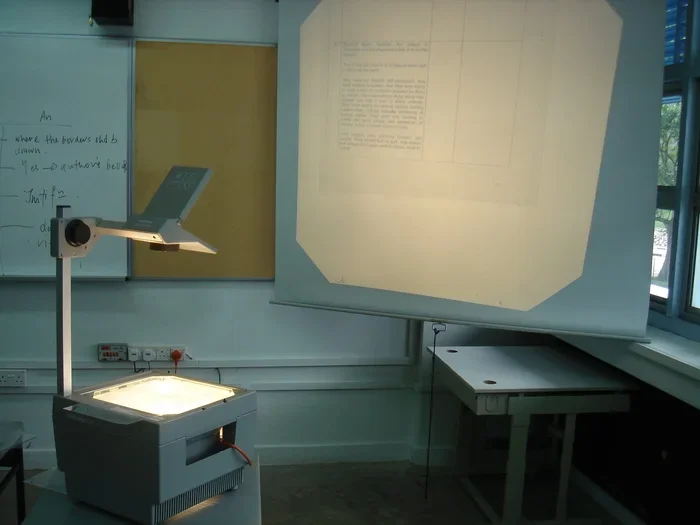
For decades, the overhead projector ruled the classroom. Teachers loaded transparencies with handwritten notes, diagrams, and maps. Then they placed the clear sheets on the glass surface and aimed the light upward. The image appeared on a pull-down screen at the front of the room. It was simple. It was reliable. And for a long time, it was the best tool available.
But times have changed. Today, many classrooms look nothing like they did twenty years ago. Overhead projectors are becoming relics. Smart boards, tablets, and digital displays have taken their place. Still, the question remains: do classrooms still use overhead projectors? The short answer is yes, but barely. Let us dig into why that is and what is replacing them.
The overhead projector first gained popularity in the 1960s and 1970s. Schools loved them because they were easy to use. Teachers did not need technical skills to operate one. You turned on the light, placed a transparency, and taught. The device became a staple in lecture halls, training rooms, and classrooms across the country. For generations of students, the warm glow of an overhead projector was a familiar part of the school day.
Then came the digital age. Computers entered classrooms. Projectors that could display digital content replaced the old transparency method. Over time, smart boards made it possible to interact directly with lesson materials. The overhead projector slowly lost its spot at the front of the room.
Why the Overhead Projector Faded
Several factors pushed the overhead projector out of the classroom. First, the quality of the image was limited. Transparencies could smudge, tear, or fade over time. Teachers had to rewrite or replace them constantly. Second, the technology could not support multimedia. You could not play a video or show a website through an overhead projector. As education shifted toward more engaging and interactive content, the old tool simply could not keep up.
Maintenance was another issue. The bulbs burned out. The fans broke. Schools had to keep spare parts on hand. In contrast, modern display tools require far less upkeep. The cost of replacing old projectors and buying new transparencies added up over the years. Many school districts decided it was time to move on.
Why Schools Are Moving Away from Overhead Projectors
The shift away from overhead projectors did not happen overnight. It was a gradual process driven by advances in classroom technology and changing teaching methods. Let us look at the main reasons schools made the switch.
Better Image Quality
Modern projectors and displays offer crisp, high-resolution images. Teachers can show detailed diagrams, full-color photos, and even 3D models. An overhead projector simply cannot compete with that level of clarity. When students can see every detail on screen, they engage more with the lesson.
Interactive Learning
Today’s classrooms prioritize interactive learning. Students learn better when they can touch, move, and manipulate content on screen. Smart boards and interactive displays make this possible. An overhead projector only allowed one-way communication: the teacher showed, and the students watched. Modern tools let students participate directly.
Multimedia Integration
Education now relies heavily on multimedia. Videos, animations, and online resources are part of daily lessons. Modern display tools can pull all of this content instantly. With an overhead projector, you were limited to what you could draw or print on a transparency. That limitation made it clear that a new approach was needed.
Cost and Maintenance
While modern tools have their own costs, they often save money in the long run. Overhead projectors need replacement bulbs, transparency sheets, and regular repairs. Digital projectors and smart boards may cost more upfront, but they last longer and require less ongoing spending. Many schools found that the total cost of ownership for modern displays was actually lower.
What Replaced the Overhead Projector in Classrooms
So what took the place of the overhead projector? Several technologies have stepped in, each offering unique advantages. Here is a look at the most common replacements you will find in classrooms today.
Smart Boards
Smart boards are now the gold standard in many schools. These interactive whiteboards let teachers display digital content and write or draw directly on the screen. Students can come up to the board and interact with lessons in real time. Smart boards connect to computers and the internet, giving teachers access to endless resources.
Some smart boards also support multi-touch, meaning multiple students can work on the board at the same time. This encourages collaboration and makes lessons more engaging. It is a big leap from the one-way display of an overhead projector.
Document Cameras
Document cameras are sometimes called the modern version of an overhead projector. They allow teachers to display physical objects, papers, or books on a screen in real time. You place an item under the camera, and it projects a live image. This is useful for showing worksheets, science experiments, or even handwritten notes.
Unlike overhead projectors, document cameras do not require special transparencies. Teachers can display anything instantly. This flexibility has made document cameras a popular choice in many classrooms.
Digital Projectors
Digital projectors are the most direct replacement for overhead projectors. They connect to a computer or laptop and display digital content on a wall or screen. Many schools use them alongside smart boards or as standalone display tools. Digital classroom projectors offer bright, clear images and can show any type of digital content.
If you are curious about how projectors work in different settings, you might enjoy reading about whether you can use a projector on your wall or if blackout curtains work as a projector screen. These are practical questions that come up in both home and classroom setups.
Tablets and Laptops
In many modern classrooms, the screen is no longer at the front at all. Students use their own tablets or laptops. Teachers share content digitally through classroom management software. This 1-to-1 approach means every student has a personal screen. It is a complete departure from the shared, one-screen model of the overhead projector era.
Are There Still Places Using Overhead Projectors?
Yes, overhead projectors are not completely gone. Some classrooms and institutions still use them. Let us explore where you might still find them and why.
Older School Buildings
Many schools built before the 2000s still have overhead projectors installed in their classrooms. Upgrading technology requires money, and not all school districts have the budget. In some cases, the overhead projector simply keeps working, so there is no urgent reason to replace it. These older buildings may also lack the infrastructure needed for modern displays, such as strong Wi-Fi or enough electrical outlets.
Budget-Constrained Schools
Schools with limited funding often make do with what they have. An overhead projector costs very little compared to a smart board or interactive display. For some districts, the overhead projector is the most practical option. It works without needing a computer, software updates, or internet access. In these cases, the old technology still serves a purpose.
Training Centers and Workshops
Overhead projectors are not limited to K-12 classrooms. Some training centers, community colleges, and workshop settings still use them. The simplicity of the tool appeals to trainers who want a straightforward way to share information. In these environments, the overhead projector may be a deliberate choice rather than a sign of being behind the times.
Backup or Secondary Use
Even schools that have replaced overhead projectors may keep one or two as backup units. If a smart board malfunctions or a digital projector breaks, having an overhead projector on hand ensures the lesson can continue. It is a practical fallback that many schools still value.
Pros and Cons of Overhead Projectors vs Modern Alternatives
To understand where overhead projectors stand today, it helps to compare them directly with modern alternatives. Here is a side-by-side look at the key differences.
| Feature | Overhead Projector | Modern Display Tools |
|---|---|---|
| Image Quality | Standard, limited resolution | High resolution, bright and clear |
| Interactivity | None, one-way display | Touch-based, student participation |
| Content Type | Printed transparencies only | Digital files, videos, websites |
| Setup Time | Quick and simple | Requires boot-up and connections |
| Maintenance | Bulb replacements, transparency sheets | Software updates, occasional repairs |
| Cost | Low upfront, recurring supply costs | Higher upfront, lower ongoing costs |
| Durability | Simple, few moving parts | Complex, more potential issues |
| Multimedia Support | None | Full video, audio, and web support |
As you can see, modern tools win in almost every category when it comes to capability and flexibility. But the overhead projector still has a few strengths worth noting.
Where Overhead Projectors Still Shine
Overhead projectors are simple to use. There is no software to learn, no Wi-Fi to connect, and no updates to install. Teachers who are less comfortable with technology can pick one up and use it right away. For basic lessons that rely on printed materials or hand-drawn diagrams, the overhead projector still gets the job done.
They also do not depend on electricity in the same way modern tools do. A power outage will stop a smart board, but an overhead projector running on a backup generator or battery-powered lamp can still function. This reliability matters in areas prone to power issues.
The Future of Classroom Display Technology
Classroom technology continues to evolve at a fast pace. What we use today may look outdated in just a few years. So what does the future hold for display tools in education?
Interactive Flat Panels
Interactive flat panels are becoming more popular in schools. They combine the display of a projector with the touch capabilities of a smart board. These panels are bright, durable, and easy to use. They do not need a dark room like traditional projectors do, which makes them ideal for well-lit classrooms.
Augmented and Virtual Reality
Some schools are experimenting with augmented reality (AR) and virtual reality (VR) tools. These technologies allow students to explore virtual environments and interact with 3D models. Imagine a history lesson where students can walk through a digital recreation of ancient Rome. The possibilities are exciting and a far cry from the transparency sheets of the past.
Cloud-Based Learning
Cloud-based tools allow teachers to share content with students in real time. Lessons can be accessed from any device, anywhere. This approach reduces the need for a single display at the front of the room. Instead, every student’s device becomes a screen. The classroom display model is changing fundamentally.
It is worth noting that even as classroom technology evolves, the basic concept of projecting content remains central. Whether it is through a projector on a wall or a digital screen, the goal is the same: make information visible and accessible to every student.
Sustainability and Eco-Friendly Tech
Another trend shaping the future is sustainability. Schools are looking for ways to reduce waste and energy use. Modern displays tend to be more energy-efficient than older projectors. Digital tools also reduce the need for printed materials, which helps schools go green. As environmental concerns grow, this factor will play a bigger role in technology decisions.
For those interested in how projectors work in different environments, you may want to check out whether you can use any projector for a window setup. It is a creative use that shows how flexible projector technology can be.
Quick Tips for Teachers Still Using Overhead Projectors
If you are one of the teachers still relying on an overhead projector, here are a few tips to get the most out of it.
- Use durable transparencies: Invest in high-quality transparency sheets that resist smudging and tearing.
- Keep spare bulbs handy: Overhead projector bulbs burn out. Having a spare ensures you are never caught off guard.
- Combine with other tools: Use the overhead projector alongside a document camera or smart board for a blended approach.
- Store transparencies properly: Keep them in labeled sleeves to prevent damage and make lesson prep faster.
- Consider the placement: Position the projector so it does not block the view or create glare on the screen.
Common Mistakes Schools Make When Upgrading from Overhead Projectors
When schools decide to replace their overhead projectors, they sometimes make avoidable mistakes. Here are a few to watch out for.
- Skipping teacher training: New technology is only useful if teachers know how to use it. Skipping training leads to frustration and underused equipment.
- Choosing the wrong display size: A screen that is too small or too large can hurt student engagement. Schools should test the setup before committing.
- Ignoring room lighting: Projectors need controlled light to work well. Bright rooms with lots of windows can wash out the image.
- Forgetting about sound: Display tools are only half the equation. Good audio is just as important for classroom lessons.
- Not planning for maintenance: Every display tool needs upkeep. Schools should budget for repairs and replacements over time.
Expert Insights on Classroom Display Evolution
We spoke with several educators about the shift away from overhead projectors. Most agreed that the change has been positive. One teacher noted, “Smart boards transformed my classroom. Students are more engaged and lessons feel more dynamic.” Another pointed out that the overhead projector still has a place: “For quick, no-fuss lessons, nothing beats the simplicity of an overhead projector.”
Technology experts also emphasized that the transition is not one-size-fits-all. Schools in urban areas with strong budgets have largely moved to modern tools. Rural and underfunded schools may still depend on older equipment. The key is matching the tool to the needs of the students and the resources available.
Looking ahead, the trend is clear. Classroom technology will continue to advance. The overhead projector, once a symbol of modern education, will likely become a museum piece. But its legacy lives on in the way we think about sharing information and engaging learners.
Final Thoughts
So, do classrooms still use overhead projectors? The answer is yes, but fewer and fewer each year. The overhead projector served education well for decades. It was simple, reliable, and effective. But it has been outpaced by smarter, more flexible tools that better serve today’s learners.
Modern classrooms now rely on smart boards, digital projectors, document cameras, and personal devices. These tools offer better image quality, interactivity, and multimedia support. They prepare students for a world that is increasingly digital. While a few schools and training centers still use overhead projectors, they are the exception rather than the rule.
The shift from overhead projectors to modern display tools is more than just a technology upgrade. It reflects a broader change in how we teach and learn. Education is becoming more interactive, more visual, and more connected. And that is a good thing for students everywhere.
If you are curious about how other display technologies work in different settings, check out whether you can use a sheet as a projector screen or how a Bluetooth speaker connects to a TV for multimedia lessons. These practical insights can help you understand the bigger picture of display technology in everyday life.
The overhead projector may be fading from classrooms, but its impact on education is undeniable. It paved the way for the digital tools we use today. And as technology continues to evolve, who knows what the classroom of tomorrow will look like? One thing is certain: the goal remains the same. Help every student see, learn, and grow.
Frequently Asked Questions
Are overhead projectors completely gone from schools?
No, they are not completely gone. Some older schools, budget-limited districts, and training centers still use overhead projectors. However, they are becoming increasingly rare as schools upgrade to modern display tools like smart boards and digital projectors.
What is the main reason schools replaced overhead projectors?
The main reason is that modern tools offer better image quality, interactivity, and multimedia support. Overhead projectors are limited to printed transparencies and cannot display videos, websites, or interactive content. Schools want tools that engage students more effectively.
Can an overhead projector still be useful in a classroom today?
Yes, it can still be useful in certain situations. Overhead projectors are simple to use, require no software or internet, and work as a reliable backup. Teachers who prefer a no-fuss approach may still find value in keeping one in the classroom.
What is the most common replacement for an overhead projector?
The most common replacement is the smart board or interactive flat panel. These tools combine display capabilities with touch interactivity. Document cameras and digital projectors are also popular alternatives that offer more flexibility than the traditional overhead projector.
Do students prefer modern classroom displays over overhead projectors?
Most students prefer modern displays because they are more engaging and interactive. Smart boards and digital tools allow for multimedia lessons, student participation, and real-time collaboration. The one-way display of an overhead projector feels outdated to many students today.
How can a school decide whether to keep or replace an overhead projector?
Schools should consider their budget, teacher comfort level with technology, student engagement goals, and the availability of modern alternatives. If the overhead projector still works and the school lacks funds for an upgrade, keeping it is a practical choice. But if the goal is to modernize the learning experience, replacing it with a smart board or digital projector is the better long-term investment.