Can You Watch Tv On A Projector Outside In Backyard
Yes, you absolutely can watch TV on a projector outside. With the right projector, screen, and setup, your backyard becomes the ultimate entertainment space. This guide covers everything you need, from choosing a bright projector to picking the best outdoor screen and avoiding common setup mistakes.
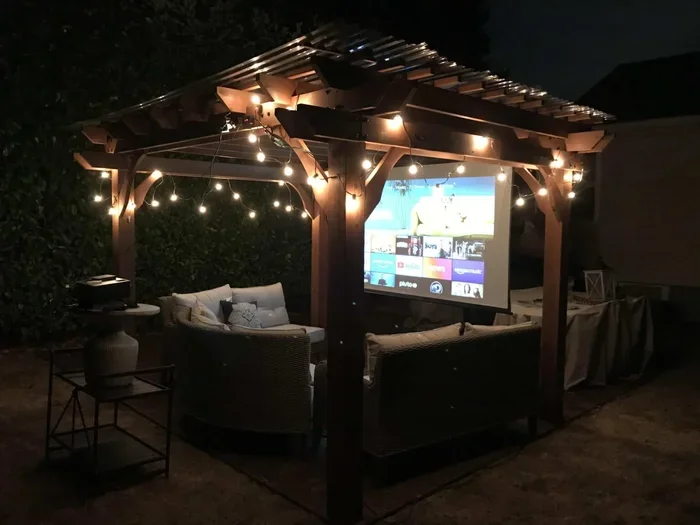
Have you ever thought about watching TV on a projector outside in your own backyard? Picture this: it’s a warm evening, the stars are out, and you’re enjoying your favorite show on a big screen under the open sky. It sounds amazing, right? But can you actually do it? The short answer is yes. You can definitely watch TV on a projector outside and turn your backyard into a personal theater. But there are a few things you need to know first.
Setting up a projector outdoors is not as hard as it sounds. You do not need a degree in technology. You just need the right gear, a little planning, and some basic know-how. Whether you want to host movie nights, watch sports on a huge screen, or stream your favorite series under the stars, this guide has you covered. Let us dive into everything you need to know about outdoor projector TV setups.
Key Takeaways
- Outdoor projector TV is totally doable: You just need a bright projector, a proper screen, and a shaded setup.
- Brightness matters most: Look for at least 2,000 lumens to fight ambient light in your backyard.
- You have multiple screen options: From inflatable screens to blackout curtains and even a simple white wall.
- Wireless streaming makes it easy: You can pair your phone or laptop and stream without messy cables.
- Weather and power are key concerns: Protect your gear and plan your power source before you start.
- Sound upgrades make a big difference: Built-in projector speakers often fall short for outdoor use.
- Setup takes planning but pays off: A well-thought-out backyard projector setup creates unforgettable movie nights.
📑 Table of Contents
Can You Watch TV On A Projector Outside?
The simple answer is yes. You can watch TV on a projector outside just like you would indoors. Projectors work by projecting light onto a surface, and that works just as well in your backyard as it does in your living room. The real question is not “can you” but “how do you get the best results?”
Outdoor projector setups have become incredibly popular. People love the idea of outdoor movie nights and backyard entertainment. A projector gives you a screen size that no regular TV can match. Imagine a 100-inch or even 150-inch display right in your yard. That is the magic of outdoor projection.
But there are challenges you need to think about. Sunlight, weather, power, and sound all play a role. Let us break down each one so you can plan your setup with confidence.
Why People Love Outdoor Projector TV
There are so many reasons people are switching to outdoor projector TV. Here are the biggest ones:
- Bigger screen size: Projectors can create screens way larger than any TV you can buy.
- Cost-effective: A good projector costs less than a large outdoor TV.
- Portability: You can set it up anywhere and take it down when you are done.
- Fun factor: There is something magical about watching TV or movies outside under the stars.
- Versatility: Use it for movie nights, sports watch parties, game nights, and more.
What You Need For Outdoor TV On A Projector
To get started with watching TV on a projector outside, you need a few key pieces of equipment. You do not need a lot, but each item matters. Let us walk through the essentials.
The Projector
Your projector is the heart of the whole setup. Not all projectors are created equal, especially for outdoor use. The most important spec to look at is brightness, measured in lumens.
For outdoor viewing, you want a projector with at least 2,000 to 3,000 lumens. This helps fight ambient light from street lamps, neighbors’ lights, or even the moon. If you plan to watch during the day or in early evening, go for 3,000 lumens or more.
Here are the key features to look for in an outdoor projector:
- Brightness: 2,000+ lumens for dusk viewing, 3,000+ for daytime.
- Resolution: At least 1080p for a sharp picture. 4K is even better but costs more.
- HDMI ports: You need HDMI to connect streaming devices, laptops, or cable boxes.
- Built-in speaker: Some projectors have decent speakers. Others need external audio.
- Wireless capability: Some projectors support Wi-Fi or Bluetooth for easy streaming.
The Screen
You need something to project onto. You do not have to buy an expensive screen either. There are plenty of options for outdoor projector screens.
You could use a portable inflatable screen, a pull-down screen, or even a white sheet stretched tight. If you want a quick and easy setup, an inflatable screen works great. For a more permanent setup, a fixed frame screen gives you the best picture quality.
Here is a quick look at screen options:
- Inflatable screens: Easy to set up and take down. Great for occasional use.
- Pull-down screens: Better picture quality. Good for regular use.
- White wall or fence: Free and simple. Works in a pinch.
- Blackout curtains: You can actually use blackout curtains as a projector screen if you do not have a dedicated screen.
If you are creative with your setup, you might even try hanging a projector screen on a wall or using a large white tarp. The key is to make the surface as smooth and white as possible for the best image.
Audio Setup
Projector speakers are often weak. Outdoors, sound disperses quickly, so you need better audio. Consider adding a Bluetooth speaker or a small soundbar to your setup. This makes a huge difference in your viewing experience.
Streaming Device Or Source
You need something to send the TV signal to your projector. You can use a streaming stick like a Roku or Fire Stick, a laptop, a cable box, or even your phone. If you want to pair your phone to a projector, many modern projectors support screen mirroring or Bluetooth connections.
For the best experience, a streaming stick plugged in via HDMI is the simplest option. Just make sure your projector has enough ports and supports the right connections.
Best Projectors For Outdoor Use
Not all projectors handle outdoor conditions well. You need one that is bright enough to compete with ambient light. Here are some things to keep in mind when choosing your projector for outdoor projector TV watching.
Brightness Is Everything
Ambient light is the enemy of outdoor projection. During the day, the sun will wash out your image completely. Even in the evening, street lights and porch lights can dim your picture. This is why brightness, measured in lumens, is the most critical spec.
Here is a simple guide:
- 1,000 to 2,000 lumens: Best for fully dark conditions. Good for late-night viewing.
- 2,000 to 3,000 lumens: Great for dusk and early evening. Most popular for backyard use.
- 3,000+ lumens: Can handle some ambient light. Good for early evening or shaded areas.
For most people, a projector in the 2,500 to 3,000 lumen range hits the sweet spot. You get a bright, clear picture without breaking the bank.
Resolution And Image Quality
Resolution determines how sharp and detailed your picture looks. For outdoor TV watching, 1080p (Full HD) is the minimum you should consider. It gives you a crisp image that looks great on a big screen. If your budget allows, 4K projectors offer stunning detail, but they cost more.
Contrast ratio also matters. A higher contrast ratio means deeper blacks and brighter whites. This makes the image pop, especially in darker outdoor settings.
Portability And Durability
Since you are using your projector outside, portability is a big plus. Look for lightweight projectors that are easy to carry and set up. Some projectors even come with built-in batteries, which is a game-changer for outdoor use.
Durability matters too. Your projector will be exposed to dust, humidity, and temperature changes. Try to keep it under a covered area or use a protective enclosure when it is not in use.
Setting Up Your Outdoor Projector Screen
Getting the screen right is just as important as choosing the right projector. A bad screen can ruin even the best projector image. Here is how to set up your outdoor screen for the best results.
Choosing The Right Location
Pick a spot in your backyard that is away from direct light sources. A shaded area works best. If you have a patio, deck, or gazebo, that is ideal. The wall of your house or a freestanding frame can serve as your screen mounting surface.
Make sure the surface you project onto is flat and smooth. Wrinkled or textured surfaces distort the image. If you are using a wall, make sure it is clean and light-colored. White or light gray surfaces work best for projection.
Screen Size And Distance
The size of your screen depends on how far the projector sits from the surface. Most projectors have a throw ratio that tells you the ideal distance for a given screen size. As a general rule:
- Short throw projectors: Can create a large image from a short distance. Great for small backyards.
- Standard throw projectors: Need more distance for a large image. Best for open yards.
- Ultra-short throw projectors: Sit very close to the screen. Great if space is limited.
Measure your available space before buying a projector. This saves you from buying one that does not fit your setup.
DIY Screen Ideas
You do not need to spend a lot on a screen. Here are some budget-friendly ideas:
- White bed sheet: Hang it on a clothesline or fence. Works surprisingly well.
- Paint a wall white: A flat white paint on an exterior wall makes a great permanent screen.
- Inflatable pool float screen: Some companies make inflatable screens that double as pool floats. Fun and practical.
- Blackout curtains: Hang blackout curtains on a frame for a wrinkle-free, smooth surface.
If you want a quick and easy screen, check out whether you can use blackout curtains as a projector screen. They are smooth, light-colored, and readily available in most homes.
Tips For The Best Outdoor Viewing Experience
Once you have your gear and screen set up, a few extra tips can take your outdoor projector TV experience to the next level.
Start At Dusk
The best time to watch TV on a projector outside is after the sun goes down but before it gets too dark. Dusk gives you enough ambient light to see around your yard while keeping the projector image clear. Waiting until full darkness can make the picture even sharper, but it also makes it harder for guests to find their seats.
Manage Ambient Light
Even after sunset, ambient light can affect your picture. Turn off outdoor lights near the screen area. If your neighbor has bright lights pointing at your setup, a friendly chat can solve the problem. You can also position your screen so that light sources are behind the projector, not behind the screen.
Get The Sound Right
Sound is just as important as picture quality. Projector speakers are often tinny and quiet. For a backyard setup, connect a Bluetooth speaker or a pair of portable speakers. Place them near the viewing area for the best sound experience. If you have a soundbar, even better.
You can also use a Bluetooth speaker for your TV setup. Many modern speakers pair easily with projectors and provide rich, full sound that fills your backyard.
Keep Cables Organized
Nothing ruins the vibe of an outdoor movie night like tripping over cables. Use cable covers or run cables along walls and fences. Wireless options like Bluetooth streaming or Wi-Fi-connected projectors can eliminate cables altogether. Just make sure your connection is stable before the party starts.
Protect Your Gear
Outdoor conditions can be tough on electronics. Dust, moisture, and temperature swings can shorten your projector’s lifespan. Keep your projector under a covered area when possible. Use a projector cover or a simple tarp when it is not in use. Bring it inside after each session if you can.
Power Supply
You need a reliable power source for your projector. An outdoor extension cord works fine, but make sure it is rated for outdoor use. If you do not have an outlet nearby, a portable power station can keep your projector running for hours. Just make sure it has enough wattage to handle your projector.
Common Mistakes To Avoid
Even with the best gear, mistakes happen. Here are the most common ones people make when setting up an outdoor projector TV, and how to avoid them.
Underestimating Brightness Needs
The biggest mistake is buying a projector that is not bright enough for outdoor use. Indoor projectors with low lumens will look washed out outside. Always check the lumen rating before you buy.
Ignoring Audio Quality
Projector speakers are an afterthought for many people. Outdoors, sound travels and gets lost. Do not skip on audio. A good speaker setup makes a massive difference.
Poor Screen Placement
Placing your screen where light hits it directly ruins the image. Always position your screen in a shaded area with the projector facing away from light sources.
Forgetting About Weather
Outdoor setups are exposed to the elements. Rain, humidity, and even dew can damage your equipment. Always check the weather forecast and have a backup plan. A pop-up canopy or gazebo can protect your setup from unexpected moisture.
Using The Wrong Cable
Not all cables are created equal. Use high-quality HDMI cables for the best signal. Cheap cables can cause signal drops, flickering, or poor image quality. Make sure your cables are long enough to reach from your source device to the projector without stretching too far.
Final Thoughts
Watching TV on a projector outside is one of the best ways to upgrade your backyard entertainment. It is easier than you think, and the results are incredible. With a bright projector, a good screen, decent audio, and a little planning, you can turn any evening into a memorable experience.
Start small if you are new to this. You do not need top-of-the-line gear to get started. A basic projector, a white sheet, and a Bluetooth speaker can get you going. From there, you can upgrade as you learn what works best for your space.
The beauty of outdoor projector TV is that it is flexible and fun. Host a movie night with friends, watch the big game on a huge screen, or enjoy a quiet evening series under the stars. Whatever you choose, your backyard is about to become the best entertainment spot on the block.
So go ahead. Set up your projector, grab some snacks, and enjoy watching TV on a projector outside. You will wonder why you did not do it sooner.
Frequently Asked Questions
Can I use any projector for outdoor TV viewing?
You can use most projectors outdoors, but brightness is key. Projectors with at least 2,000 lumens work best for evening viewing. For daytime use, you need 3,000 lumens or more. Check your projector’s lumen rating before taking it outside.
What is the best screen for outdoor projector TV?
The best screen depends on your budget and setup. Inflatable screens are easy and affordable. Pull-down screens give better image quality. You can also use a white wall, a bed sheet, or even blackout curtains as a projector screen in a pinch.
Do I need Wi-Fi to watch TV on a projector outside?
Not necessarily. You can use an HDMI cable from a cable box or streaming stick. But if you want wireless streaming, Wi-Fi helps. Many modern projectors support Wi-Fi or Bluetooth connections for easy streaming from your phone or laptop.
Can I stream Netflix on a projector outside?
Yes, you can stream Netflix on a projector outside. Simply connect a streaming stick like Roku or Fire Stick to your projector’s HDMI port. You can also mirror your laptop screen or pair your phone directly if your projector supports wireless connections.
How do I protect my projector when using it outside?
Keep your projector under a covered area like a patio or gazebo. Use a projector cover or tarp when it is not in use. Avoid setting it directly on the ground where dust and moisture can reach it. Bring it inside after each use to extend its lifespan.
What time of day is best for outdoor projector TV?
Dusk is the sweet spot for outdoor projector TV. The sky is dark enough for a clear image, but there is still some ambient light so guests can move around comfortably. Avoid midday viewing unless your projector is very bright and your screen is in deep shade.