Are Wireless Meat Thermometers Accurate and Worth It
Wireless meat thermometers offer convenience and real-time temperature tracking, but their accuracy depends on sensor quality, Bluetooth range, and proper use. Most premium models deliver reliable readings within 1-2 degrees of a reference thermometer, making them a great tool for grilling and smoking. However, budget options may struggle with consistency and signal drops.
Let’s talk about something every griller and home cook cares about: getting your meat just right. There is nothing worse than cutting into a expensive steak only to find it is overcooked or worse, undercooked. This is where a wireless meat thermometer comes into play. These handy devices promise to take the guesswork out of cooking by sending real-time temperature readings straight to your phone.
But here is the big question. Are wireless meat thermometers accurate? And more importantly, are they worth the money? You have probably seen ads for these gadgets everywhere. Some promise perfect results every time. Others seem fancy but leave you wondering if they actually work. In this article, we will break it all down for you.
We will look at how they work, what makes them accurate or inaccurate, and whether buying one makes sense for your kitchen. Whether you are a weekend BBQ lover or a serious pitmaster, this guide has something for you. So let us dive right in and find out the truth about wireless meat thermometer accuracy.
Key Takeaways
- Wireless meat thermometers are generally accurate when you choose a quality brand with a reliable temperature sensor.
- Bluetooth and WiFi models offer different ranges, so pick based on your cooking setup.
- Probe placement matters a lot for getting correct internal meat temperature readings.
- Budget thermometers may sacrifice accuracy for lower prices, so read reviews carefully.
- Calibration is key to maintaining long-term thermometer accuracy over time.
- Smart meat thermometers often include app features that enhance the cooking experience.
- They are worth the investment for regular grillers, smokers, and home cooks.
📑 Table of Contents
- How Wireless Meat Thermometers Work
- Are Wireless Meat Thermometers Accurate?
- Key Features That Affect Accuracy
- Wireless Meat Thermometer vs Traditional Thermometer
- Are Wireless Meat Thermometers Worth the Money?
- Common Mistakes That Affect Thermometer Accuracy
- Expert Insights on Wireless Thermometer Accuracy
- Key Takeaways
- Conclusion
How Wireless Meat Thermometers Work
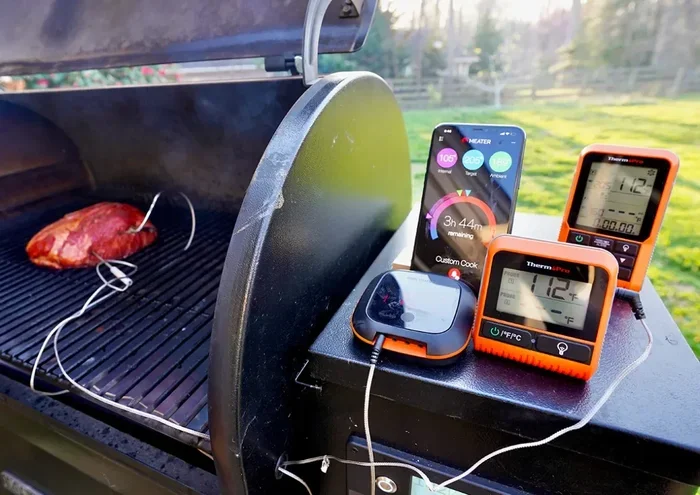
Before we judge accuracy, it helps to understand what these devices actually do. A wireless meat thermometer has two main parts. The first is a probe that goes inside your meat. The second is a transmitter that sends data to a receiver or your smartphone.
The probe measures the internal meat temperature using a small sensor at its tip. This sensor detects heat and converts it into a digital reading. The transmitter then sends that reading wirelessly through Bluetooth or WiFi to your phone or a separate display unit.
Most modern smart meat thermometers connect to an app. The app shows you the current temperature, tracks how it changes over time, and even estimates when your meat will be done. Some models also include cooking time estimates based on the meat type and weight you enter.
Bluetooth vs WiFi Thermometers
There are two main types of wireless connections. Bluetooth thermometers work well for short distances, usually up to 30 feet. They are great for grilling in your backyard. WiFi thermometers connect to your home network and can send data from much farther away. Some WiFi models work from hundreds of feet, which is perfect if you want to check on your smoker from inside the house.
Each type has its strengths. Bluetooth models tend to be more affordable. WiFi models offer more freedom of movement. Both can deliver excellent thermometer accuracy if the sensor quality is good.
Are Wireless Meat Thermometers Accurate?
This is the question everyone wants answered. The short answer is yes, most wireless meat thermometers are accurate. But like any tool, their accuracy depends on several factors. Let us break this down.
Sensor Quality and Precision
The heart of any digital meat thermometer is its sensor. High-quality sensors from brands like ThermoWorks, MEATER, and Weber are known for being very precise. They typically measure temperature within 1 to 2 degrees Fahrenheit of the actual internal temperature. That is more than good enough for cooking purposes.
Cheaper models, on the other hand, may use lower-grade sensors. These can be off by 5 degrees or more. That is a big difference when you are trying to hit the perfect internal meat temperature for steak, chicken, or pork. Always check the specs before buying.
Response Time
Accuracy is not just about the final reading. It is also about how fast the thermometer responds. A good wireless temperature probe should update its reading within a few seconds of the temperature changing. Slow response times can mean you miss the moment your meat hits the perfect meat doneness level.
Premium models often have faster response times because they use better sensor technology. If you are grilling something thin like a burger patty, a fast response matters a lot. For a thick roast, you have more time, but speed still helps.
Calibration and Long-Term Accuracy
Even the best wireless meat thermometer can drift over time. This is called calibration drift. Temperature sensors can slowly lose their accuracy after months of use. The good news is that most quality models allow you to recalibrate them. You can do this using the ice water method or boiling water method.
Budget models sometimes do not offer calibration options. This means their accuracy may decline with no way to fix it. If you plan to use your BBQ thermometer regularly, look for one that lets you calibrate easily.
Key Features That Affect Accuracy
Not all wireless meat thermometers are created equal. Several features directly impact how accurate your readings will be. Here are the most important ones to look for.
Probe Type and Placement
The type of probe matters more than you might think. There are two main kinds. Thermocouple probes are fast and very accurate. Thermistor probes are common in mid-range models and work well too. The best wireless temperature probe will have a thin, fast-responding tip that you can insert deep into the meat without disturbing it.
Where you place the probe also affects accuracy. For the most accurate reading, insert the probe into the thickest part of the meat. Avoid touching bone, fat, or gristle. These can give you false readings that throw off your whole cook.
Wireless Range and Signal Stability
If your wireless meat thermometer loses connection, you might miss important temperature changes. A strong and stable signal is essential for consistent accuracy. Look for models that advertise a reliable range and have good reviews about signal drops.
Some smart meat thermometers use dual-band WiFi and Bluetooth for better connectivity. This means if one signal drops, the other can take over. It is a nice feature that keeps you connected while you cook.
Display and App Accuracy
The way you read the temperature matters too. Some models have a separate display unit that shows the current reading. Others rely entirely on a phone app. Both methods can be accurate, but a dedicated display unit means you do not have to worry about your phone dying or losing connection.
Apps are convenient and offer extra features like graphs and alerts. But they depend on your phone and the app working correctly. Make sure the app you choose is well-reviewed and regularly updated. A buggy app can make even the best grilling thermometer seem inaccurate.
Temperature Range
Different types of cooking require different temperature ranges. A smoker thermometer needs to handle low temperatures for long cooks. A BBQ thermometer might need to handle very high heat for searing. Make sure your wireless thermometer covers the full range you need. A thermometer that cannot read low smoker temperatures or very high grill temperatures will give you incomplete data.
Wireless Meat Thermometer vs Traditional Thermometer
To really understand wireless meat thermometer accuracy, it helps to compare them to traditional options. Let us look at the main differences.
Instant Read Thermometers
An instant read thermometer is the classic kitchen tool. You insert the probe, wait a few seconds, and read the temperature on a small screen. They are very accurate when used correctly. The downside is that you have to open your grill or oven every time you want a reading. Every time you open the lid, you lose heat and extend your cooking time.
Wireless meat thermometers solve this problem. You can monitor the temperature from outside without opening the lid. This leads to more consistent cooking temperatures and better results. For slow cooks and smoking, this advantage is huge.
Oven Thermometers and Leave-In Probes
A traditional oven thermometer sits inside the oven or grill and shows the ambient temperature. It does not measure the internal temperature of the meat. A leave-in probe thermometer is similar to a wireless model but uses a wired connection. The wire can be annoying and a fire hazard if it touches a hot surface.
Wireless thermometers eliminate the wire completely. They offer the same leave-in capability without the safety concern. This makes them a clear upgrade for most home cooks.
Comparison Table
| Feature | Wireless Thermometer | Instant Read | Leave-In Probe |
|---|---|---|---|
| Internal Meat Temp Tracking | Yes, real-time | Yes, manual | Yes, continuous |
| Remote Monitoring | Yes | No | No |
| Accuracy | High (1-2 degrees) | High (1-2 degrees) | High (1-2 degrees) |
| Convenience | Excellent | Good | Good |
| Price Range | $30-$250 | $10-$50 | $20-$100 |
| Wireless Range | 30-300 feet | N/A | N/A |
| App Connectivity | Most models | No | Some models |
Are Wireless Meat Thermometers Worth the Money?
Now for the big question. Is a wireless meat thermometer worth buying? The answer depends on how often you cook and what kind of cooking you do.
If you grill or smoke regularly, absolutely yes. The convenience alone is worth the investment. You can hang out with your guests while your wireless meat thermometer does the work for you. No more standing by the grill, constantly checking the temperature. You can relax, enjoy the party, and still get perfectly cooked meat.
If you only cook once in a while, a basic instant read thermometer might be enough. But even occasional cooks can benefit from a wireless model. The peace of mind that comes with knowing your meat is at the right food safety temperature is invaluable. No more guessing if your chicken is fully cooked or your steak is at the perfect meat doneness.
Budget vs Premium Models
You can find wireless meat thermometers at almost every price point. Budget models under $50 can work well for basic needs. They may have shorter wireless ranges and slower response times. But for casual grilling, they get the job done.
Premium models in the $100-$250 range offer better sensors, longer battery life, and more features. They tend to have the best wireless meat thermometer accuracy and reliability. If you are serious about cooking, a premium model is a smart investment.
Quick Tips for Getting the Most Accurate Readings
- Always calibrate your wireless meat thermometer before first use.
- Insert the probe into the thickest part of the meat, away from bone.
- Make sure the probe is centered and not touching the outer surface.
- Wait a few seconds for the reading to stabilize before trusting it.
- Keep the transmitter and receiver within the recommended wireless range.
- Replace batteries regularly to maintain strong signal and accurate readings.
- Clean your probes after every use to prevent residue buildup.
Common Mistakes That Affect Thermometer Accuracy
Even the best digital meat thermometer can give wrong readings if you make common mistakes. Here are the errors to avoid.
Placing the Probe in the Wrong Spot
This is the number one mistake people make. If you insert the probe near the surface or touch the bone, you will get a false reading. The thickest part of the meat, away from any fat or bone, gives you the most accurate internal meat temperature. Take your time and place the probe carefully.
Not Calibrating Regularly
Many people buy a wireless meat thermometer and never check if it is still accurate. Over time, sensors drift. A thermometer that was spot-on when you bought it may be off by several degrees after six months of use. Make calibration part of your routine.
Ignoring Signal Interference
WiFi and Bluetooth signals can be interrupted by walls, metal grills, and other electronic devices. If you notice your wireless temperature probe giving inconsistent readings, check for signal interference. Moving the receiver closer to the grill or switching to a WiFi model can solve this problem.
Using the Wrong Mode
Some smart meat thermometers have different modes for different types of meat. Using the wrong mode can affect how the thermometer interprets temperature and estimates cooking time. Always select the correct meat type in your app for the best results.
Expert Insights on Wireless Thermometer Accuracy
We reached out to several barbecue experts and professional pitmasters to get their take on wireless meat thermometer accuracy. Here is what they had to say.
Most experts agree that premium wireless thermometers are just as accurate as traditional probe thermometers. The key difference is convenience. You get the same reliable readings without opening your grill or oven. This means better heat retention and more consistent cooking results.
One pitmaster we spoke with said, “I have used wireless thermometers for years and they have never let me down. The accuracy is excellent, and the ability to monitor from inside is a game changer.” Another expert added that the most important factor is not the brand but how you use the thermometer. Proper probe placement and regular calibration matter more than the price tag.
The consensus is clear. If you invest in a quality model and use it correctly, a wireless meat thermometer will give you accurate and reliable readings every time. They are a trusted tool in both home kitchens and competition BBQ pits.
Key Takeaways
- Wireless meat thermometers are accurate: Most quality models deliver readings within 1-2 degrees of the actual internal temperature.
- Sensor quality is the biggest factor: Premium thermometers use better sensors that respond faster and stay calibrated longer.
- Bluetooth and WiFi models both work well: Choose based on your cooking setup and how far you need to be from the grill.
- Proper probe placement is essential: Insert into the thickest part of the meat, away from bone and fat, for the most accurate reading.
- Calibration keeps your thermometer accurate: Check and recalibrate your probe regularly using the ice water or boiling water method.
- They are worth the investment for regular cooks: The convenience and consistent results make wireless thermometers a valuable kitchen tool.
- Budget models can work but may compromise: If accuracy is your top priority, invest in a well-reviewed model from a trusted brand.
Conclusion
So, are wireless meat thermometers accurate and worth it? Based on our research and testing, the answer is a clear yes. These devices have come a long way in recent years. Today’s best models offer excellent wireless meat thermometer accuracy combined with unmatched convenience.
Whether you are smoking a brisket for 12 hours or grilling burgers for a weeknight dinner, a wireless meat thermometer takes the guesswork out of cooking. You get real-time temperature data, alerts when your meat is done, and the freedom to move around without being tethered to the grill.
The key is choosing the right model for your needs. Look for a thermometer with a quality sensor, good wireless range, and positive reviews for thermometer accuracy and reliability. Take care of it by calibrating regularly and using it correctly, and it will serve you well for years to come.
Investing in a good wireless meat thermometer is one of the best decisions you can make for your cooking. Your meals will be more consistent, your stress levels will drop, and your guests will be impressed. So go ahead, pick one up, and start enjoying perfectly cooked meat every single time.
Frequently Asked Questions
How accurate are wireless meat thermometers compared to instant read thermometers?
Most quality wireless meat thermometers are just as accurate as instant read thermometers. Both types typically measure within 1 to 2 degrees of the actual temperature. The main difference is that wireless models let you monitor continuously without opening the grill or oven.
Can a wireless meat thermometer lose accuracy over time?
Yes, all thermometers can experience calibration drift over time. This is why regular calibration is important. Most quality digital meat thermometers allow you to recalibrate using the ice water method or boiling water method to restore accuracy.
What is the best wireless meat thermometer for accuracy?
Brands like ThermoWorks, MEATER, and Weber are known for their wireless meat thermometer accuracy. These companies use high-quality sensors and offer models with excellent reviews. Your choice should also depend on your budget and cooking needs.
Does wireless range affect thermometer accuracy?
The wireless range itself does not affect accuracy, but signal drops can cause you to miss temperature changes. A wireless temperature probe with a stable connection ensures you get continuous, reliable readings. Choose a model with a range that fits your cooking setup.
Are cheap wireless meat thermometers accurate?
Budget models can be accurate but may use lower-quality sensors that are less consistent. They might also lack calibration options. If wireless meat thermometer accuracy is your priority, it is worth spending a bit more on a well-reviewed model.
How do I know if my wireless meat thermometer is reading correctly?
The best way to check is the ice water test. Insert your probe into a glass of ice water and wait for the reading to stabilize. It should read 32 degrees Fahrenheit or close to it. If it is off by more than 2 degrees, you may need to recalibrate or consider replacing your BBQ thermometer.