Can You Call The Police About Hidden Cameras In Your Home
Yes, you can call the police about hidden cameras in your home. Finding a hidden camera where you sleep or change clothes is a serious violation. This guide covers detection methods, legal rights, and when to involve law enforcement. You will learn how to protect your privacy and take action if someone has placed a surveillance device in your personal space.
Finding a hidden camera in your home is a shocking experience. You expect your home to be your safest place. The thought of someone watching you through a spy camera without your knowledge is deeply unsettling. Many people wonder if they can call the police about hidden cameras in their home. The short answer is yes. But the full story is more nuanced.
This guide will walk you through everything you need to know. We will cover when to call the police, how to detect hidden cameras, what happens after you file a report, and how to protect yourself going forward. Whether you found a nanny cam in the wrong place or a surveillance device planted by a stalker, this article has you covered.
Key Takeaways
- You have the right to call police: Hidden cameras in private areas like bathrooms and bedrooms are illegal in most states.
- Detection is the first step: Use a hidden camera finder or your phone to scan for spy devices.
- Evidence matters: Do not disturb the camera before police arrive. Document everything with photos and videos.
- Legal options exist: You can pursue civil action, file criminal complaints, and seek restraining orders.
- Prevention is possible: Simple habits like regular room checks and signal scanners can keep your home safe.
📑 Table of Contents
- Understanding Hidden Cameras And Your Privacy Rights
- When Should You Call The Police About Hidden Cameras
- How To Detect Hidden Cameras In Your Home
- What Happens When You File A Police Report For Hidden Cameras
- Legal Recourse And Protecting Your Rights
- Preventing Hidden Camera Violations In The Future
- Key Takeaways
Understanding Hidden Cameras And Your Privacy Rights
Before you pick up the phone to call the police, it helps to understand your rights. Privacy laws vary by state, but there are general rules that apply across the country. You have a reasonable expectation of privacy in certain areas of your home. These areas include your bedroom, bathroom, and changing room.
What Counts As A Private Space?
Any area where you would reasonably expect to be alone is considered private. This includes:
- Your bedroom
- Your bathroom
- Your dressing room
- Your laundry room
- Any area where you change clothes
Placing a hidden camera in any of these spaces without your consent is almost always illegal. Even if the person placing the camera is a roommate or a family member, they need your permission. Recording without consent in private spaces is a violation of your privacy rights.
Where Are Hidden Cameras Usually Legal?
Hidden cameras are legal in common areas of your home. This includes your living room, kitchen, and hallway. Many families use nanny cams to watch over their children or babysitters. These cameras are legal as long as they are not placed in private areas. The key rule is consent. Everyone in the home should know about the cameras in shared spaces.
When Should You Call The Police About Hidden Cameras
Not every hidden camera situation requires a police report. But some situations demand immediate action. Knowing the difference can save you time and protect your rights.
Situations That Require A Police Call
You should call the police if you find a hidden camera in any of these scenarios:
- The camera is in a bathroom or bedroom
- You did not give consent for any recording
- The camera was placed by a stranger or someone you do not trust
- The camera is being used to blackmail or harass you
- The footage is being shared online or with others without your permission
- A child or vulnerable person is being recorded in private areas
These situations involve illegal surveillance and privacy invasion. Law enforcement has the tools and authority to investigate. They can also help preserve evidence that you might need for a criminal complaint or civil lawsuit.
When You Might Not Need Police Involvement
If you find a nanny cam in the living room and everyone in the home knows about it, police involvement is likely unnecessary. Similarly, if a landlord placed a security camera in a common area and disclosed it in the lease, that is usually legal. Use your judgment. When in doubt, it never hurts to make the call and ask for guidance.
How To Detect Hidden Cameras In Your Home
Catching a spy camera early makes a big difference. The sooner you find it, the sooner you can protect your privacy and gather evidence. Here are practical methods to detect hidden cameras.
Physical Inspection
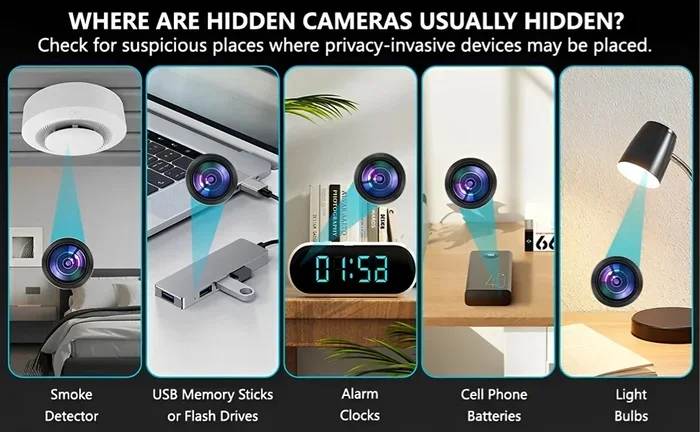
Start with a thorough room check. Look for anything that seems out of place. Common hiding spots include:
- Smoke detectors on the ceiling
- Air filters and vent covers
- Clock radios and alarm clocks
- Phone chargers and power strips
- Stuffed animals and decorative items
- Books on a shelf with unusual bumps
- Mirrors that seem thicker than normal
Use a flashlight to scan dark corners. A camera lens will often reflect the light. Look for tiny pinholes or small glass circles that do not belong on the object.
Using Your Phone To Find Hidden Cameras
Your smartphone can be a powerful hidden camera detector. Try these methods:
- Use your phone camera: Open your camera app and scan the room. Many spy cameras use infrared lights that appear as a purple or white glow on your phone screen but are invisible to the naked eye.
- Use a phone call: Make a call and walk around the room. If you hear buzzing or clicking on the call, a hidden device might be transmitting nearby.
- Use a Wi-Fi scanner app: Apps like Fing or WiFi Analyzer can show all devices connected to your network. An unknown device could be a spy camera streaming footage.
Professional Hidden Camera Finders
For the most thorough check, consider buying a hidden camera detector. These devices range from $20 to $200. They work by detecting radio frequencies or lens reflections. Some professional-grade detectors can find even the most advanced surveillance devices. If you suspect a serious invasion, investing in a quality detector is worth it.
Quick Tip: Always check your rental property when you first move in. Take photos of any suspicious devices and report them to your landlord immediately.
What Happens When You File A Police Report For Hidden Cameras
Calling the police is an important step, but knowing what to expect can ease your anxiety. Here is how the process typically works.
Step 1: Do Not Disturb The Evidence
Once you find a hidden camera, do not touch it or move it. Leave it exactly where it is. Touching the device could damage fingerprints or other evidence. Use your phone to take clear photos and videos of the camera from multiple angles. Note the exact location and the date and time you found it.
Step 2: Call Your Local Police Department
Dial the non-emergency line unless you feel you are in immediate danger. Explain the situation clearly. Tell the dispatcher you found a hidden camera in a private area of your home. They will likely send an officer to your location.
Step 3: The Officer Will Document Everything
The responding officer will walk through your home and examine the camera. They will take statements and create an official report. This report is crucial for any future legal action. Make sure you get a copy of the report or the report number for your records.
Step 4: Investigation And Next Steps
After the initial report, the police may investigate further. They might check the camera for fingerprints or retrieve stored footage. Depending on the severity, the case may be handed to a detective. In many cases, the police can identify the person responsible through device records or witness statements.
Common Mistakes To Avoid:
- Do not confront the suspected person before police arrive. This could destroy evidence or put you in danger.
- Do not delete any footage you find online. This is evidence and should be preserved.
- Do not delay making the report. The sooner you act, the better the chances of preserving evidence.
Legal Recourse And Protecting Your Rights
Calling the police is one option, but it is not your only option. You have several paths to seek justice and protect yourself from future surveillance violations.
Criminal Charges
In most states, placing a hidden camera in a private area without consent is a crime. Charges can include voyeurism, stalking, or invasion of privacy. The severity of the charges depends on the circumstances. A first-time offender might face misdemeanor charges, while repeat offenders or cases involving minors can lead to felony charges.
Hidden camera penalties can include fines, probation, and jail time. Some states also require the offender to register as a sex offender, depending on the nature of the violation.
Civil Lawsuits
Beyond criminal charges, you can file a civil lawsuit. This allows you to seek financial compensation for damages. You can sue for emotional distress, invasion of privacy, and any costs related to the incident. A lawyer can help you navigate this process and build a strong case.
Restraining Orders
If the person placing the camera is someone you know, consider getting a restraining order. This legally requires the person to stay away from you and your home. Violating a restraining order can result in arrest and additional charges.
Expert Insight: “Many victims of hidden camera invasions do not realize they have legal options until it is too late,” says privacy attorney Sarah Mitchell. “The key is acting quickly and preserving all evidence. A police report combined with documented proof gives you the strongest foundation for any legal action.”
Preventing Hidden Camera Violations In The Future
Once you have dealt with a hidden camera situation, your next priority should be prevention. Taking proactive steps can keep your home safe and your privacy intact.
Regular Room Checks
Make it a habit to do a quick scan of private areas every few months. Check smoke detectors, chargers, and decorative items. A hidden camera detection routine takes just a few minutes but can catch new devices early.
Use Signal Jammers And Scanners
A signal jammer can block wireless transmissions from spy devices. However, check your local laws before using one, as jammers are illegal in some areas. A RF scanner is a legal alternative that detects wireless signals and alerts you to unknown devices.
Secure Your Wi-Fi Network
Many modern spy cameras connect to Wi-Fi to stream footage. Protect your network with a strong password and enable WPA3 encryption. Change default router passwords and disable remote access unless you need it. Regularly check connected devices through your router settings.
Be Careful With Visitors And Roommates
Trust is important, but verification adds a layer of safety. If you share your home with roommates or frequent guests, consider placing a hidden camera detector in common areas. If you rent, review your lease for any clauses about surveillance devices. Know your rights as a tenant.
Educate Your Family
Make sure everyone in your household knows the signs of a spy camera. Teach children to recognize suspicious devices. Create an open environment where family members feel comfortable reporting concerns. Awareness is one of the best defenses against surveillance abuse.
Key Takeaways
- You can absolutely call the police about hidden cameras: Finding a hidden camera in private areas like your bedroom or bathroom is a crime in most jurisdictions.
- Act quickly and preserve evidence: Do not touch or move the camera. Take photos and videos before contacting law enforcement.
- Detection tools are accessible: From phone apps to professional hidden camera finders, you have many options to scan your home.
- Legal recourse exists beyond police: You can pursue criminal charges, civil lawsuits, and restraining orders to protect yourself.
- Prevention is your best defense: Regular checks, secure Wi-Fi, and family education can help prevent future privacy invasions.
- You are not alone: Many people face this issue, and resources and professionals are available to help you through the process.
Can you call the police about hidden cameras in your home? The answer is a clear and definitive yes. Your home is your sanctuary, and your privacy is protected by law. If you find a spy camera or any unauthorized surveillance device in your personal space, do not hesitate to take action. Call the police, document everything, and explore your legal options. You deserve to feel safe and secure in the one place that should always be yours alone.
Stay vigilant. Stay informed. And remember that taking action is always better than staying silent. Whether you are dealing with a hidden camera right now or want to be prepared for the future, the steps outlined in this guide will help you protect your home and your peace of mind.
Frequently Asked Questions
Can I Call The Police If I Find A Hidden Camera In My Rental Home?
Yes, absolutely. You have the right to privacy in your rental home regardless of who owns the property. Call the police and also notify your landlord. The landlord may have a responsibility to ensure the property is safe and free from surveillance devices. Keep a copy of your police report for any future disputes with the landlord or property management.
What Should I Do If I Find A Hidden Camera But I Am Not Sure It Is Recording?
Treat every hidden camera as if it is recording until proven otherwise. Do not touch the device. Take photos and videos of its location and condition. Call the police and report the finding. Even if the camera is not currently recording, its presence in a private area is a violation of your privacy rights and may be illegal.
Can My Roommate Legally Place A Hidden Camera In Our Shared Home?
Generally, no. A roommate cannot place a hidden camera in private areas like your bedroom or bathroom without your consent. Even in shared spaces, all adults in the home should be aware of any recording devices. If your roommate has placed a hidden camera without telling you, this is grounds for a police report and potentially a civil lawsuit.
How Long Does A Police Investigation Into Hidden Cameras Take?
The timeline varies depending on the complexity of the case and your local department’s workload. Simple cases with clear evidence may be resolved quickly, while more complex investigations can take weeks or months. Stay in touch with the detective assigned to your case and keep your contact information up to date.
Do I Need A Lawyer To Take Legal Action Against Someone Who Placed A Hidden Camera?
While you do not need a lawyer to file a police report, having legal representation is highly recommended for civil action. A lawyer who specializes in privacy law or personal injury can help you navigate the legal system, gather evidence, and seek fair compensation. Many lawyers offer free initial consultations.
Are Hidden Cameras In Common Areas Like The Living Room Always Legal?
Not always. Even in common areas, the camera must be disclosed to everyone in the household. A nanny cam in the living room is legal if all adults in the home know about it and have agreed to it. Secret recording in any area, even common spaces, can be illegal if it is done with the intent to harass, blackmail, or invade someone’s privacy.