Can I Use The Kinect As A Webcam For Live Video Calls
Yes, you can use the Kinect as a webcam for live video calls, but it requires the right software and a Windows PC. The Kinect sensor offers a wide field of view, built-in microphone array, and unique depth-sensing features that standard webcams lack. This guide will walk you through setup, compatible models, and the best apps for video calls. You’ll learn the pros and cons so you can decide if the Kinect fits your needs.
This is a comprehensive guide about Can I Use The Kinect As A Webcam.
Key Takeaways
- Kinect works as a webcam: You can use it for video calls with the correct drivers and software.
- Windows PC is required: The Kinect connects via USB and needs Windows 7 or later for most apps.
- Video quality is unique: The wide 70- to 110-degree field of view captures full-body motion and room context.
- Built-in microphone array: The Kinect’s four-microphone setup handles noise cancellation and voice commands.
- Software is key: Apps like OBS, ManyCam, and Kinect SDK make it possible to stream or call with the sensor.
- Limitations exist: No native Mac support, bulky design, and driver quirks can frustrate casual users.
- Great for creators: Content makers use it for motion capture, 3D scanning, and immersive streaming.
[FEATURED_IMAGE_PLACEHOLDER]
Can I use the Kinect as a webcam for live video calls? It sounds like a strange question, but the answer is a clear yes. The Kinect sensor was built for gaming, yet its camera and microphone hardware work surprisingly well for video conferencing. People often ask this because they want a wider view than a standard laptop webcam offers.
The Kinect as a webcam setup opens up creative possibilities. You get a full-body view, depth awareness, and studio-quality audio in one device. Whether you’re hosting a team meeting or streaming a workout, the sensor can do more than just capture your face.
This guide will show you exactly how to make it work. I’ll cover every model, the software you need, and real-world tips for smooth video calls. By the end, you’ll know if the Kinect fits your setup.
What Is the Kinect and Why Use It as a Webcam?
The Kinect is a motion-sensing input device made by Microsoft. It started as an Xbox 360 accessory and later evolved for the Xbox One. The sensor combines an RGB camera, an infrared depth sensor, and a multi-array microphone. Together, these parts let the console track body movements and voice commands without a controller.
Using the Kinect for video calls feels different from a normal webcam. The depth sensor maps your body in 3D space, which means you can step back and still stay fully in frame. The wide angle captures more of the room, which is handy for group calls or demonstrations. You also get noise-canceling microphones that pick up your voice clearly from across the room.
The Kinect’s Hidden Camera Capabilities
Most people don’t realize the Kinect has a high-quality RGB camera. The Kinect for Xbox One uses a 1080p sensor that records at 30 frames per second. That’s smooth and detailed enough for live video calls. The infrared sensor works in low light, so you don’t need a bright lamp shining on your face.
The depth camera also enables body tracking and skeletal tracking. These features let software follow your joints and movements in real time. For a video call, this means you can use gestures to control slides or interact with virtual backgrounds. It’s a step beyond a simple flat video feed.
Why People Look for Kinect Webcam Alternatives
Many users search for a Kinect webcam hack because standard webcams feel too small. Laptop cameras often show only your head and shoulders, which can feel distant during group meetings. The Kinect solves that by pulling back and showing your whole upper body or even full torso.
Gamers and streamers also want the motion capture features. You can use your body movements to control avatars or trigger effects in OBS. Content creators love the idea of full-body tracking without buying expensive suit-based systems. The Kinect offers a low-cost entry point into that world.
Can I Use the Kinect as a Webcam? The Short Answer
Yes, you can use the Kinect as a webcam, but you need a Windows PC and the right software. The sensor connects through USB, and Windows recognizes it as a video device once you install drivers. Mac users will face limitations, so this guide focuses on Windows setups.
The Kinect for Xbox 360 and Kinect for Xbox One both work, but they differ in resolution and connector type. The older Xbox 360 model uses a proprietary USB hub, while the Xbox One version uses a standard USB 3.0 connection. Both can stream live video to computers with the correct drivers.
Supported Models: Kinect for Xbox 360 vs. Kinect for Xbox One
The Kinect for Xbox 360 (model 1414 or 1473) has a 720p RGB camera and a 640×480 depth sensor. It uses an angled USB adapter that plugs into the console, but you can bypass it with a direct USB cable. The field of view is about 57 degrees horizontally for the RGB camera, which is narrower than the Xbox One version.
The Kinect for Xbox One (model 1520) upgrades to a 1080p RGB camera and a wider 70-degree horizontal field of view. The depth sensor uses infrared to track up to six skeletons at once. This model connects natively via USB 3.0, making setup on a PC much simpler. For video calls, the Xbox One version delivers sharper images and a broader view.
What You Need to Get Started
To turn your Kinect into a webcam, gather a few items. You need the Kinect sensor itself, a Windows PC with a USB 3.0 port (for Xbox One), and the correct cable. The Xbox One Kinect uses a standard USB 3.0 cable, while the Xbox 360 model needs the special adapter that came in the box.
You also need driver software. Microsoft released the Kinect SDK (Software Development Kit) for Windows, which installs the necessary drivers. Once the SDK is installed, your PC will see the Kinect as a video and audio device. This is the foundation for any video call or streaming app.
Setting Up Your Kinect as a Webcam
Setting up the Kinect for live video calls takes a few steps, but it’s straightforward. You’ll install drivers, choose a software app, and adjust settings. I’ll walk you through the process so you can jump on your next call without hassle.
Step-by-Step Connection Guide
Start by plugging the Kinect into your PC. If you have the Xbox One model, connect the USB 3.0 cable directly to a port on your computer. For the Xbox 360 version, use the USB hub that came with the sensor and plug that into your PC. Windows should recognize the device and begin installing drivers automatically.
Next, download and install the Microsoft Kinect SDK. The SDK is free and works with Windows 7, 8, and 10. During installation, it sets up the Kinect drivers that allow other apps to access the camera and microphone. Restart your computer after installation to ensure everything loads correctly.
Open the Kinect Studio app that comes with the SDK. This tool lets you test the video and audio feed. You should see a clear image of yourself and hear sound through the microphone array. If the image looks dark, check the infrared sensor and make sure nothing is blocking the sensor bar.
Software Options for Video Calls
Once the Kinect is recognized, you need an app that accepts external video sources. OBS Studio is a popular free tool that lets you add the Kinect as a video capture device. You can then stream to Zoom, Skype, or Google Meet by using OBS as your camera source.
ManyCam is another great option for video calls. It supports direct Kinect input and offers fun overlays, backgrounds, and filters. ManyCam works as a virtual webcam, so you can select it inside Zoom or Skype just like a normal webcam. CyberLink YouCam also supports Kinect and adds face-tracking effects for casual calls.
For developers or advanced users, the Kinect for Windows SDK provides direct access to the depth stream. You can build custom apps that use body tracking to move virtual avatars or trigger commands with gestures. This opens up possibilities far beyond a simple video call.
How the Kinect Performs in Live Video Calls
The Kinect brings a unique feel to video calls, but it’s not a direct replacement for a standard webcam. Understanding its strengths and quirks helps you set realistic expectations. Here’s how it performs in real-world scenarios.
Video Quality and Field of View
The Kinect for Xbox One captures 1080p video at 30 frames per second. That’s enough for smooth, clear video calls. The image is sharp and colorful, with natural skin tones. The wide 70-degree horizontal field of view shows more of the room than most built-in laptop cameras.
Because the sensor uses an infrared depth camera, it handles low light better than many standard webcams. You don’t need a bright ring light to look good. The infrared projector illuminates your face invisibly, so the image stays clear even in a dimly lit room. This is a big advantage for evening calls.
Audio Features and Microphone Array
The Kinect’s microphone array is one of its best features for video calls. Four microphones work together to isolate your voice and cancel out background noise. The noise cancellation and echo suppression are built into the sensor’s firmware, so you sound clear even if you’re in a busy room.
You can also use voice commands with the Kinect during calls. While not directly a video call feature, it’s fun to raise a hand or nod to trigger a virtual background change. The audio quality is broadcast-ready, which makes the Kinect a strong choice for podcasting or streaming as well.
Pros and Cons of Using the Kinect as a Webcam
Every device has trade-offs, and the Kinect is no different. I’ll lay out the real benefits and the real frustrations so you can make an informed choice.
Advantages for Streaming and Content Creation
The wide field of view is the biggest plus. You can step back and show your entire desk, whiteboard, or workout space. This is perfect for fitness instructors, music teachers, or anyone who uses hand gestures while talking. The full-body tracking also lets you create interactive experiences that standard webcams can’t match.
The built-in depth sensor enables 3D scanning of objects and people. You can create simple 3D models of yourself or your surroundings using free software. For content creators, this adds a layer of creativity that a flat webcam simply can’t provide. The microphone array also saves you from buying a separate USB microphone.
Limitations and Common Frustrations
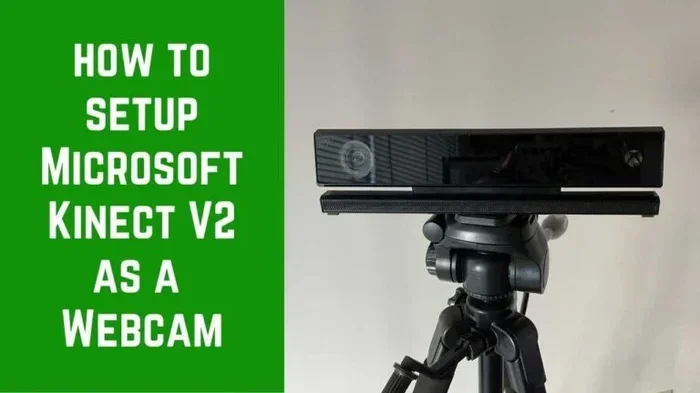
The Kinect is bulky and heavy compared to a slim webcam. It needs a stable surface or a tripod to stay pointed at you. The field of view is so wide that you might appear small in the frame if you sit too far back. You’ll need to find a sweet spot that balances framing and detail.
Driver issues can pop up, especially after Windows updates. Some users report the Kinect disappearing from device lists or showing a black screen. The setup process is more involved than plugging in a standard webcam. Mac users will find very limited support, so Windows is practically a requirement.
Expert Tips and Common Mistakes
Getting the most from your Kinect webcam takes a few tweaks. I’ve seen people struggle with setup, but these tips will save you time and frustration.
Quick Tips for Best Results
Place the Kinect at eye level or slightly above. The sensor works best when it has a clear view of your upper body and face. Avoid placing it directly in front of a bright window, because the infrared depth sensor can get confused by direct sunlight.
Use a USB 3.0 port for the Xbox One Kinect. USB 2.0 ports can cause lag or dropped frames. If you need a longer cable, use a high-quality active USB extension. Keep the firmware updated through the Kinect for Windows SDK to ensure stability. Finally, test your audio levels in the app before joining an important call.
Common Mistakes to Avoid
Don’t skip the driver installation. Many people plug in the Kinect and expect it to work instantly, but the SDK is required. Another mistake is using the Kinect in a room with moving blinds or flickering lights. The infrared sensor can interpret these changes as movement, which affects tracking.
Avoid using the Kinect in a very small room. The depth sensor needs space to map the environment accurately. If you sit too close, the sensor might not capture your full body. Also, don’t forget to adjust the exposure settings in your software. The Kinect’s auto-exposure can sometimes over-brighten the image.
Conclusion
The Kinect can absolutely serve as a webcam for live video calls, and it brings a unique set of features that standard webcams lack. With the right drivers and software, you get a wide-angle view, studio-quality audio, and depth-sensing capabilities. It’s a great fit for creators, streamers, and anyone who wants more than a basic face cam.
If you’ve been asking “Can I use the Kinect as a webcam?”, the answer is yes—just be prepared for a bit of setup. The experience is different from a plug-and-play webcam, but the results are worth it for the right user. Try it in your next video call and see how the wide field of view changes the conversation.
Start with the Kinect SDK, pick a virtual camera app like ManyCam or OBS, and test the feed before your meeting. Once you see yourself in full frame with crystal-clear audio, you’ll wonder why you didn’t try this sooner. The Kinect webcam setup is a fun, creative way to upgrade your video calls.
Can I use the Kinect as a webcam on a Mac?
The Kinect has very limited support on macOS. You can find some third-party drivers, but they often lack stability. For the best experience, use a Windows PC with the official Kinect SDK.
Do I need the Kinect SDK to use it as a webcam?
Yes, the SDK installs the necessary drivers that let your computer recognize the Kinect as a video and audio device. Without it, most apps won’t see the sensor.
Can I use the Kinect for Zoom or Skype video calls?
You can, but not directly. Use OBS Studio or ManyCam to create a virtual webcam feed from the Kinect, then select that virtual camera inside Zoom or Skype.
Does the Kinect work in low light?
Yes, the infrared depth sensor and RGB camera work well in dim conditions. The infrared projector illuminates the scene invisibly, so you don’t need extra lighting.
Is the Kinect better than a 4K webcam?
It depends on your needs. The Kinect offers a wider field of view and depth tracking, but a dedicated 4K webcam may deliver higher resolution and smoother auto-focus for face-only shots.
Can I use the Kinect for live streaming?
Absolutely. The Kinect works as a video source in OBS Studio, and its body tracking lets you trigger effects or virtual backgrounds with gestures during a stream.
Frequently Asked Questions
What is Can I Use The Kinect As A Webcam?
Can I Use The Kinect As A Webcam is an important topic with many practical applications.