Do Short Throw Projectors Need Less Lumens Than Regular Ones
Do short throw projectors need less lumens than regular ones? The answer depends on your room size, screen distance, and ambient light levels. Short throw projectors are built to produce large images from a short distance, so they often work well with lower lumen output. In this article, we break down everything you need to know about projector brightness for short throw setups.
Do short throw projectors need less lumens than regular ones? The answer is not as simple as yes or no. Short throw projectors are designed to project large images from a short distance, which gives them some advantages when it comes to lumen requirements. However, your specific setup, room conditions, and screen size all play a role in determining how many lumens you actually need. In this guide, we break down everything you need to know about projector brightness for short throw setups. Whether you are building a home theater or setting up a presentation room, understanding lumens will help you make the right choice.
Many people assume that short throw means low brightness. That is not always true. Some short throw projectors are incredibly bright, while others are designed for dimmer environments. The key is understanding what lumens mean, how they interact with your room, and what projector placement works best for your space. Let us dive in and explore this topic in detail so you can make a confident buying decision.
Key Takeaways
- Short throw projectors work well with lower lumens: Because they sit close to the screen, they do not need as much brightness as regular projectors to produce a clear image.
- ANSI lumens matter more than raw numbers: Always check ANSI-rated brightness for an accurate and consistent comparison between different projector models.
- Room lighting is a huge factor: A bright room may need more lumens even with a short throw projector, regardless of the throw distance.
- Throw ratio determines image size and distance: Short throw projectors have a ratio between 0.4 and 1.0, which keeps light concentrated and bright.
- Contrast ratio affects perceived brightness: Higher contrast makes images look sharper and more vivid even at lower lumen levels.
- Consider your screen size before buying: Larger screens demand more lumens for a clear and bright picture, no matter the throw type.
- LED projectors save on lamp costs: They often have lower lumen needs and longer-lasting light sources compared to traditional lamp-based models.
📑 Table of Contents
What Is a Short Throw Projector?
A short throw projector is a type of projector that can produce a large image from a very short distance. Unlike traditional projectors that need several feet of space between the device and the screen, short throw models can project a 100-inch image from just a few feet away. This makes them perfect for smaller rooms, apartments, and living room projector setups where space is limited.
The throw ratio is the key measurement that defines a short throw projector. It is the ratio of the distance from the projector to the screen divided by the width of the image. Short throw projectors typically have a throw ratio between 0.4 and 1.0. An ultra short throw projector goes even further, with a ratio below 0.4, meaning it can sit right next to the wall or screen and still produce a massive image.
How Short Throw Projectors Work
Short throw projectors use specialized lens systems to bend light more aggressively. This allows them to project a large image from a shorter distance. The lens design is more complex than in standard projectors, which is why they often cost a bit more. But the tradeoff is worth it for many users who want a big picture without the long projector distance that regular models require.
These projectors are popular for several reasons. They reduce shadow interference, which happens when people walk between the projector and the screen. They also save space and make projector placement much more flexible. You can place a short throw projector on a small table or shelf right in front of the screen without blocking the image.
Common Uses for Short Throw Projectors
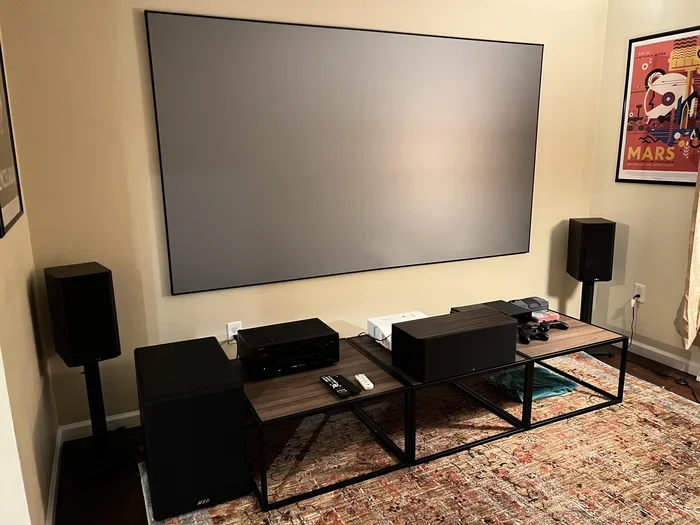
Short throw projectors are used in many settings. Home theater setups are the most common use case. Families love them because they can place the projector on a coffee table in front of the TV and still get a massive image. Classrooms and conference rooms also use them because teachers and presenters do not want to block the projection beam. Gaming setups benefit from short throw projectors too, since gamers want a large screen without sitting far from it.
Understanding Lumens and Projector Brightness
Projector lumens measure the brightness of the light output from a projector. The higher the lumen count, the brighter the image. But brightness is not just about numbers. It also depends on how the projector interacts with your room environment. Understanding lumens is essential before you buy any projector, whether it is a short throw model or a standard one.
What Are ANSI Lumens?
When shopping for a projector, you will see the term ANSI lumens thrown around a lot. ANSI stands for the American National Standards Institute. They created a standardized way to measure projector brightness. This means ANSI lumens give you a reliable and consistent measurement. Some cheaper projectors use “LED lumens” or “light source lumens” that are not measured the same way. Always look for ANSI lumens when comparing projector brightness across different models to make sure you are getting an apples-to-apples comparison.
How Lumens Affect Image Quality
Lumens directly impact your image quality in several ways. In a dark room, even a projector with 1,500 lumens can look stunning. But in a bright living room with windows and overhead lights, you might need 3,000 lumens or more to see the picture clearly. The contrast ratio also plays a role. A projector with high contrast can make dark areas look deeper and colors more vivid, even at lower brightness levels.
Another factor is projector resolution. A 4K projector with 2,000 lumens can look sharper than a 1080p projector with 3,000 lumens, because the extra detail compensates for the lower brightness. So lumens are important, but they are not the only factor that determines overall picture quality. Your projector screen size and the surface you project onto also matter a great deal.
How Many Lumens Do You Really Need?
This depends on your environment. Here is a quick guide to help you figure out your needs:
- Dark room (home theater): 1,500 to 2,000 lumens
- Dim room (evening viewing): 2,000 to 2,500 lumens
- Bright room (living room with windows): 3,000 to 4,000 lumens
- Very bright room (conference or classroom): 4,000+ lumens
This projector brightness guide gives you a starting point. But remember, your screen size also matters. A larger screen spreads the same light over more area, which makes the image appear dimmer. Always factor in both your room conditions and your desired screen size when choosing lumens.
Do Short Throw Projectors Need Less Lumens?
Do short throw projectors need less lumens than regular ones? The short answer is yes, in most cases. Because short throw projectors sit much closer to the screen, the light does not have to travel as far. This means less light is lost over distance, and the image stays brighter even with a lower lumen count.
Why Distance Matters for Brightness
When a projector sits far from the screen, the light spreads out over a larger area by the time it reaches the wall or screen. This is why long-throw projectors often need more lumens to produce a bright image on a large screen. Short throw projectors, on the other hand, project the same size image from a much shorter distance. The light stays more concentrated, resulting in a brighter picture per lumen.
Think of it like a flashlight. If you hold a flashlight close to a wall, the light spot is bright and focused. Move the flashlight far away, and the same light spreads out and becomes dimmer. The same principle applies to projector distance and brightness. Short throw models keep the light energy packed into a smaller area, which means they need fewer total lumens to achieve the same perceived brightness.
When Short Throw Projectors Do NOT Need Fewer Lumens
There are times when a short throw projector still needs high lumens. If you plan to use your projector in a bright room with lots of ambient light, you will still want a brighter model. A short throw projector with only 1,500 ANSI lumens will look washed out in a sunlit living room. In these cases, you need more lumens regardless of the throw distance.
Also, if you are projecting onto a non-white or gray screen, you may need more lumens. Some screens absorb more light than others. A high-gain screen can reflect more light back to the viewer, which means you can get away with fewer lumens. But a standard matte white screen may require more brightness for the same image quality. Always check your screen specifications alongside your projector lumen count.
The Role of Ambient Light in Lumen Requirements
Ambient light is one of the biggest factors in determining how many lumens you need. Even the best short throw projector will struggle in a room flooded with sunlight. If your projector setup faces a window or is in an open floor plan, you should aim for at least 3,000 ANSI lumens. For evening viewing in a dimmed room, 1,500 to 2,000 lumens is usually plenty for a short throw model.
Some modern projectors come with built-in light sensors that adjust brightness automatically based on room conditions. This is a great feature if you want your projector to adapt to changing light throughout the day without you having to adjust settings manually. It takes the guesswork out of choosing the right lumen output for your space.
Short Throw vs Regular Throw: Lumens Compared
Let us look at how short throw and regular throw projectors compare when it comes to brightness requirements. This comparison will help you understand why throw distance matters so much for your lumen needs and help you make a smarter purchase.
Brightness Requirements by Throw Type
Here is a side-by-side look at typical lumen needs for each type of projector:
- Short throw projector (0.4 to 1.0 throw ratio): 1,500 to 3,000 lumens for most home setups
- Standard throw projector (1.0 to 2.0 throw ratio): 2,500 to 4,000 lumens for the same screen size
- Long throw projector (2.0+ throw ratio): 3,000 to 5,000 lumens for large screens at distance
As you can see, short throw projectors generally need fewer lumens to achieve the same perceived brightness as standard or long throw models. This is a direct result of the shorter projector distance between the device and the screen. The light travels a shorter path and loses less energy along the way.
Real-World Examples
Let us say you want a 100-inch image. A short throw projector sitting 5 feet from the screen needs about 2,000 lumens to look great in a dim room. A standard throw projector sitting 12 feet away for the same 100-inch image might need 3,000 lumens or more to match that brightness. The extra distance causes more light dispersion, which is why standard throw models demand higher lumen output.
For large screen projection, the difference becomes even more noticeable. A 150-inch image from a short throw projector might only need 2,500 lumens, while the same size image from a long throw projector could require 4,000 lumens or more. This is one of the biggest advantages of choosing a short throw setup for your home theater or entertainment space.
Does Throw Type Affect Image Quality?
Throw type does not directly affect image quality, but it does influence the brightness and clarity you experience. A short throw projector placed too close to the screen can sometimes cause distortion or focus issues. This is why proper projector placement and calibration matter just as much as the lumen count. Always follow the manufacturer’s recommended projector distance for the best results and a sharp, clear image.
How Room Size and Lighting Affect Brightness Needs
Your room environment is just as important as the projector itself when it comes to determining how many lumens you need. A powerful projector in a bright room can still produce a washed-out image. A lower-lumen projector in a dark room can look amazing. Let us break down how room size and lighting affect your brightness requirements.
The Impact of Room Size on Lumen Needs
Larger rooms generally need more lumens. The light from the projector has to cover a bigger area, and more of it gets absorbed by walls and ceilings before reaching the screen. In a small bedroom, a short throw projector with 1,500 lumens can produce a brilliant image. In a large basement or open-concept living room, you might need 3,000 lumens or more to achieve the same effect.
Room size also affects ambient light levels. Bigger rooms often have more windows, more light fixtures, and more reflective surfaces. All of these factors increase the ambient light, which reduces the perceived brightness of your projected image. You need more lumens to overcome this extra light and maintain a clear picture.
Managing Ambient Light for Better Projection
If you cannot control the ambient light in your room, there are a few tricks to improve your viewing experience. Blackout curtains are the most effective solution. They block sunlight and create a dark environment that makes any projector look better. You can also paint your walls with matte dark paint to reduce light reflection and improve contrast.
Another option is to use an ambient light rejecting (ALR) screen. These screens are designed to reflect projector light back to the viewer while absorbing ambient light from other sources. They work wonders with both short throw and standard throw projectors. Pairing an ALR screen with a short throw projector can dramatically improve image quality even in bright rooms with lots of natural light.
Living Room vs Bedroom Setup
Your living room projector setup will likely face more ambient light than a bedroom setup. Living rooms tend to have larger windows, overhead lighting, and more foot traffic. For a living room, aim for a short throw projector with at least 2,500 to 3,000 ANSI lumens. In a bedroom where you can control the lighting, 1,500 to 2,000 lumens is usually sufficient for a great viewing experience.
Some people prefer to use their projector as a projector vs TV comparison. In bright living rooms, a TV might actually look better than a projector because it produces its own light. But with the right lumen count and screen setup, a short throw projector can compete with a TV and offer a much larger and more immersive viewing experience for movies and games.
How to Choose the Right Lumen Level for Your Setup
Now that you understand how short throw projectors and lumens work together, let us talk about how to choose the right brightness for your specific setup. This is where all the theory meets practical application and helps you make a confident decision.
Step-by-Step Guide to Choosing Lumens
Follow these steps to find the perfect lumen level for your short throw projector setup:
- Measure your room size: Know the length, width, and height of the space where your projector will sit.
- Determine your screen size: Decide how large you want your projected image to be. Bigger screens need more lumens to stay bright.
- Assess your ambient light: Visit your room at the time you plan to watch and note how much natural and artificial light is present.
- Check the throw ratio: Make sure your short throw projector can produce your desired screen size from the available distance.
- Match lumens to your conditions: Use the brightness guide above to select a projector with the right ANSI lumen count for your room.
Budget Considerations
Higher lumen projectors generally cost more. A short throw projector with 3,000+ ANSI lumens will typically be more expensive than one with 1,500 lumens. However, the price difference has narrowed significantly in recent years. LED projectors, in particular, have become more affordable and offer excellent brightness at lower price points.
When budgeting, also consider projector lamp life. Traditional lamp-based projectors need lamp replacements every 2,000 to 5,000 hours, which adds to the long-term cost. LED and laser projectors last much longer and often come with built-in light sources that do not need replacement. This can save you money over time, even if the upfront cost is slightly higher. Think of it as an investment in long-term value.
Connecting Your Projector to Other Devices
Your short throw projector is only one part of your setup. You also need a source device to send content to the projector. Many people use laptops, tablets, or streaming devices. If you are wondering whether your laptop has the software you need for presentations, do all laptops have Microsoft Office? This is a common question, and the answer depends on the brand and operating system. Some laptops come with Office pre-installed, while others do not.
Using an old laptop as a projector media source is a great way to save money. If you have an older device sitting around, you might wonder can I do anything with my old laptop? The answer is yes. Old laptops can handle basic streaming, presentations, and media playback just fine when connected to a projector. They make excellent budget-friendly projector companions.
Tablets are another popular option for projector use. If you are considering an iPad, you may ask do you have to pay monthly for iPad? iPads do not require a monthly subscription just to use, though some apps and services do have recurring fees. An iPad can work great as a projector companion device for streaming and presentations, giving you flexibility and convenience.
Conclusion
Do short throw projectors need less lumens than regular ones? Yes, in most cases. Because they project from a short distance, short throw models can produce bright, clear images with lower lumen counts. However, your room size, ambient light, screen size, and viewing habits all influence your final decision. The best approach is to assess your specific environment and choose a projector that matches your needs.
Remember that ANSI lumens, throw ratio, and contrast ratio all work together to determine your overall viewing experience. Do not focus on lumen count alone. Consider the full picture, and you will end up with a projector setup that delivers stunning visuals for years to come. Take the time to measure your room, research your options, and test different models if possible. The right short throw projector with the right lumen level will transform your viewing experience and make every movie night, game night, or presentation feel like a special event.
Frequently Asked Questions
Can I use a short throw projector in a bright room?
Yes, but you will need a model with higher lumens, ideally 3,000 ANSI lumens or more. Bright rooms with lots of ambient light wash out lower-brightness projectors. Consider using blackout curtains or an ambient light rejecting screen to improve the picture quality even further.
What is the ideal throw ratio for a short throw projector?
A throw ratio between 0.4 and 1.0 is considered short throw. An ultra short throw projector has a ratio below 0.4. The ideal ratio depends on your room size and how far the projector can sit from the screen. Measure your available space before buying to make sure the projector can produce your desired screen size.
Do LED short throw projectors need fewer lumens than lamp-based ones?
LED projectors do not necessarily need fewer lumens, but they often appear brighter and more vibrant because LED light sources produce more accurate colors. The lumen requirements are similar, but LED projectors tend to have better efficiency, which means you get more perceived brightness per lumen compared to older lamp-based models.
How does screen size affect the lumens I need?
Larger screens spread the same light over more area, which makes the image appear dimmer. If you increase your screen size from 100 inches to 150 inches, you will need more lumens to maintain the same brightness level. A good rule of thumb is to add about 500 lumens for every 50 inches of additional diagonal screen size.
Is it worth buying an ultra short throw projector?
Ultra short throw projectors are worth it if you have very limited space or want to place the projector right against the wall or below a TV mount. They produce large images from just inches away. However, they tend to be more expensive than standard short throw models and may require a specialized screen for the best image quality.
What is the difference between ANSI lumens and LED lumens?
ANSI lumens are measured using a standardized test method created by the American National Standards Institute. They provide a consistent and reliable brightness measurement. LED lumens or light source lumens are sometimes used by manufacturers to describe the output of the light source itself, which can be higher than the actual projected brightness. Always look for ANSI lumens when comparing projectors to get an accurate comparison.