Are Projectors Still A Thing in Todays Modern World
Yes, projectors are absolutely still a thing — and they are better than ever. Modern projectors now offer stunning 4K resolution, smart features, and compact designs that rival flat-screen TVs. Whether you want a home theater setup or a portable option for outdoor movies, today’s projection technology has something for everyone.
Key Takeaways
- Projectors are making a strong comeback: Sales and interest in home projectors have surged thanks to better technology and lower prices.
- Modern projectors rival TVs in quality: 4K resolution, high brightness, and smart features make projectors a serious contender against flat-screen displays.
- They are more affordable than ever: Budget-friendly options now deliver excellent picture quality without breaking the bank.
- Portability is a game-changer: Compact and lightweight projectors let you take your big screen anywhere — camping trips, parties, and more.
- Laser and LED projectors last longer: Newer light sources mean less maintenance and years of reliable use.
- Projectors beat TVs for immersive viewing: A large projection screen creates a cinematic experience that no 55-inch TV can match.
- They work great for gaming and work too: Projectors are not just for movies — they shine in gaming setups and home office environments.
📑 Table of Contents
- Are Projectors Still A Thing? The Big-Screen Comeback Is Real
- The Rise of Modern Projectors
- Projector vs TV: The Big Showdown
- Types of Projectors You Should Know About
- Surprising Ways People Use Projectors Today
- Common Mistakes People Make With Projectors
- Expert Insights: What the Industry Thinks
- Are Projectors Still A Thing? The Verdict
- Frequently Asked Questions
Are Projectors Still A Thing? The Big-Screen Comeback Is Real
Let us get one thing straight. Projectors are not dead. Not even close. In fact, projectors are having one of their best moments in decades. People are buying them in record numbers. Tech companies are pouring money into new projection technology. And consumers are falling in love with the big-screen experience again.
So why does this question even exist? Probably because TVs got really good, really fast. Flat-screen OLED and QLED models look incredible. Wall-mounted TVs are the norm in most living rooms. It is easy to assume that projectors faded into obsolescence. But the reality is much more exciting. Home theater projectors have evolved in ways that make them a top choice for movie lovers, gamers, and even professionals.
In this article, we will explore whether projectors still have a place in our modern world. We will look at the latest technology, compare them to TVs, and help you decide if a projector setup makes sense for you. Whether you are a cinephile or just someone who wants a bigger picture, this guide has you covered.
The Rise of Modern Projectors
How Far Have Projectors Come?
Not too long ago, projectors meant bulky equipment, dim images, and noisy fans. You needed a dark room just to see the picture clearly. Replacement projector lamps cost a fortune and burned out fast. The whole experience felt more like a hassle than entertainment.
Fast forward to today. The difference is night and day. Modern LED projectors and laser projectors deliver bright, vibrant images even in rooms with some ambient light. They are compact, whisper-quiet, and connect to streaming services with ease. Some models fit in the palm of your hand.
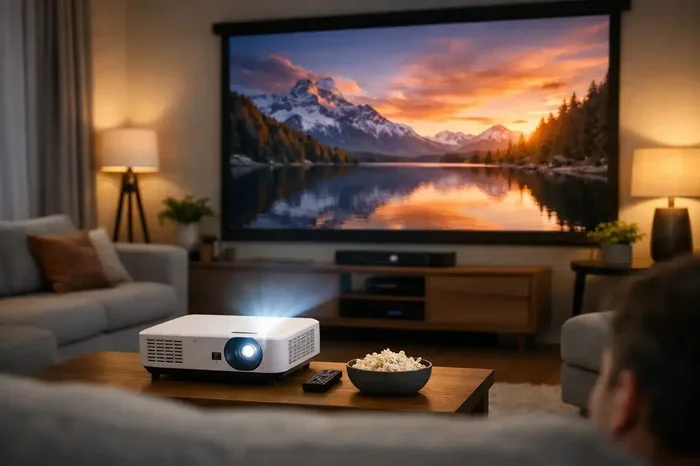
The home cinema movement has been a huge driver of this evolution. People want the feeling of sitting in a movie theater — but from the comfort of their couch. A projector screen measuring 100 inches or more creates an experience that no television can replicate. That pull toward immersion is keeping projectors very much alive.
Key Tech Advances Driving the Comeback
Several breakthroughs have pushed projectors back into the spotlight. Here are the biggest ones:
- 4K resolution: Many projectors now offer true 4K detail. That means razor-sharp images with incredible clarity.
- High lumen output: Modern units produce 2,000 to 4,000 lumens or more. This means a bright picture even during daytime viewing.
- Smart features: Built-in Android TV, Roku, and Amazon Fire TV are now standard. You can stream directly without extra devices.
- Laser and LED light sources: These last 20,000 to 30,000 hours. That is years of use without needing a replacement bulb.
- Short throw and ultra-short throw: These projectors sit inches from the wall and still produce a massive image. Perfect for small rooms.
- HDR support: High Dynamic Range brings deeper blacks and brighter highlights to projected images.
- Built-in speakers: Many modern projectors include decent audio, so you do not need a separate sound system right away.
Each of these advances solves a real problem that used to hold projectors back. The result is a product that feels modern, intuitive, and genuinely impressive.
Projector vs TV: The Big Showdown
Image Size and Immersion
This is where projectors absolutely dominate. A large screen projection of 100 to 120 inches makes you feel like you are inside the movie. A 65-inch TV is great. But it cannot compete with that level of immersion. When you watch a sports game or an epic movie on a projection screen, the scale changes everything.
For home theater enthusiasts, this is the single biggest reason to choose a projector. The cinematic feeling is unmatched. You get wide aspect ratios, bold colors, and a viewing experience that wraps around your field of vision.
Picture Quality Comparison
TVs still hold an edge in brightness and contrast. OLED TVs produce perfect blacks and stunning HDR performance. In a completely dark room, a high-end TV can look slightly better than a projector. But in a room with controlled lighting, a good 4K projector holds its own beautifully.
Here is a quick side-by-side comparison:
- Screen size: Projector wins easily. TVs max out around 85 inches. Projectors go well beyond 100 inches.
- Brightness: TV wins in bright rooms. Projectors work best in dim or controlled lighting.
- Contrast: High-end TVs edge ahead. But modern projectors with HDR are closing the gap fast.
- Portability: Projector wins. Most models are lightweight and easy to move.
- Lifespan: Laser and LED projectors last 20,000+ hours. TVs last 50,000 to 100,000 hours.
- Cost per inch: Projector wins. A big projector screen costs less per inch than a large TV.
Which One Should You Choose?
If you watch movies regularly and want a true theater feel, go with a projector. If you watch a lot of daytime TV, sports in bright rooms, or prefer a wall-mounted setup, a TV might serve you better. There is no wrong answer here. It depends on your lifestyle and viewing habits.
Types of Projectors You Should Know About
Home Theater Projectors
These are the heavy lifters of the projector world. Home theater projectors are designed for dedicated media rooms or basements. They offer high brightness, excellent color accuracy, and support for 4K and HDR content. Brands like Epson, BenQ, and Optoma lead this category.
A typical home cinema projector costs between $500 and $2,500. At that price point, you get a picture that transforms any room into a personal movie palace.
Portable and Mini Projectors
Portable projectors have exploded in popularity. These tiny devices fit in a backpack and connect to your phone or laptop via Bluetooth or HDMI. They are perfect for camping trips, backyard movie nights, or business presentations.
Do not expect 4K quality from a mini projector. But for casual viewing and fun gatherings, they deliver surprisingly good images. Popular options in this category include the Anker Nebula series and the LG PH550.
Ultra-Short Throw Projectors
Ultra-short throw projectors sit inches away from the wall or a special screen. They produce a large image without casting shadows or creating glare. This makes them ideal for living rooms where space is tight.
These models are growing in popularity because they look sleek and modern. You can place them on a low table or mount them just below a TV mount. The result is a clean, uncluttered setup.
Laser Projectors
Laser projectors are the future of projection technology. They use laser diodes instead of traditional lamps. This means they are brighter, last longer, and maintain color accuracy over time. Prices have dropped significantly, making laser projectors accessible to more families.
If you plan to use a projector every day, a laser model is the smart investment. The maintenance is minimal, and the picture quality stays consistent for years.
Surprising Ways People Use Projectors Today
Outdoor Movie Nights
One of the most fun uses for a portable projector is outdoor entertainment. Set up a white sheet or a portable projector screen in your backyard. Invite friends over. Pop some popcorn. You have just created a memorable movie night under the stars.
Many people use outdoor projectors for birthday parties, holiday gatherings, and even sports watch parties. The big screen adds a festive touch that a laptop or tablet simply cannot provide.
Gaming on the Big Screen
Gamers are discovering that projectors are fantastic for their hobby. A 100-inch screen makes open-world games feel enormous. Modern projectors have low input lag, which means responsive gameplay. Models with 120Hz refresh rates are especially popular among serious gamers.
Whether you play on a console or a PC, a gaming projector adds a new dimension to your setup. Racing games, shooters, and RPGs all look incredible on a large projection surface.
Business and Education
Do not forget that projectors have always been essential in offices and classrooms. Business projectors help teams present ideas clearly. Schools use them for lessons, training videos, and interactive learning. Even with the rise of smart boards, projectors remain a reliable and cost-effective choice for large-group displays.
Common Mistakes People Make With Projectors
Buying the Wrong Brightness
One of the most common mistakes is choosing a projector with too few lumens. If your room gets a lot of natural light, you need at least 3,000 lumens for a clear picture. A dim projector in a bright room will look washed out and frustrating.
Quick tip: Always check the lumen rating before buying. Match it to your room conditions. A darker room can get away with fewer lumens.
Ignoring the Throw Distance
Every projector has a specific throw ratio. This determines how far the unit needs to sit from the screen to produce a given image size. If you buy a projector without checking this, you might end up needing a very long cable or a much bigger room than expected.
Quick tip: Measure your room before shopping. Use an online throw distance calculator to find the right model for your space.
Forgetting About the Screen
Many people buy an expensive projector and then project onto a bare white wall. The result is often uneven, dull, and disappointing. A proper projection screen makes a massive difference in picture quality.
Quick tip: Even a basic retractable screen improves sharpness and color. You do not need to spend a fortune — a decent screen is a worthwhile investment.
Neglecting Maintenance
Projectors need care to perform well over time. Dust can clog vents and cause overheating. Filters need cleaning or replacing. Lenses should be kept clean for the sharpest image.
Common mistake: People ignore maintenance until the picture degrades. A little regular care goes a long way in extending your projector’s lifespan.
Expert Insights: What the Industry Thinks
Industry analysts agree that the projector market is growing. According to recent reports, global shipments of home projectors have increased steadily over the past three years. The demand for smart home theater equipment is a major factor driving this growth.
Tech experts also point to the rise of portable and smart projectors as a key trend. These devices appeal to younger consumers who value flexibility and convenience. The ability to stream content directly from a projector — no extra boxes or cables — is a huge selling point.
Experts also highlight the role of affordable 4K projectors. Just a few years ago, 4K projectors cost thousands of dollars. Now, excellent models are available for under $1,000. This price drop has opened the door to a much wider audience.
As one industry insider put it, “The projector is no longer a niche product. It is a mainstream entertainment device that competes directly with the television.” That statement captures the current moment perfectly.
Are Projectors Still A Thing? The Verdict
The answer is a clear and resounding yes. Projectors are still a thing, and they are thriving. Modern technology has transformed them from clunky, dim machines into sleek, powerful entertainment centers. They deliver big-screen magic at prices that more families can afford than ever before.
Whether you want to build a dedicated home theater, enjoy backyard movie nights, or add a unique display to your gaming setup, a projector delivers an experience that few other devices can match. The combination of 4K resolution, smart features, and portability makes today’s projectors genuinely compelling.
So the next time someone asks, “Are projectors still a thing?” you can confidently say yes. The big screen is alive and well. It is just in a different room now — and it is better than ever.
Frequently Asked Questions
Do projectors still sell well in the modern market?
Yes, projectors continue to sell strongly. The home theater and portable projector segments have seen consistent growth. Smart features and affordable pricing have driven renewed consumer interest in projection technology.
Can a projector replace a TV for everyday viewing?
For many people, yes. A modern projector with smart capabilities can handle streaming, gaming, and casual viewing just fine. However, if you watch a lot of content in bright rooms, a TV may still be the better choice due to higher brightness levels.
How long do modern projectors last?
LED and laser projectors can last 20,000 to 30,000 hours or more. That translates to roughly 10 to 15 years of regular use. Traditional lamp-based projectors have shorter lifespans but still offer several thousand hours of reliable performance.
Are portable projectors worth buying?
Absolutely. Portable projectors are fun, convenient, and surprisingly capable. They are great for outdoor movie nights, travel, and casual viewing. While they do not match the quality of larger home theater models, they deliver excellent value for their price.
What is the best projector for a small apartment?
An ultra-short throw or short throw projector is ideal for small spaces. These models sit close to the wall and produce a large image without needing a deep room. Look for a unit with at least 2,000 lumens and smart streaming support for the best experience.
Is it expensive to maintain a projector?
Modern LED and laser projectors are very low maintenance. They do not require frequent bulb replacements, and their filters are easy to clean. Overall, the cost of ownership is quite reasonable, especially when you consider the large screen size you get for the price.