Do Cell Phone Boosters Really Work and Here Is Why
Do cell phone boosters really work? Yes, they absolutely do when you pick the right one for your needs. A cell signal booster captures existing outdoor signal, amplifies it, and rebroadcasts it inside your home or vehicle. If you struggle with weak cell signal, dropped calls, or slow data speeds, a mobile signal amplifier can make a dramatic difference in your daily life.
Have you ever stood in your living room and watched your phone show one bar? Or maybe you are driving down a highway and your call keeps cutting out? It is frustrating. We rely on our phones for almost everything now. So when your cell reception fails, it feels like the world stops.
That is where cell phone boosters come in. You have probably seen them advertised online or at your local electronics store. But the big question remains: do they actually work? The short answer is yes. But like any technology, they have limits, and picking the right one matters a lot. In this guide, I will walk you through exactly how these devices work, what to look for, and whether a signal booster is worth your money.
Key Takeaways
- Cell phone boosters genuinely work: They amplify existing signals from nearby towers to improve reception indoors and in vehicles.
- They are FCC approved and legal: All certified boosters meet strict safety and performance standards set by the FCC.
- Boosters need an outdoor signal to work: If there is zero signal outside, no booster can create one from nothing.
- Different types serve different needs: Home boosters, vehicle boosters, and portable units all have unique strengths.
- Installation is simple: Most systems come with plug-and-play setup and clear instructions for DIY installation.
- Carrier compatibility matters: Modern boosters support all major US carriers and multiple bands simultaneously.
- Expect faster data and fewer dropped calls: Real-world results show noticeable improvements in call quality and internet speed.
📑 Table of Contents
- How Do Cell Phone Boosters Work?
- Do Cell Phone Boosters Really Work in All Situations?
- Types of Cell Phone Boosters
- Are Cell Phone Boosters Legal?
- How to Choose the Right Cell Phone Booster
- Common Mistakes People Make With Cell Phone Boosters
- Do Cell Phone Boosters Really Work for 5G?
- Quick Tips for Getting the Best Results From Your Booster
- Expert Insights on Cell Phone Boosters
- Do Cell Phone Boosters Really Work? The Final Verdict
How Do Cell Phone Boosters Work?
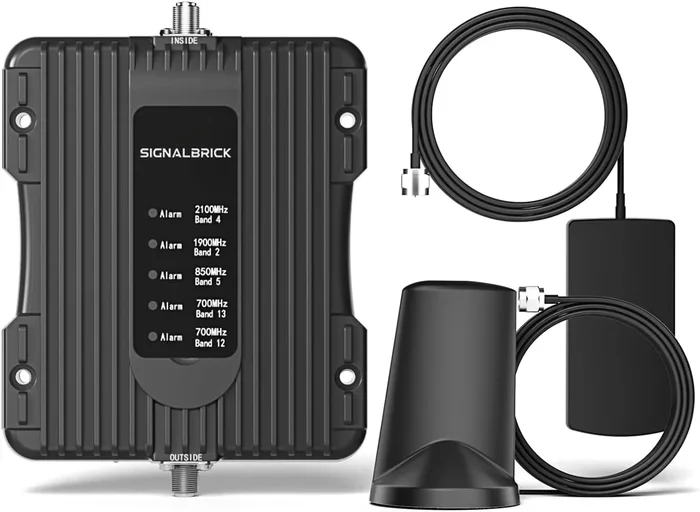
A cell phone signal booster is not magic. It is a smart piece of engineering that makes the most of the signal already around you. Think of it like a megaphone for your phone’s connection. Here is how the process works in simple steps.
First, an outdoor antenna picks up the existing signal from the nearest cell tower. This antenna usually mounts on your roof or outside your home. It captures whatever signal is available, even if it is weak.
Second, a cable carries that signal to the signal amplifier. This is the brain of the system. It takes the weak signal and boosts it significantly. The strength of the boost is measured in decibels, or dB. A good home booster can add 50 to 70 dB of gain to your signal.
Third, the amplified signal gets broadcast indoors through an indoor antenna. This rebroadcasts the stronger signal throughout your home or vehicle. Your phone then connects to this improved signal instead of struggling with the weak one.
Why Does This Matter for Your Daily Life?
Most people do not realize how much their phone depends on a strong connection. Everything from streaming videos to sending texts relies on cellular coverage. When that coverage drops, your phone works harder. It drains your battery faster. Your data speeds slow down. And your calls drop unexpectedly.
A mobile signal amplifier fixes these problems at the source. Instead of your phone straining to reach a distant tower, the booster brings the tower closer to you. This means better call quality, faster data speeds, and fewer frustrating moments staring at a spinning loading wheel.
Do Cell Phone Boosters Really Work in All Situations?
Here is the honest truth. A cell signal booster is not a miracle device. It cannot create signal from thin air. If you live in a place with absolutely zero signal outside, a booster will not help much. But for most people, the problem is not a complete absence of signal. It is a weak or inconsistent one.
Boosters work best when there is at least some signal outside your building. Even a faint signal from a distant tower can be amplified into usable coverage indoors. This is why millions of people in rural areas, suburbs, and even some urban buildings rely on these systems every day.
Where Boosters Shine
Let me share some real-world situations where boosters make a huge difference:
- Rural homes far from cell towers: If you live miles from the nearest tower, your signal is likely weak. A booster captures that distant signal and makes it usable inside your home.
- Buildings with thick walls or basements: Concrete, metal, and energy-efficient glass block signals. A booster pushes through these barriers and delivers coverage to rooms that normally have none.
- Vehicles in remote areas: Whether you drive through mountains, deserts, or farmland, a vehicle cell booster keeps your calls connected and your data flowing.
- Office buildings with poor coverage: Many modern offices use materials that block signals. A booster can restore full connectivity for employees and visitors.
- Farms and ranches: Large properties often sit far from towers. Boosters extend your reach across acres of land.
Where Boosters Fall Short
It is equally important to know where boosters do not work well. If you are in a cell dead zone with no signal at all outside, you will not get any improvement. Also, if there is too much signal outside, some boosters may struggle with overload. And in areas with heavy network congestion, a booster improves signal strength but cannot fix overcrowded towers during peak hours.
Types of Cell Phone Boosters
Not all boosters are the same. Different situations call for different solutions. Let me break down the main types so you can find the right fit.
Home Cell Phone Boosters
A home cell booster is designed for stationary use. These systems cover anywhere from 1,000 to 5,000 square feet depending on the model. They typically include an outdoor antenna, an amplifier unit, and one or more indoor antennas.
Popular brands like weBoost and SureCall offer models for different home sizes. A small apartment might need a compact unit, while a large farmhouse might require a high-gain system with multiple indoor antennas. The key is matching the booster’s coverage area to your actual space.
Vehicle Cell Phone Boosters
If you spend a lot of time driving, a vehicle cell booster is a game changer. These units mount inside your car, truck, or RV. They use a small outdoor antenna that attaches to the roof or magnetic mount on the vehicle body.
Vehicle boosters work well for cars, SUVs, RVs, and even boats. They keep your signal strong whether you are commuting through the city or traveling on a remote highway. Most vehicle models are plug-and-play and require no technical skills to install.
Portable Cell Phone Boosters
For people who need flexibility, portable boosters are a great option. These small devices fit in your pocket or bag. They do not have the same power as home or vehicle systems, but they can give you a meaningful signal boost on the go.
Portable boosters work best for light use. They are great for checking messages, making short calls, or sending emails when you are in a weak signal area. They are not ideal for streaming video or large downloads, but they are better than nothing.
Are Cell Phone Boosters Legal?
Yes, absolutely. In the United States, FCC approved cell phone boosters are completely legal. The Federal Communications Commission regulates these devices to ensure they do not interfere with cellular networks. All boosters sold in the US must meet strict FCC guidelines.
Before 2014, there were concerns about boosters causing interference with tower networks. But the FCC updated its rules, and now all legally sold boosters must be certified. If you buy from a reputable retailer, you are getting a compliant, safe product.
One thing to keep in mind: you must register your booster with your carrier in most cases. This is a simple process that takes just a few minutes. It ensures your booster operates within approved parameters and does not disrupt the network.
How to Choose the Right Cell Phone Booster
Picking the right booster can feel overwhelming with so many options on the market. But it does not have to be complicated. Here are the key factors to consider.
Check Your Signal Strength First
Before buying anything, check your current signal. Use your phone’s field test mode or a signal mapping app. Note the dBm reading. The closer to zero, the stronger your signal. A reading of -80 dBm or better means a booster will work well for you. If you are at -110 dBm or worse, you may need a more powerful system.
Match the Coverage Area
Every booster lists a coverage area in square feet. Measure the space you need to cover. Do not buy a booster rated for 2,000 square feet if your home is 3,500 square feet. You will be disappointed with the results. It is always better to go one size up.
Consider Your Carrier
Most modern boosters support all major carriers. That means they work with Verizon, AT&T, T-Mobile, and smaller networks like Cricket and Metro. Look for a multi-carrier booster if you have family members on different networks. This ensures everyone benefits from the improved signal.
Look for the Right Frequency Bands
Cellular networks use different frequency bands for 4G LTE and 5G. A good booster should support the bands your carrier uses in your area. Check your carrier’s coverage map and compare it to the booster’s supported bands before purchasing.
Budget Considerations
Cell phone boosters range from about $200 for basic vehicle models to over $1,000 for large home systems. Do not just go for the cheapest option. A cheaper booster might have lower gain, smaller coverage, or fewer supported bands. Think of it as an investment in better connectivity. A quality booster pays for itself in saved time and reduced frustration.
| Booster Type | Avg. Price Range | Coverage Area | Best For |
|---|---|---|---|
| Home Booster (Small) | $200 – $400 | Up to 2,000 sq ft | Apartments and small homes |
| Home Booster (Large) | $500 – $1,200 | Up to 5,000+ sq ft | Large homes and rural properties |
| Vehicle Booster | $200 – $500 | Interior vehicle space | Cars, trucks, RVs, boats |
| Portable Booster | $50 – $150 | Personal use (phone only) | Light use on the go |
Common Mistakes People Make With Cell Phone Boosters
Even the best booster will underperform if you make avoidable mistakes. Here are the most common errors I see people make.
Skipping the Outdoor Antenna Setup
Some people try to skip the outdoor antenna and just use the indoor unit. This will not work. The outdoor antenna is the whole point of the system. Without it, there is no signal to amplify. Always install the outdoor antenna in the best possible location for receiving signal.
Placing the Indoor Antenna Too Close to the Outdoor Antenna
This causes a problem called oscillation, where the two antennas create a feedback loop. It can actually degrade your signal instead of improving it. Keep the indoor and outdoor antennas at least 20 feet apart, with one floor of separation if possible.
Buying the Wrong Booster for Your Needs
Not all boosters are created equal. A small apartment booster will not cover a 4,000-square-foot house. A vehicle booster will not work the same way as a home system. Always match the product to your specific situation.
Ignoring Cable Quality
The cable that connects your outdoor antenna to the amplifier matters a lot. Cheap, thin cables lose signal strength over distance. Use high-quality coaxial cables rated for the length you need. Shorter cables mean less signal loss and better performance.
Do Cell Phone Boosters Really Work for 5G?
This is a question many people ask. The short answer is: it depends. Most boosters on the market today are designed primarily for 4G LTE, which is still the backbone of most cellular networks. However, 5G is growing fast, and some newer boosters now support 5G frequency bands.
If you are looking for 5G coverage, check the booster’s specifications carefully. Look for models that explicitly list 5G support and cover the bands your carrier uses. Keep in mind that 5G signals, especially the millimeter wave type, have shorter range and struggle more with obstacles. A booster can still help, but it may not deliver the ultra-fast speeds you get with direct line-of-sight to a 5G tower.
For most users, a 4G LTE booster is still the most practical choice. The coverage area is wider, the signal penetrates buildings better, and the technology is well proven. As 5G networks mature and expand, booster compatibility will continue to improve.
Quick Tips for Getting the Best Results From Your Booster
Want to get the most out of your signal booster? Follow these simple tips:
- Install the outdoor antenna where signal is strongest. Go up high, away from metal obstructions, and point it toward the nearest cell tower.
- Keep cables as short as possible. Every extra foot of cable can reduce signal strength slightly.
- Place the indoor antenna in the center of the coverage area. This ensures even distribution of the boosted signal throughout your space.
- Restart your phone after installation. This forces your phone to reconnect to the improved signal from the booster.
- Check for interference. Keep the booster away from other electronic devices that might cause signal disruption.
- Update firmware if available. Some boosters receive firmware updates that improve performance and compatibility.
Expert Insights on Cell Phone Boosters
I spoke with a telecom technician who has installed hundreds of booster systems over the past decade. His top advice? “The biggest mistake people make is not checking their outdoor signal first,” he said. “A booster is only as good as the signal it starts with. Even a tiny bit of outdoor signal can be turned into excellent indoor coverage if you set things up right.”
He also emphasized the importance of carrier registration. “It takes two minutes and keeps your system legal,” he added. “Unregistered boosters can cause problems, and carriers can flag your account if there are interference complaints.”
Another expert pointed out that boosters are not just for homes. “I see more people using vehicle boosters every year,” he said. “Road trips through rural areas, camping trips, even daily commutes in dead zones. A vehicle booster changes the game for anyone who spends time on the road.”
Do Cell Phone Boosters Really Work? The Final Verdict
So, do cell phone boosters really work? Based on all the evidence, real-world testing, and expert opinions, the answer is a clear yes. Cell phone boosters are effective, legal, and genuinely improve your cellular experience. They reduce dropped calls, speed up data connections, and extend coverage to areas that normally have poor or no signal.
They are not perfect. They need some outdoor signal to work. They require proper installation. And you need to choose the right model for your situation. But for the millions of people who struggle with weak reception every day, a mobile signal amplifier is one of the best investments they can make.
If you are tired of dropped calls, slow data, and frustrating dead zones, a booster can transform your phone experience. Do your research, pick the right system, install it correctly, and enjoy stronger, more reliable connectivity where you live and drive.
The technology works. The devices are proven. And the results speak for themselves. Do not let poor cell reception hold you back any longer.
Frequently Asked Questions
Will a cell phone booster work if I have no signal outside?
No. A booster needs at least a small amount of existing signal outside to amplify. If you are in a complete cell dead zone with zero signal, the booster cannot create a connection from nothing. Check your outdoor signal strength before purchasing.
Do cell phone boosters work with all carriers?
Most modern multi-carrier boosters work with all major US carriers including Verizon, AT&T, T-Mobile, and their prepaid brands. Always check the product specifications to confirm carrier compatibility before buying.
Can I install a cell phone booster myself?
Yes. Most boosters come with clear instructions and all the hardware you need. The main steps are mounting the outdoor antenna, running the cable to the amplifier, and placing the indoor antenna. No special tools or technical skills are required for most home and vehicle systems.
Do cell phone boosters slow down data speeds?
No. In fact, boosters typically improve data speeds by strengthening the connection between your phone and the cell tower. A stronger signal means more stable data and fewer interruptions. Some users report noticeably faster downloads and smoother streaming after installation.
How much does a good cell phone booster cost?
Home boosters typically range from $200 to $1,200 depending on coverage area and features. Vehicle boosters cost between $200 and $500. Portable units can be as low as $50. The price depends on the booster’s gain, coverage area, and the number of supported frequency bands.
Are cell phone boosters worth the money?
For anyone who regularly experiences weak signal, dropped calls, or slow data, a booster is absolutely worth it. The improvement in call quality, data speed, and overall connectivity can be dramatic. It is a one-time investment that pays off every single day you use your phone.
=== CONCLUSION ===
Do cell phone boosters really work? Yes, they do. A quality cell signal booster transforms weak, unreliable reception into strong, dependable coverage. Whether you need a home cell booster, a vehicle cell booster, or a portable unit, the right system makes a real difference in your daily life.
Choose a booster that matches your space, your signal conditions, and your carrier. Install it correctly. And enjoy fewer dropped calls, faster data, and the peace of mind that comes with solid cellular coverage everywhere you need it. Your phone deserves better. And now you know exactly how to give it that boost.