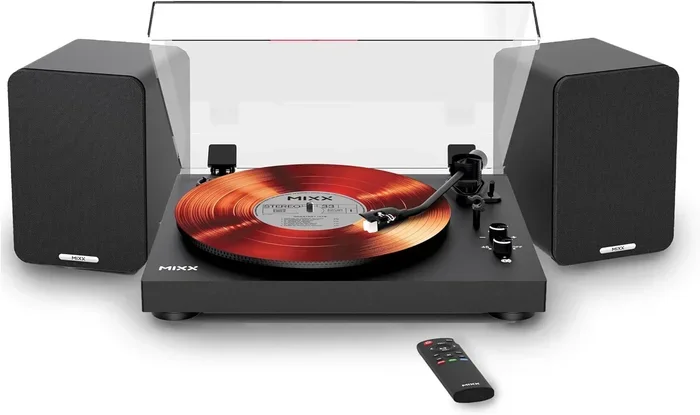
Can I Play My Record Player Through Bluetooth Speaker
You can absolutely play your record player through a Bluetooth speaker. Whether you use a Bluetooth transmitter, an aux cable, or a Bluetooth receiver, connecting your turntable to wireless speakers is easier than you think. This guide walks you through every method, setup step, and tip to get your vinyl sound streaming wirelessly.
There is something magical about dropping the needle on a vinyl record. The warm analog sound, the crackle before the music starts, and the tactile experience of flipping the record halfway through. But here is the thing. Your speakers might not be doing justice to that beautiful sound. Maybe your old stereo is broken, or you want to move your setup to a different room. Whatever the reason, you might be wondering if you can play your record player through a Bluetooth speaker.
The short answer is yes. You absolutely can. And the good news is that it is not as complicated as you might think. Whether you are a vinyl enthusiast or just someone who loves the nostalgia of records, connecting your turntable to a wireless speaker opens up a whole new world of listening flexibility. In this guide, we will walk you through every method, every tip, and every thing you need to know to get your records playing through Bluetooth.
Before we dive in, let us talk about what you are working with. A record player outputs an analog signal. That signal needs to reach your speaker somehow. A Bluetooth speaker receives digital audio wirelessly. So somewhere in the middle, there needs to be a bridge between the analog world of vinyl and the digital world of Bluetooth. That bridge can take several forms, and we will explore all of them.
Key Takeaways
- Multiple connection options exist: You can use a Bluetooth transmitter, an RCA-to-aux cable, or a Bluetooth receiver to link your turntable to a wireless speaker.
- Sound quality may vary: Bluetooth compression can slightly reduce audio fidelity, but modern codecs like aptX help preserve the warm vinyl sound.
- A Bluetooth transmitter is the most popular method: It plugs into your record player and sends audio wirelessly to any compatible speaker within range.
- Latency can be an issue: Some Bluetooth connections introduce a slight delay, which matters if you want real-time audio sync.
- Choose the right speaker: Not all Bluetooth speakers are equal. Look for good battery life, strong range, and support for high-quality audio codecs.
- Setup is simple: Most connections take less than five minutes and require no technical expertise.
📑 Table of Contents
- How Bluetooth Technology Connects to Your Record Player
- Different Ways to Connect a Record Player to a Bluetooth Speaker
- Step-by-Step Setup Guide for Wireless Listening
- Does Bluetooth Affect the Sound Quality of Vinyl Records?
- Best Bluetooth Speakers for Playing Records
- Common Problems When Playing Records Through Bluetooth
- Expert Tips to Get the Most Out of Your Setup
- Final Thoughts on Playing Records Through Bluetooth
How Bluetooth Technology Connects to Your Record Player
Understanding the Basics of Wireless Audio
Bluetooth is a wireless communication technology that sends data between devices over short distances. When you pair your phone with a speaker, Bluetooth handles the transfer. The same principle applies when you want to connect a record player to a Bluetooth speaker. But there is one key difference. Your record player does not have Bluetooth built in. Not most of them, anyway. So you need a helper device to make the connection happen.
Think of it like a translator. Your record player speaks analog. Your Bluetooth speaker speaks digital and wireless. The translator takes the analog signal, converts it, and sends it through the air to your speaker. That translator can be a small transmitter, a cable with a built-in Bluetooth chip, or a dedicated receiver. Each option works, but they have different strengths.
How Bluetooth Transmits Sound
Bluetooth uses radio waves to transmit audio. When you hit play on your record player, the stylus reads the grooves on the vinyl. That movement creates an electrical signal. That signal travels through the cables to your output device. If that output device has a Bluetooth transmitter, it converts the signal into a wireless format and sends it to the paired speaker.
The whole process happens in milliseconds. Modern Bluetooth versions, especially Bluetooth 5.0 and above, offer faster data transfer and stronger connections. This means fewer dropouts and better sound quality. But the quality of your wireless listening experience depends heavily on the equipment you use. More on that in a moment.
One thing to keep in mind is Bluetooth range. Most Bluetooth speakers work well within 30 feet. If you move too far away, the signal weakens. For most home setups, this is not a problem. You can easily place your Bluetooth speaker in the living room while your turntable sits in the corner of the same room. Just make sure there are no major walls or obstacles blocking the signal.
Different Ways to Connect a Record Player to a Bluetooth Speaker
Method One: Using a Bluetooth Transmitter
This is the most popular and straightforward method. A Bluetooth transmitter plugs into the output of your record player. It then searches for and pairs with your Bluetooth speaker. The whole process is wireless from that point forward. You get freedom of placement and a clean setup without tangled cords running across the room.
Here is how it works in practice. You plug a small RCA cable from the record player output into the Bluetooth transmitter. The transmitter powers on, usually through a USB cable or batteries. Then you put your Bluetooth speaker into pairing mode. The transmitter finds the speaker, and you are listening to your records wirelessly.
Some Bluetooth transmitters also support aptX or LDAC codecs. These are advanced audio codecs that reduce the compression loss that Bluetooth normally introduces. If you care about sound quality, look for a transmitter that supports these codecs. Your ears will thank you.
Method Two: Connecting Through an RCA-to-Aux Cable
This method skips Bluetooth entirely. You use a cable to connect your record player directly to the Bluetooth speaker. Many Bluetooth speakers have a 3.5mm aux input. You simply run a cable from the RCA output of your turntable to the aux input on the speaker.
The advantage here is sound quality. A wired connection does not compress audio the way Bluetooth does. You get the full, uncompressed signal from your record player to your speaker. The downside is that you lose the wireless freedom. Your speaker needs to stay close to the turntable, connected by a cable.
This method works great if you do not plan on moving the speaker around much. It is also the cheapest option since you only need a cable. A simple RCA-to-aux cable costs under fifteen dollars and gets the job done.
Method Three: Using a Bluetooth Receiver
A Bluetooth receiver is the opposite of a transmitter. Instead of sending audio wirelessly, it receives the wireless signal. You connect the receiver to your speaker using a cable, and then the receiver pairs with your phone or tablet. But wait, you might ask, how does this help with a record player?
Here is the trick. Some Bluetooth receivers can also act as a passthrough for analog audio. You connect your record player to the receiver using cables. The receiver outputs the audio to your speaker while also maintaining a Bluetooth connection. This is a less common setup, but it works well in certain scenarios, especially with powered speakers that have aux inputs.
Method Four: Using a Turntable with Built-in Bluetooth
If you are in the market for a new record player, consider one with built-in Bluetooth. Many modern turntables come with Bluetooth capability right out of the box. You just pair the turntable with your speaker and start listening. No extra devices, no cables, no hassle.
Brands like Audio-Technica, Victrola, and Sony now offer turntables with Bluetooth built in. These models range from budget-friendly options to higher-end players. If you want the simplest setup possible, this is the way to go. Just be aware that built-in Bluetooth modules can vary in quality. Some use older Bluetooth versions that compress audio more than newer ones.
Step-by-Step Setup Guide for Wireless Listening
What You Need Before You Start
Before you begin the setup process, gather your equipment. Here is a quick checklist of what you will need:
- A record player or turntable with an available output (RCA or aux)
- A Bluetooth speaker that is in pairing mode
- A Bluetooth transmitter (if your turntable does not have Bluetooth built in)
- RCA cables or an RCA-to-aux cable to connect the transmitter to the turntable
- A power source for the transmitter, if it requires external power
That is it. You do not need any special tools or technical knowledge. If you can plug in a cable and press a button, you can set this up. The entire process takes about five to ten minutes.
Pairing Your Devices
Once you have everything ready, follow these steps. First, connect the Bluetooth transmitter to your record player using the RCA cables. Plug the red cable into the red output and the white cable into the white output. If your turntable has a single 3.5mm output, use an RCA-to-aux cable instead.
Next, power on the Bluetooth transmitter. Most transmitters have a small LED light that blinks when they are ready to pair. Put your Bluetooth speaker into pairing mode. This usually involves holding down a button on the speaker until the LED light flashes.
The transmitter should find the speaker automatically. Once paired, the LED light on the transmitter will usually stop blinking and stay solid. At that point, you can drop the needle on your record and start listening. It really is that simple.
One quick tip. If you are having trouble pairing, move the devices closer together. Once they are connected, you can move them further apart. Also, make sure your speaker is not already connected to another device. Bluetooth can only stay paired with one source at a time unless it supports multipoint pairing.
Does Bluetooth Affect the Sound Quality of Vinyl Records?
Comparing Wired vs Wireless Audio
This is the question every vinyl lover asks. Does Bluetooth compress the warm, rich sound that makes records so special? The honest answer is a little bit yes, but not as much as you might think.
Bluetooth uses a lossy compression format. This means some audio data is lost during transmission. In the early days of Bluetooth, this was a real problem. The sound could feel thin, flat, or lacking in bass. But Bluetooth technology has come a long way. Modern codecs like aptX, aptX HD, and LDAC preserve much more of the original audio quality.
For most listeners, the difference between a wired connection and a Bluetooth connection is subtle. You might notice a slight reduction in the deepest bass frequencies or a tiny bit less detail in the high end. But for casual listening in your living room or bedroom, the difference is barely noticeable. The warm character of vinyl still comes through loud and clear.
Tips to Preserve Audio Fidelity
If you want the best possible sound quality when playing records through Bluetooth, follow these tips. First, invest in a Bluetooth transmitter that supports aptX or LDAC. These codecs make a real difference in audio fidelity.
Second, keep your devices close together. Bluetooth signals weaken with distance and through walls. The closer your transmitter and speaker are, the stronger the connection and the better the sound.
Third, avoid interference. Wi-Fi routers, microwaves, and other wireless devices can interfere with Bluetooth signals. Keep your Bluetooth transmitter away from these devices for a cleaner connection.
Fourth, use a quality phono preamp if your turntable does not have one built in. A good preamp ensures the signal from your record player is strong and clean before it reaches the Bluetooth transmitter. This small investment can make a big difference in the final sound.
Best Bluetooth Speakers for Playing Records
Top Picks for Different Budgets
Not all Bluetooth speakers are created equal. Some are designed for deep bass and loud volumes. Others focus on clarity and portability. When you are playing records through Bluetooth, you want a speaker that reproduces the full range of audio frequencies well. Here are some great options across different price ranges.
- Budget pick: The JBL Flip 6 offers solid sound quality, good battery life, and a compact design. It costs around one hundred dollars and handles vinyl audio surprisingly well for the price.
- Mid-range pick: The Bose SoundLink Color II delivers balanced audio with clear highs and decent bass. It is around two hundred dollars and pairs easily with most Bluetooth transmitters.
- Premium pick: The Sonos Move is a premium portable speaker with excellent sound quality and smart features. It costs around four hundred dollars and is perfect for audiophiles who want the best wireless experience.
What to Look For in a Bluetooth Speaker
When shopping for a Bluetooth speaker to use with your record player, keep a few things in mind. First, look for speakers that support the aptX or LDAC codecs. These ensure better audio quality over Bluetooth.
Second, consider battery life. If you plan on listening to full albums, you need a speaker that can last several hours on a single charge. Most good Bluetooth speakers offer eight to twelve hours of playback.
Third, check the speaker’s frequency response. A wider frequency response means the speaker can reproduce more of the audio spectrum. For vinyl records, you want good bass response and clear highs. Avoid tiny portable speakers that only emphasize the midrange.
Finally, think about portability. If you want to move your speaker from room to room, go for a lightweight, battery-powered option. If the speaker stays in one place, you can prioritize sound quality over portability.
Common Problems When Playing Records Through Bluetooth
Connection Drops and How to Fix Them
Bluetooth connection drops are frustrating, but they are usually easy to fix. The most common cause is distance. If your record player and speaker are too far apart, the signal weakens and drops. Move the devices closer together and see if that solves the problem.
Another common cause is interference. Other wireless devices in your home can disrupt the Bluetooth signal. Try turning off nearby Wi-Fi devices or moving your router away from your speaker setup. Sometimes simply changing the Bluetooth channel on your transmitter helps too.
If your connection keeps dropping, try unpairing and re-pairing the devices. Turn off both the transmitter and the speaker, wait a few seconds, and then turn them back on. Put them into pairing mode again and let them reconnect. This simple reset fixes most connection issues.
Latency and Audio Delay Issues
Latency is the delay between when the audio is produced and when you hear it. With Bluetooth, there is always a slight delay. For most music listening, this delay is so small that you do not notice it. But when you are watching a video or if you are very sensitive to timing, it can be annoying.
To reduce latency, use a Bluetooth transmitter with a low-latency codec. AptX Low Latency is specifically designed to minimize delay. Not all speakers support this codec, so check your speaker’s specifications before buying a transmitter.
Another way to reduce the perceived delay is to place the speaker close to you and the turntable. The shorter the Bluetooth distance, the faster the signal travels. It is a small change, but it can make a noticeable difference.
Remember, some latency is normal with any Bluetooth connection. Do not expect it to be perfectly zero. But with the right equipment, the delay is small enough that it does not affect your listening experience in any meaningful way.
Expert Tips to Get the Most Out of Your Setup
Here are a few extra tips from experienced vinyl listeners. First, always clean your records before playing them. Dust and debris affect the sound quality, and Bluetooth amplifies every imperfection. A clean record sounds noticeably better, whether you are listening through speakers or headphones.
Second, invest in a good phono preamp. This small device boosts the signal from your turntable to line level. Without it, the sound can be weak and thin. A quality preamp makes a huge difference in how your records sound through any speaker, Bluetooth or otherwise.
Third, experiment with speaker placement. Bluetooth speakers sound different depending on where you put them. Placing a speaker against a wall can boost bass but muddy the mids. Elevating the speaker on a shelf can improve clarity. Try different positions and find what sounds best in your room.
Fourth, update your Bluetooth firmware when possible. Many Bluetooth transmitters and speakers receive firmware updates that improve connectivity and audio quality. Check the manufacturer’s website or app for updates. A simple update can transform your listening experience.
Finally, enjoy the process. There is something special about hearing your favorite records come through a wireless speaker. You get the warmth of vinyl with the convenience of modern technology. It is the best of both worlds.
Final Thoughts on Playing Records Through Bluetooth
Playing your record player through a Bluetooth speaker is not only possible, it is incredibly easy. You have multiple ways to make it work, from Bluetooth transmitters to simple cables to turntables with built-in wireless capability. The setup takes just a few minutes, and the result is a flexible, convenient way to enjoy your vinyl collection.
Yes, there are small trade-offs in sound quality when you go wireless. But with modern Bluetooth technology, those trade-offs are minimal. The warm, rich sound of vinyl records still shines through. You get the best of both the analog and digital worlds.
So go ahead. Set up your Bluetooth speaker next to your turntable. Drop the needle on your favorite record. And enjoy the music the way it was meant to be heard. With the right equipment and a little bit of know-how, your record collection has never sounded better or been more accessible.
Whether you are a longtime vinyl collector or just getting started, connecting your record player to a Bluetooth speaker is a game changer. It lets you listen anywhere in your home without being tethered to a stereo system. The convenience is real, the sound quality is great, and the setup is simple. What are you waiting for?
Frequently Asked Questions
Can any record player connect to a Bluetooth speaker?
Yes, almost any record player can connect to a Bluetooth speaker. If your turntable does not have Bluetooth built in, you just need a Bluetooth transmitter or a simple aux cable. Most modern record players have standard RCA outputs that work with any Bluetooth transmitter on the market.
Does playing records through Bluetooth reduce sound quality?
Bluetooth does compress audio slightly, but the difference is very small with modern codecs like aptX. Most listeners cannot tell the difference between a wired and wireless connection. The warm, rich character of vinyl records still comes through clearly when streamed via Bluetooth.
What is the best Bluetooth transmitter for a record player?
Look for a transmitter that supports aptX or aptX HD codecs for the best sound quality. Popular options include the TaoTronics Bluetooth 5.0 transmitter and the 1Mii Bluetooth transmitter. These models offer reliable connections, good range, and minimal audio compression.
Can I connect multiple Bluetooth speakers to one record player?
Some Bluetooth transmitters support multipoint pairing, which lets you connect to multiple speakers at once. However, most standard transmitters only pair with one speaker at a time. If you want multi-room audio, look for a transmitter that explicitly supports dual or multiple speaker connections.
Is there a delay when playing records through Bluetooth?
There is a very slight delay with Bluetooth, usually around 40 to 200 milliseconds. For music listening, this delay is barely noticeable. If you are sensitive to timing, choose a transmitter with aptX Low Latency to minimize the delay even further.
Do I need a phono preamp to connect my record player to a Bluetooth speaker?
It depends on your turntable. Many modern record players have a built-in preamp, which means you can connect them directly to a Bluetooth speaker or transmitter. If your turntable does not have a built-in preamp, you will need an external one to get a clean, strong signal. Check your turntable’s manual or look for a “line level” or “phono preamp” switch on the back.