Does Solar Camera Work In Winter When It Is Freezing
Yes, a solar camera can work in winter, but freezing conditions reduce its efficiency significantly. Cold weather affects battery life, sunlight availability, and panel performance. With the right setup and maintenance, your solar camera winter performance stays reliable even during the harshest months.
Winter is coming. And if you rely on a solar-powered security camera to keep your property safe, you might be wondering what happens when the temperature drops. Does your camera keep recording? Does the panel still charge? These are fair questions, especially if you live in a region where snow and ice are routine.
The short answer is yes, a solar camera works in winter. But the longer answer comes with some important caveats. Cold weather affects nearly every component of a solar camera system. From the photovoltaic panel to the internal battery, winter conditions test the limits of your equipment. Understanding how these factors interact helps you prepare and avoid surprises when the mercury drops.
In this guide, we break down exactly how solar cameras perform in freezing conditions. We explore the science behind cold-weather efficiency, share practical tips for keeping your system running, and address common concerns homeowners have. Whether you already own a solar camera or are considering buying one, this article covers what you need to know. Think of it as your complete winter survival guide for solar-powered surveillance.
If you are also curious about placing cameras in other tricky spots, check out our guide on hidden camera placement at work for additional insights on positioning your devices effectively.
Key Takeaways
- Solar cameras do work in winter: They can still capture footage, but efficiency drops due to reduced sunlight.
- Battery performance suffers in freezing temps: Lithium batteries lose charge faster when temperatures plummet.
- Snow and ice block solar panels: Regular clearing keeps your system powered throughout the season.
- Backup power options help: Battery reserves and hybrid power setups ensure continuous operation.
- Proper placement matters: Angling panels and choosing sheltered spots improve cold-weather output.
- Weatherproof ratings are essential: Look for IP65 or higher to protect your camera from moisture and ice.
- Maintenance is key: Simple winter care routines keep your solar camera running smoothly year-round.
📑 Table of Contents
- How Solar Cameras Work In Cold Weather
- Does Snow And Ice Affect Solar Camera Performance
- Best Solar Cameras For Winter Use
- Solar Camera Winter Maintenance Checklist
- How To Maximize Solar Camera Efficiency In Winter
- Common Problems And How To Fix Them
- Do Solar Cameras Work In Extreme Winter Conditions
- Conclusion
How Solar Cameras Work In Cold Weather
To understand winter performance, you need to know how a solar camera functions in the first place. A solar security camera draws power from sunlight. The panel converts light into electricity, which charges an internal or external battery. That battery then powers the camera’s sensors, recording, and transmission features.
In warm weather, this process runs smoothly. Sunlight is abundant, and batteries charge efficiently. But winter throws a wrench into the equation. Shorter days mean fewer hours of sunlight. Clouds and snow reduce the intensity of available light. And cold temperatures affect battery chemistry in ways that can shorten runtime.
The Science Behind Cold Weather And Solar Panels
Here is something that surprises many people. Solar panels actually perform better in cold temperatures than in hot ones. Cold conditions improve the electrical conductivity of silicon cells. This means a clear, cold winter day can produce surprisingly good voltage output.
However, the problem is not voltage. It is total energy. Winter days are short. The sun sits low on the horizon. Snow cover on the panel blocks light entirely. So even though each hour of sunlight is efficient, the total number of sunlight hours drops dramatically. This mismatch between quality and quantity is the core challenge of solar camera cold weather performance.
How Freezing Temperatures Affect Camera Batteries
Most solar cameras use lithium-ion or lithium iron phosphate batteries. These batteries are sensitive to extreme cold. When temperatures fall below freezing, the chemical reactions inside the battery slow down. This reduces the battery’s ability to hold and deliver charge.
In practical terms, this means your camera might run out of power faster on a cold night than it would on a mild one. Some high-end models handle cold better than budget options. But no lithium battery is immune to the effects of freezing temperatures. Understanding this limitation is the first step toward managing it effectively.
Does Snow And Ice Affect Solar Camera Performance
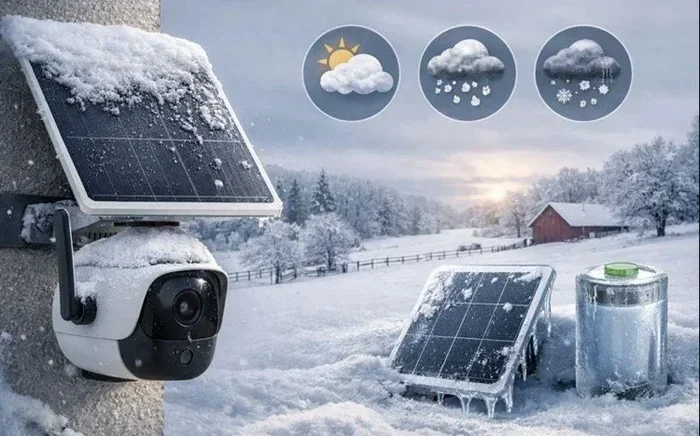
Snow is the biggest enemy of solar cameras in winter. A layer of snow on the panel blocks sunlight completely. Even a thin dusting can reduce energy absorption significantly. And heavy snowfall can weigh down smaller panels, potentially causing physical damage.
Ice poses a different but equally serious problem. Ice buildup around the camera lens can obscure the field of view. It can also seal moisture inside the housing if the weatherproofing is not up to standard. Over time, repeated freeze-thaw cycles can degrade seals and compromise the camera’s weatherproof rating.
Tips For Clearing Snow Off Solar Panels
Keeping your solar panel clear is one of the most important winter maintenance tasks. Here are some practical tips:
- Use a soft brush or broom: Gently sweep snow off the panel surface. Avoid abrasive materials that could scratch the glass.
- Wait for a dry day: Clearing snow when the panel is cold and dry works best. Wet snow is heavier and harder to remove.
- Install panels at an angle: A steeper tilt helps snow slide off naturally. Flat panels collect and hold snow more easily.
- Consider a panel heater: Some solar kits include small heating elements that prevent ice buildup. These are especially useful in heavy snowfall regions.
- Check panels daily during storms: A quick glance each morning can prevent major snow accumulation from going unnoticed.
If you are exploring other camera types for different environments, our article on plugging a USB camera into your phone offers useful insights on connectivity options that may complement your outdoor setup.
Best Solar Cameras For Winter Use
Not all solar cameras are built equal. Some models handle winter conditions far better than others. When shopping for a camera that must survive freezing temperatures, look for specific features that make a real difference.
Key Features To Look For
- Wide operating temperature range: Quality solar cameras function in temperatures as low as negative 20 degrees Fahrenheit or lower.
- High IP rating: An IP65 or IP67 rating ensures protection against moisture, dust, and ice penetration.
- Large battery capacity: A bigger battery compensates for reduced charging hours during short winter days.
- Dual power support: Cameras that accept both solar and AC power offer a reliable fallback during extended cloudy periods.
- Infrared or color night vision: Winter nights are long. A camera with strong low-light capabilities ensures 24-hour coverage.
Top Brands For Cold Weather Reliability
Several brands have built their cameras specifically for harsh outdoor conditions. Reolink, Ring, and Blink all offer models with cold-weather specifications. Reolink solar cameras, for example, often feature wide temperature tolerances and robust housing. Ring’s solar panels are designed to shed snow more effectively due to their curved shape.
When choosing a camera, always check the manufacturer’s listed operating temperature range. This number tells you exactly how cold the device can handle. If you live in an area where winters regularly drop below negative 10 degrees Fahrenheit, prioritize models rated for those extremes.
For those relying on wireless cameras that need consistent connectivity, our guide on Ring camera functionality without internet provides helpful information on maintaining surveillance even during connectivity disruptions.
Solar Camera Winter Maintenance Checklist
Maintenance is the secret weapon for keeping any solar camera running through winter. A few simple routines can dramatically extend the life and performance of your system. Think of it like caring for a car before a long road trip.
Weekly Maintenance Tasks
- Inspect the solar panel: Look for snow, ice, or debris covering the surface. Clear any obstructions promptly.
- Check the camera lens: Wipe away frost or condensation. A clear lens ensures sharp, usable footage.
- Verify the connection: Make sure cables and mounts are secure. Wind and ice can loosen components over time.
- Review the battery indicator: Most apps show real-time battery levels. A sudden drop may signal a problem.
Monthly Maintenance Tasks
- Test the full system: Trigger a recording and check that footage saves correctly.
- Inspect weatherproof seals: Look for cracks or gaps in the housing. Replace seals if you notice any damage.
- Clean the panel surface: Use a mild cleaner and soft cloth to remove grime or salt residue from winter roads.
- Update firmware: Manufacturers often release updates that improve cold-weather performance and fix bugs.
Seasonal Preparation Before Winter
Before the first freeze arrives, take these proactive steps:
- Trim nearby trees: Overhanging branches block winter sunlight and drop snow onto the panel.
- Reinforce mounting hardware: Wind loads increase in winter. Tighten all bolts and brackets.
- Add a battery backup: A supplemental battery pack provides extra reserve for the darkest weeks.
- Apply waterproof tape to exposed connections: This extra layer of protection prevents moisture infiltration.
- Set up alerts: Configure your app to notify you of low battery or connectivity issues.
How To Maximize Solar Camera Efficiency In Winter
Even with the best equipment, winter efficiency will always be lower than summer. But you can take deliberate steps to maximize what your system delivers. These strategies focus on positioning, power management, and smart usage.
Optimize Panel Placement And Angle
The angle of your solar panel matters more in winter than in summer. Because the sun sits lower in the sky during cold months, a steeper panel angle captures more direct light. As a general rule, set your panel angle equal to your latitude plus 15 degrees during winter.
Orientation also plays a role. South-facing panels in the northern hemisphere receive the most sunlight during winter. Avoid placing panels near tall structures that create shadows, especially during the short afternoon hours when the sun is already low.
Use Power Saving Modes
Most modern solar cameras include power-saving features. Motion-activated recording uses less energy than continuous recording. Adjusting the sensitivity settings can reduce unnecessary triggers from wind-blown debris or snowflakes.
Some cameras also offer a “winter mode” or “low power mode” that reduces frame rate or disables certain features to conserve battery. Enabling these modes during the darkest weeks can extend runtime significantly. It is a small trade-off for continued operation when sunlight is scarce.
Consider A Hybrid Power Setup
For maximum reliability, pair your solar panel with a backup power source. A small AC adapter or a portable power bank can keep the camera running during extended cloudy periods. This hybrid approach ensures your outdoor security camera never goes dark, regardless of weather conditions.
Some advanced systems include a built-in battery that charges via solar during the day and switches to stored power at night. These dual-mode systems are ideal for winter because they decouple charging from immediate power consumption. The battery charges when sunlight is available and powers the camera independently when it is not.
If you are also dealing with power bank safety concerns in cold storage, check out our article on packing power banks in checked luggage for relevant safety tips that also apply to storing backup batteries in cold environments.
Common Problems And How To Fix Them
Winter is unforgiving on outdoor electronics. Even the best solar cameras can encounter issues when temperatures drop. Knowing what goes wrong and how to fix it saves time and frustration.
Camera Goes Offline Frequently
This is one of the most common winter complaints. The culprit is usually a drained battery. When the solar panel cannot fully recharge the battery during short daylight hours, the camera shuts down to preserve power. The fix is straightforward: clean the panel, reduce power consumption, or add a backup battery.
If the camera uses Wi-Fi, cold weather can also affect the wireless signal. Ice and snow on the panel housing can interfere with the antenna. Repositioning the camera or adding a Wi-Fi extender often resolves this issue.
Footage Appears Grainy Or Dark
Low light conditions in winter can produce grainy footage, especially at night. Snow on the ground actually reflects light, which should help. But if the camera’s infrared sensor is blocked by frost, night vision suffers. Regular lens clearing solves this problem.
Some cameras automatically switch to black-and-white mode in low light. This mode performs better in darkness but can look grainy. Adjusting the sensitivity settings or enabling color night vision (if your model supports it) improves image quality.
Panel Shows Damage From Ice
Ice accumulation can crack the solar panel surface or damage wiring. Inspect the panel regularly for visible cracks or discoloration. Small cracks can be sealed with waterproof epoxy, but significant damage requires panel replacement.
Prevention is always better than repair. A panel cover or protective shield reduces direct ice impact. Some homeowners use a removable panel cover during heavy storms, taking it off during sunny periods to maintain charging.
Do Solar Cameras Work In Extreme Winter Conditions
Extreme winter conditions push solar cameras to their limits. In regions where temperatures regularly drop below negative 20 degrees Fahrenheit or where heavy snowfall is common, standard solar cameras may struggle. However, specialized models designed for extreme cold can still perform reliably.
These rugged cameras feature reinforced housing, industrial-grade batteries, and heated panels. They are built to operate in conditions that would defeat a standard consumer model. The trade-off is price. Extreme cold cameras cost significantly more than standard options. But for those who need year-round surveillance in harsh climates, the investment pays off.
It is also worth noting that some solar cameras use a supercapacitor instead of a traditional battery. Supercapacitors handle cold temperatures much better than lithium-ion cells. They charge quickly and tolerate extreme temperature swings without degradation. If you live in an extremely cold climate, look for models that use this technology.
When evaluating whether a camera setup is right for your situation, consider how the device performs in other challenging environments. For example, understanding how devices handle power restrictions can help you make better decisions. Our article on leaving a USB hub plugged in continuously explores similar themes of device reliability under constant power conditions.
Conclusion
So, does a solar camera work in winter when it is freezing? The answer is a confident yes, with conditions. A solar camera can operate through the coldest months if you choose the right model, maintain it properly, and take steps to maximize efficiency. Winter will always reduce performance compared to summer. Shorter days, weaker sunlight, and freezing temperatures are real challenges. But they are not dealbreakers.
The key is preparation. Clean your panels regularly, angle them for winter sun, and consider backup power options. Choose a camera rated for cold weather operation and invest in weatherproof maintenance. With these steps in place, your solar camera continues to protect your property all winter long.
Winter does not have to mean dark screens and empty storage. A well-maintained solar camera system stays active, reliable, and ready. Take the time now to prepare your setup, and you will thank yourself when the snow starts falling and the temperatures drop. Your security does not take a holiday just because the weather gets cold.